

Watching your little one grow up day by day is one of the most wonderful parts of being a parent. Every new smile, step, and word brings pure joy to your home. At the same time, keeping track of your child's health and overall growth matters deeply for their future well-being. Today, we will explore what child development really means, the key areas of growth, and how you can support your child every step of the way.
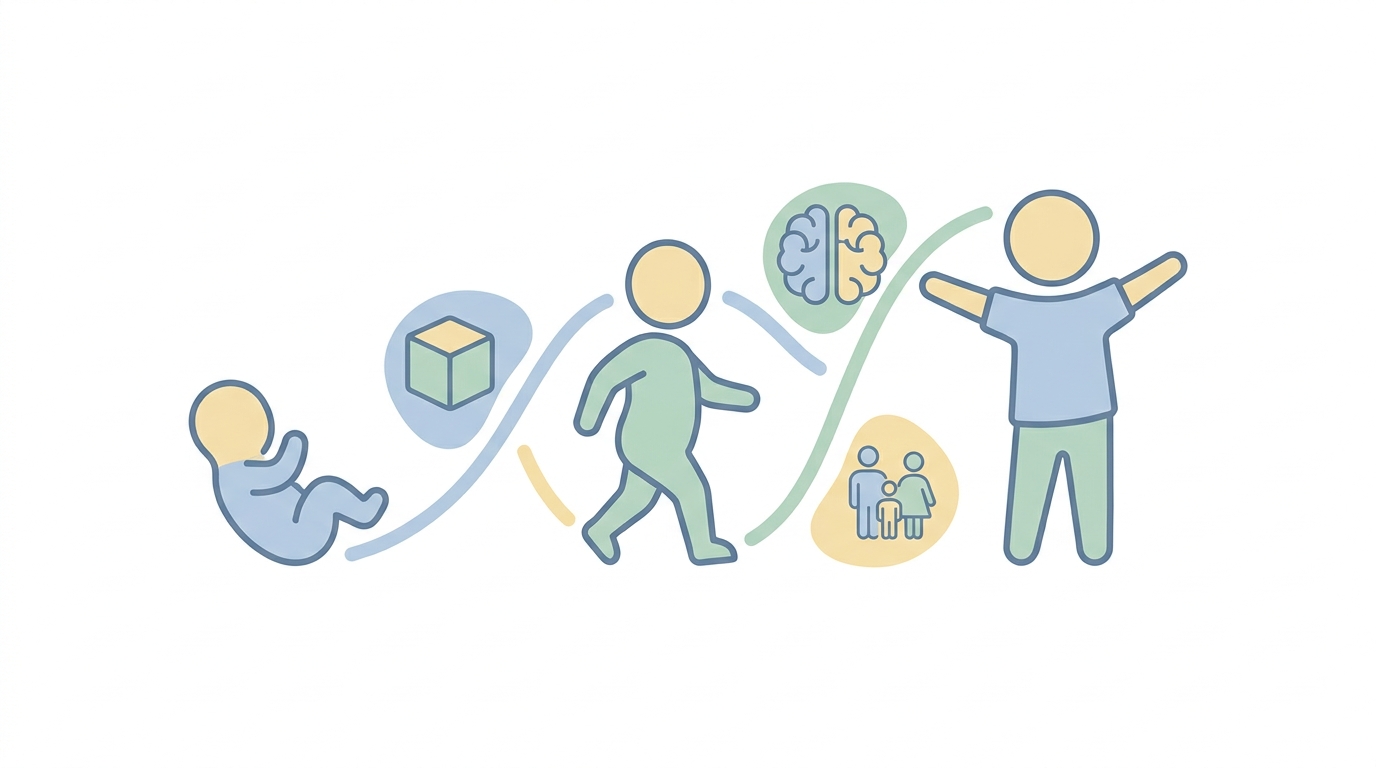
Understanding month-by-month developmental milestones helps parents support their child's natural growth.
Key Takeaways for Parents.
- Child development covers four main areas: motor skills, thinking, communication, and social-emotional growth.
- Every child grows at their own unique pace, so try not to compare your little one to others.
- Regular checkups with your pediatrician help track growth and spot any support needs early.
- Simple daily activities like reading, talking, and playing build strong foundations for learning.
Four Main Areas of Child Development.
Medical experts divide child growth and development into four core categories. Let's look closely at each area.
- Motor Skills: This covers how your child controls their body movements. It includes gross motor skills like walking, running, and jumping, as well as fine motor skills like using fingers to pick up small objects.
- Cognitive Skills: This relates to how your child thinks, learns, remembers, and solves problems. In simple terms, it is how their brain works and processes the world around them.
- Language and Communication: Your child uses these skills to share thoughts and connect with you. This includes talking, listening, using gestures, making eye contact, and showing facial expressions.
- Social and Emotional Skills: This involves managing feelings, showing happiness or sadness, building friendships, and understanding other people's emotions. It also includes how your child responds to guidance and care.
Why Tracking Child Development Matters.
Watching your child's growth closely helps you spot any health concerns or developmental delays early. Early detection is the best way to get timely support. That is why routine well-child visits with your pediatrician are so important. During these checkups, your doctor evaluates growth patterns, checks vital health markers, and offers expert guidance tailored to your family.
What Are Developmental Milestones?
Developmental milestones are specific behaviors and abilities that experts use to measure a child's growth. Think of them as signposts along a journey. However, the most important rule to remember is that every child develops at their own unique speed. Some children master certain skills quickly while others take a bit more time. Experts base these milestones on what about three out of four children can do by a specific age.
Main Stages of Child Growth.
Doctors typically divide the growing years into five broad stages:
- Infancy: From birth to 12 months of age.
- Toddler Years: From 1 year to 3 years of age.
- Preschool Years: From 3 years to 5 years of age.
- Grade School Years: From 5 years to 12 years of age.
- Teen Years: From 12 years to 18 years of age.
What Children Can Do at Different Ages.
As your child grows past their first birthday, their skills expand in amazing ways. These new abilities build directly upon earlier infant milestones. Let's review what your child should be able to do at various ages.
The 15-Month-Old Toddler.
Around 15 months of age, many little ones can do the following tasks:
- Stand up independently and take a step or two on their own.
- Pick up food with their fingers and feed themselves.
- Clap their hands when they feel excited or happy.
- Show you toys that they like or find interesting.
- Hug or cuddle their favorite toys, or show affection by hugging you.
- Copy what other children do during playtime.
- Try to say a few words beyond mama and dada, even if pronunciation is not yet clear.
- Understand object names, such as looking at a ball when you say the word.
- Follow simple directions, like handing you an object when you reach out your hand.
- Point to things they want to ask for help with.
- Hold and explore everyday objects like cups or board books.
The 18-Month-Old Toddler.
By 18 months of age, most toddlers can achieve these milestones:
- Walk steadily without holding onto anyone or anything for support.
- Help with daily routines, like stretching out arms for a jacket or holding hands for washing.
- Eat using a spoon and drink from an open cup, though spills may still happen.
- Climb up and down furniture or low stairs safely.
- Explore nearby spaces while sometimes turning around to make sure you are close.
- Sit patiently while you read a few pages of a storybook together.
- Copy simple chores around the house, like pretending to sweep or wipe surfaces.
- Use at least three distinct words besides mama and dada, and follow simple spoken commands.
The 2-Year-Old Toddler.
By 2 years of age, most young children display these new skills:
- Use both hands together, such as holding an object with one hand while opening it with the other.
- Notice when someone else feels hurt or upset.
- Look at your facial expressions to see how you react to a new situation.
- Combine two words together to express simple thoughts and wishes.
- Point to named body parts or identify pictures in a book when asked.
- Use clear physical gestures beyond simple pointing, such as shaking their head or blowing a kiss.
- Operate simple toy switches or buttons and play with multiple toys at once.
- Kick a ball, run freely, and walk up stairs using alternating feet without holding rails.
The 30-Month-Old Toddler.
Around two and a half years old, children typically reach these milestones:
- Play alongside other children or join in interactive group play.
- Follow familiar daily routines, like brushing teeth when bedtime approaches.
- Use a vocabulary of around 50 words, form simple sentences, and name at least one color.
- Engage in pretend play using toys, such as feeding a toy bear with a play block.
- Use fingers skillfully to open door latches, twist lids off containers, or turn book pages.
- Solve simple problems, like stepping on a low stool to reach an item.
- Jump upward off the ground with both feet at the same time.
- Take off their own jacket or simple clothing items without help.
The 3-Year-Old Child.
At 3 years of age, most children show significant progress:
- Calm down within ten minutes after you drop them off at childcare or leave them with a caregiver.
- Interact and play cooperatively with other children.
- Talk in longer sentences, ask questions, and describe actions in pictures using action verbs.
- Speak clearly enough that familiar adults understand most of what they say.
- Understand safety rules and stop when warned not to touch hot objects.
- Draw simple shapes like circles when asked, or thread large beads onto a string.
- Feed themselves neatly using a fork.
- Help put on loose clothing items like elastic-waist pants or simple jackets.
The 4-Year-Old Child.
At 4 years of age, your child moves past the toddler stage. Most children at this age can do the following:
- Engage in imaginative role-play, pretending to be different characters or animals.
- Comfort a friend or family member who feels sad.
- Understand basic rules of behavior in different settings, such as libraries or parks.
- Recognize common dangers and avoid unsafe actions, like jumping from high places.
- Offer to help with household tasks when invited.
- Speak in sentences containing four or more words, recite parts of stories, and talk about past events.
- Answer simple reasoning questions, such as explaining what shoes are used for.
- Identify several common colors correctly.
- Draw a person with a head, arms, and legs.
- Catch a large bounced ball reliably.
- Hold a crayon or pencil correctly between fingers rather than clenching it in a fist.
The 5-Year-Old Child.
By 5 years of age, most children master these milestones:
- Follow game rules and wait patiently for their turn.
- Help with simple home chores like setting the table or sorting laundry.
- Have back-to-back conversations and tell detailed stories.
- Recognize rhyming words, count up to 10, and understand basic time words like yesterday and tomorrow.
- Focus on an engaging activity for 5 to 10 minutes without screen distraction.
- Identify some letters and write several letters of their own name.
- Button clothing items independently.
- Hop forward on one foot.
| Age Group. | Key Physical Skill. | Key Communication Skill. |
|---|---|---|
| 15 Months. | Stands and takes steps. | Tries new words. |
| 2 Years. | Kicks ball, runs well. | Combines two words. |
| 3 Years. | Uses fork, climbs stairs. | Speaks in clear sentences. |
| 5 Years. | Hops on one foot, buttons clothes. | Tells detailed stories. |
What If My Child Cannot Do Certain Age-Appropriate Skills?
Feeling concerned if your child struggles with certain milestone tasks is completely normal. However, always remember that these milestones serve as general guidelines rather than rigid rules. Every child is unique. Your child might shine brightly in one developmental area while needing extra practice and time in another.
If you have questions or worries about developmental milestones, schedule a visit with your pediatrician. Your doctor can assess your child's overall progress and offer supportive guidance. When needed, they can refer your family to specialized care services such as physical therapy, occupational therapy, or speech therapy. Early support makes a wonderful difference in helping children reach their full potential.
Development varies greatly from one child to another. Think of milestones as helpful signposts rather than strict scorecards. No matter how your child navigates this journey, your love, patience, and encouragement matter most.
When to Seek Urgent Medical Attention.
Contact your doctor right away or go to the nearest emergency department (ER or A&E) / call 911 (US/Canada) or 999 (UK) if you notice any major developmental regression or red flags, such as:
- Sudden loss of speech, babbling, or social skills at any age.
- Complete lack of eye contact or failure to respond to their name by 12 months.
- Inability to walk or bear weight on legs by 18 months.
- Extreme lethargy, unresponsiveness, or severe breathing difficulties.
Final Thoughts to Keep in Mind.
As you watch your little one grow and learn, keep these simple principles in mind:
- Milestones are guides, not deadlines. Every child follows a personal timeline, so avoid comparing your child to others.
- Trust your instincts. If you notice something that feels unusual or concerning, speak with your pediatrician right away. Early questions lead to early answers.
- Embrace professional guidance. If your doctor recommends therapy or extra support, approach it with confidence and optimism.
- Your love and encouragement are irreplaceable. Celebrate every small victory and milestone your child achieves.
- Spend quality time together. Reading books, talking, singing, and playing every day stimulate brain development and strengthen your bond.
A Note from Dr. Priya Sammani.
As a clinician, I always remind parents that parenting is a journey of patience and observation. Your intuition as a parent is one of the strongest tools for recognizing when your child needs extra support. Never hesitate to partner with your pediatrician. Together, we can ensure your child thrives in health, happiness, and confidence.


💬 Comments (0)
No comments yet. Be the first to share your thoughts here.
Add Your Comment