
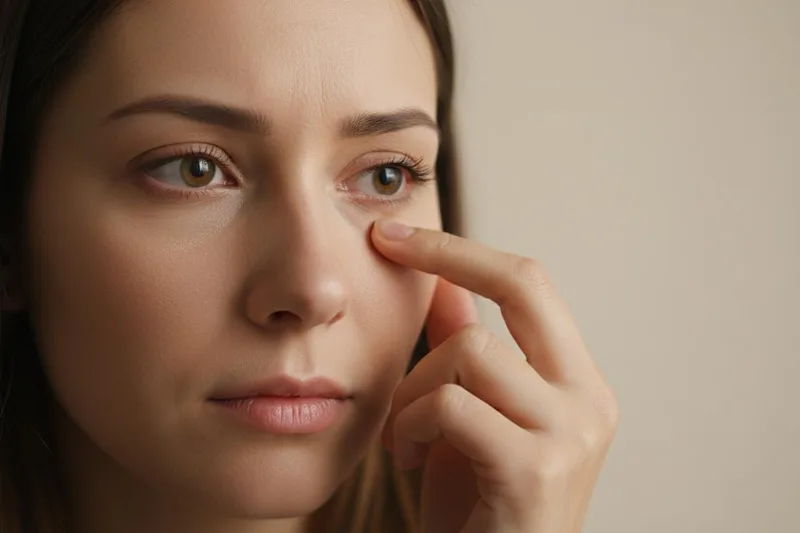
Have you ever noticed that your eyes suddenly become red, your vision becomes a little blurry, and sometimes you see little black dots floating inside your eyes? Do you find it hard to look at the light? These things don't just happen. These can be caused by inflammation, or swelling, of two very important parts of your eye, the choroid and the retina . In medicine, we call this condition chorioretinitis . This can be a serious condition, so it's important to be aware of it.
What is Chorioretinitis?
Simply put, chorioretinitis is an inflammation of the back of your eye, the choroid and retina . It is actually one of a larger group of conditions called uveitis , which are inflammations of the inside of the eye.
Think of your eye as a small camera. This camera has different parts.
- The choroid is a membrane inside the eye. It contains blood vessels that supply the eye with blood. It is located between the retina and the white part of the eye (sclera). Just like the soil that provides water and nourishment to a tree, the choroid is the one that nourishes the retina. So if there is a problem with it, vision can be damaged.
- The retina is a very sensitive membrane at the back of the eye. The images we see are formed here. It's like the film in a camera. It's what sends light signals to the brain, so we see things.
So, when both the choroid and retina become inflamed at the same time, we call that condition chorioretinitis. When this inflammation starts to damage the eye, it is also called chorioretinopathy . The part '-pathy' means damage. If you have symptoms like blurred vision, eye pain, and sensitivity to light, you should see an ophthalmologist immediately.
What are the symptoms of Chorioretinitis?
These symptoms can vary from person to person. Some people may have one or more of these symptoms.
- Seeing black spots, floaters, or flashes of light before your eyes: Imagine that you are just sitting still and suddenly see small spider webs or black spots moving here and there in front of your eyes. Sometimes you may even see flashes of light like lightning.
- Redness of the eyes: The white part of the eye may turn red.
- Blurred vision: You may not be able to see things clearly, as if you are looking through a fog. You may also feel like the letters are jumbled up when you read.
- Eye pain: Pain may come from inside or around the eye.
- Photophobia: Difficulty seeing even when the sun or lights are out, and the eyes may feel as if they are turning blue.
- Excessive tearing: Tears may simply flow from the eyes like water.
- Difficulty recognizing colors: Some colors may appear different than others, or it may be difficult to recognize colors.
If you have any of these symptoms, don't ignore them. See an ophthalmologist immediately.
What are the causes of Chorioretinitis?
There are two main categories of causes for this condition: infectious and non-infectious causes.
Chorioretinitis caused by infections (Infectious causes)
Some of these infections can be present at birth (congenital) or acquired during life.
- Toxoplasmosis: This is the most common cause of chorioretinitis. It is an infection caused by a parasite. It can be transmitted through cat feces and undercooked meat and fish.
- Tuberculosis: Yes, the tuberculosis we all know can also affect the eyes in this way.
- Cytomegalovirus (CMV): This is a viral infection that can affect people with weakened immune systems.
- Syphilis: This is a sexually transmitted infection that can also damage the eyes.
In addition, viruses such as the Zika virus, rubella virus, varicella-zoster virus, which causes chickenpox , and some fungal infections can cause this.
Non-infectious causes
Sometimes chorioretinitis can occur without an infection.
- Eye injuries: If something hits the eye and injures it, this type of inflammation is likely to occur.
- Autoimmune and inflammatory illnesses: These are diseases in which our body's own immune system attacks our own cells. Examples include conditions like rheumatoid arthritis , sarcoidosis , and Behçet's disease .
- Some types of cancer: This condition can also be caused by cancers such as lymphoma , or by cancer that has spread to the eyes from elsewhere in the body (metastatic disease) .
- Some genetic conditions: Rarely, this disease can also be caused by certain genetic conditions that are passed down through generations.
What are the possible complications of Chorioretinitis?
If this disease is not treated properly, vision can be reduced and even permanent blindness can occur.Therefore, it is very important to seek medical advice as soon as symptoms appear.
How is Chorioretinitis diagnosed?
When you see an eye doctor, he or she will examine your eyes. This usually involves dilating your eyes with eye drops, and taking a close look at the back of your eye. The doctor can then examine the condition of your retina and choroid. Sometimes, they can also see things like old scars (chorioretinal scars).
What are the diagnostic tests?
In addition to an eye exam, the doctor may also perform tests such as:
- Lab tests on material swabbed from your eye: A small sample taken from inside your eye can be sent to a lab to find out if there is an infection and, if so, what type.
- Optical Coherence Tomography (OCT): This is like a 3D scan of the inside of the eye. It uses light to take cross-sectional pictures of the layers at the back of the eye. This can help determine the extent of inflammation and the presence of fluid buildup.
- Fluorescein angiography: This involves injecting a special dye into a vein in your arm and taking pictures of the blood vessels inside your eye. This can help to check for problems with your blood vessels.
- Indocyanine green (ICG) angiography: This is a test that uses the same dye as the previous one, but it mainly looks at the blood vessels in the choroid, which is located under the retina.
If chorioretinitis is caused by another underlying condition, the doctor may need to perform further tests to diagnose that condition.
How is Chorioretinitis treated?
Eye doctors often treat this condition by giving steroids to reduce inflammation . These can be given as eye drops, pills, or sometimes injections. However, steroids should not be used for long periods of time, as they can cause side effects.
Therefore, your ophthalmologist may work with a rheumatologist, a doctor who specializes in joint pain and autoimmune diseases, to prescribe steroid-sparing medications that control your immune system.
If chorioretinitis is caused by an infection, treatment is based on the germ that caused the infection.
- Antibiotics if it is a bacterial infection
- Antifungals if it is a fungal infection
- Antiparasitics if there is a parasitic infection
- If there is a viral infectionAntivirals
It is very important to take these medications exactly as prescribed by your doctor, for the full duration of the prescribed period. Do not stop taking the medication just because you feel better.
Very rarely, a surgery called vitrectomy may be required to remove fluid and debris from inside the eye.
What kind of hope can someone with chorioretinitis have?
If you have chorioretinitis, and you treat it properly, as well as the underlying cause, the outcome is usually good . However, you will need to see an eye doctor regularly to have your eyes checked.
Most people do not have permanent vision problems after treatment.
However, if left untreated, chorioretinitis can affect your vision. One complication is chorioretinal atrophy . This means that the affected parts of the eye – the retina and choroid – shrink and stop working properly. If left untreated, it can lead to complete loss of vision (blindness) .
Can Chorioretinitis be prevented?
Although it cannot be completely prevented, you can do the following to reduce your risk:
- Protect yourself from infections:
- Always wash your hands thoroughly with soap .
- Stay away from people who are sick.
- Practice safe sex .
- To avoid toxoplasmosis, wear gloves when handling cat feces, and cook meat and fish thoroughly.
- See your eye doctor on a regular schedule: If you have other conditions, such as diabetes, it's essential to get your eyes checked.
- If you notice any changes in your vision, see an eye doctor immediately: Don't wait for your scheduled appointment.
- Take care of your overall health: eat a well-balanced diet, exercise, and manage any chronic conditions you have.
When should I see my doctor?
If you have already been diagnosed with chorioretinitis, your doctor will tell you what eye problems you may have. If you have been given a treatment plan and it doesn't seem to be working, talk to your doctor about it.
At any time, whether you have a diagnosed eye condition or not, if you experience any of the following, see an eye doctor or go to a hospital emergency department immediately:
- If something happens to the eye.
- If you suddenly lose your vision or your vision becomes very poor.
What questions should I ask my doctor?
You can ask your doctor questions like these about chorioretinitis:
- Why did I get this disease?
- What treatment do you recommend?
- Are there any side effects of this treatment?
- What complications should I be careful of?
- Is it possible that this disease will affect anyone else in my family? (especially if there are genetic causes)
Finally, what to remember (Take-Home Message)
Our eyes are very precious organs. It is normal for your eyes to tear up and hurt a little sometimes. However, if your vision is blurry, your eyes hurt, your vision changes, or you constantly see something floating in front of your eyes, don't ignore it. It could be an inflammation of the inside of your eye, such as chorioretinitis.
The sooner you diagnose the disease and start treatment, the greater your chances of preserving your precious eyesight. So, don't be afraid and seek medical advice without delay. It's your responsibility to take care of your eyes!
👩🏽⚕️ Additional questions (FAQs)
💬 Is Chorioretinitis a blinding eye disease?
If left untreated, this can lead to blindness! This is when both the blood vessel layer at the back of your eye (the choroid) and the retina (the tissue that provides vision) suddenly become infected with a virus, causing swelling and damage.
💬 What causes the retina to swell like this?
This condition is often caused by the blood-borne transmission of serious germs/parasites (Toxoplasma gondii), viruses (CMV), and certain bacteria (such as Syphilis/Tuberculosis) to the eye. This is especially true of toxoplasmosis, which is transmitted through cat feces (even during pregnancy).
💬 How do you know if your vision is deteriorating? Do you need glasses?
In this case, not only does vision become blurry, the patient suddenly begins to see floating black spots/spots (Floaters), and the eye becomes very red and painful. Wearing glasses is not helpful for this, you should immediately see an ophthalmologist and get antibiotics/steroids to kill the relevant germ.
` Chorioretinitis, eye inflammation, eye disease, vision impairment, retina, choroid


💬 Comments (0)
No comments yet. Be the first to share your thoughts here.
Add Your Comment