
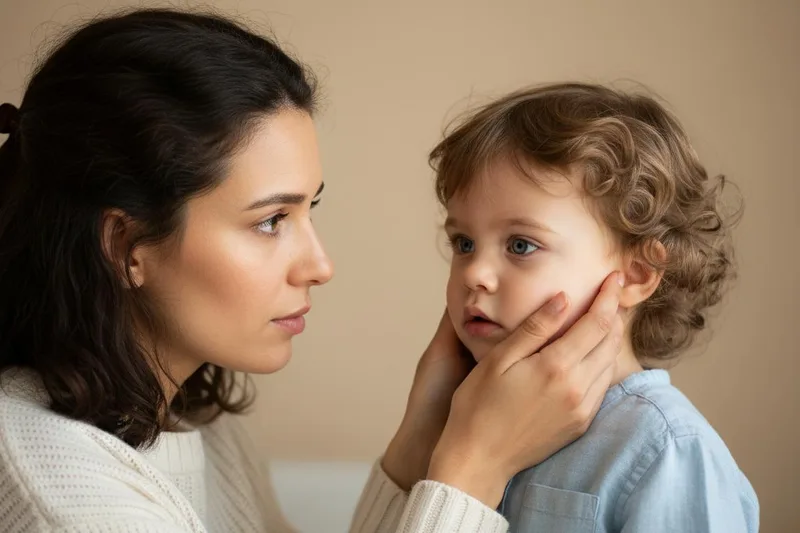
As parents, our biggest dream is to see our children healthy and happy. But sometimes, children can develop health problems that we don't expect. Imagine that your little one doesn't respond much to sounds from the day he was born. Or when he gets a little older, you realize that he has difficulty finding things in dimly lit places at night and walking. It's normal to feel a lot of fear and anxiety at times like these. Today, we are going to talk about a rare condition that causes hearing and vision problems at the same time, but is not talked about much in our society. That is Usher Syndrome.
What exactly is Usher Syndrome?
Simply put, Usher Syndrome is an inherited condition that mainly affects a child's hearing and vision. In some cases, it also affects the body's ability to maintain balance. This is caused by certain changes (mutations) in some genes that help hearing and vision develop while the child is still in the womb. This is often a condition that is congenital, or symptoms begin to appear in childhood. However, very rarely, there are people who show symptoms later in life.
This is a very rare condition. It affects between 3 and 6 per 100,000 people worldwide. Although there is currently no cure, there are many ways to manage the symptoms and help the child live a good life.
What are the main types of Usher Syndrome?
Several genetic mutations have been identified that cause this disease. The types of the disease vary depending on how these genes are combined. But all of these types affect hearing, vision, and balance. The main differences are in the time it takes for symptoms to start and how severe they are. Let's take a look at these three main types.
I created this table to make this information easier to understand.
| Type | Hearing problems | Vision problems | Balance problems |
|---|---|---|---|
| Type 1 | They are not very hard of hearing at birth (may be deaf). | It starts in childhood. First, night vision decreases. It gets worse with age. | It is present at birth. This causes a delay in starting to walk. |
| Type 2 | Moderately or severely hearing impaired at birth, but not completely deaf. | It usually starts in adolescence and gets worse with age. | Balance problems usually do not occur. |
| Type 3 | Hearing is normal at birth. Hearing begins to decline in late childhood. | Vision is normal at birth. Vision begins to decline in early adulthood. | About half of people with this type may experience balance problems. |
What are the main symptoms seen in this condition?
Although symptoms vary depending on the type of Usher Syndrome, there are several common features.
- Hearing loss: Some children are born completely deaf. Others have moderate hearing loss. Some children gradually lose their hearing as they get older.
- Vision loss: This is caused by retinitis pigmentosa (RP), a disease of the retina of the eye. This is caused by the gradual destruction of the light-sensitive cells (rods and cones) in the eye.
- The first symptom: Blurred vision at night or in dim light ( night blindness ). For example, a child may have difficulty walking indoors or finding a toy when the light is low in the evening.
- Later: As the disease progresses, peripheral vision is lost. This means you can see straight ahead, but not to the sides. This is also called 'tunnel vision' . It feels like you are looking through a long tube. Eventually, this condition can progress to complete blindness.
- Balance issues: Children with Type 1, in particular, have difficulty maintaining balance. As a result, they start sitting, standing, and walking later than other children.
What causes Usher Syndrome?
This is a condition that is completely genetic. Let's understand this a little more simply.
For a child to develop this disease, the child must receive the defective gene for the disease from both the mother and father . In medical terms, this is called autosomal recessive inheritance .
Imagine that both the mother and father have this defective gene, but they don't have symptoms. We call them 'carriers'. Here's what happens when two parents have a child:
- There is a 25% (one in four) chance that a child will develop the disease (if both parents inherit the defective gene).
- There is a 50% (two in four) chance that the child will also be an asymptomatic 'carrier' (if one parent inherits the defective gene and the other inherits the healthy gene).
- The child has a 25% (one in four) chance of being completely healthy, without this disease or the defective gene.
These genetic changes cause the nerve cells in the cochlea, which carry sound waves to the brain, to malfunction, causing hearing loss. Also, changes in the genes that produce light-sensitive cells in the retina of the eye cause retinitis pigmentosa, which causes vision loss.
How to diagnose this disease?
The process of diagnosing the disease may vary depending on the child's symptoms and age.
Usually, in every hospital in Sri Lanka, a newborn hearing screening is performed at birth. If the doctor suspects that the baby has any hearing impairment, he or she will be referred for further tests.
If you think your child has a hearing or vision problem, you should see a pediatrician as soon as possible. He or she will examine the child and refer them to specialists if necessary.
- Hearing tests: An ear, nose, and throat specialist (ENT specialist) and an audiologist perform various hearing tests to find out how well the child can hear and what types of sounds they cannot hear.
- Vision tests: An ophthalmologist will examine the child's eyes to check for signs of retinitis pigmentosa in the retina. They will also perform tests to measure peripheral vision.
- Genetic tests: If you suspect you have Usher Syndrome based on your symptoms, the best way to confirm it definitively is to have a genetic test. This can also identify the specific genetic mutation that causes the condition.
What are the treatments and management methods for this?
Unfortunately, there is no cure for Usher Syndrome. However, there are many ways to manage the symptoms and maximize the child's quality of life. Treatment plans vary from child to child, depending on their condition.
- Cochlear implants: This can be very helpful for children who are born with severe hearing loss. This is an electronic device that is surgically implanted in the ear. It directs sound waves directly to the auditory nerve, allowing the child to experience the world of sound.
- Hearing aids: Hearing aids can be used for children with moderate hearing loss. These are especially important for children with Type 2 or 3, who tend to lose hearing as they age.
- Vision aids: There are various devices that can help manage vision problems. For example, glasses with special lenses that filter light, magnifying glasses, etc.
- Early intervention services: This is extremely important . If the condition is identified early in a child's life, the special services they need can be started sooner.
- Speech therapy
- Teaching sign language
- Teaching Braille
- Special education methods
- Physiotherapy exercises that improve body balance
All of this gives the child great strength to develop his or her abilities to the fullest and cope successfully in society.
Important questions to ask your doctor
It's normal to have a lot of questions when you learn about such a rare disease. Don't forget to ask these questions when you see your doctor.
- What type of Usher Syndrome does my child have?
- What treatments and management methods do you recommend?
- Will my child lose his vision completely over time?
- What specialists, therapists, or organizations are there that can help my child with this condition?
- Can we (parents) also test to see if we have the genes related to this?
Remember, it is much more important to discuss all your concerns with your doctor rather than being afraid and anxious.
As a parent, you may feel like you are going through this journey alone. But remember, you are not alone. You can also get support from your child's doctors, therapists, teachers, and other parents who have experienced the same thing. With proper management and loving care, a child with Usher Syndrome can live a happy, successful life like any other.
Take-Home Message
- Usher Syndrome is a rare genetic disorder inherited from parents that affects hearing, vision, and sometimes balance.
- There are three main types of this disease (Type 1, 2, and 3), and the time to onset of symptoms and their severity vary depending on the type.
- It is very important to seek medical advice immediately if you notice any changes in your child's hearing or vision. Early detection of the disease is very helpful in management.
- Although this cannot be completely cured, cochlear implants, hearing aids, visual aids, and various therapeutic services can greatly improve the child's quality of life.
- By staying in constant contact with your medical team and providing your child with the support and love they need under their guidance, you can pave the way for him/her to lead a successful life.


💬 Comments (0)
No comments yet. Be the first to share your thoughts here.
Add Your Comment