

Our eyes are an amazing creation, aren't they? We see and experience the world through these two small organs. But how much do we know about the tiny parts inside the eye that we can't see from the outside, but that do a lot of very important work? The eye is actually a collection of many tiny parts that work together. Today we are going to talk about a very important, but unheard-of, silent hero inside the eye. That is the ciliary body.
What is the Ciliary Body?
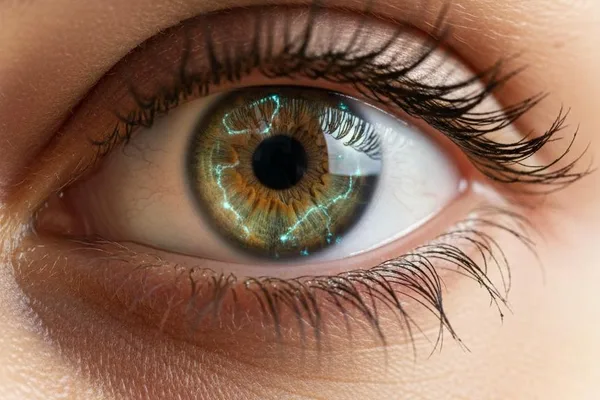
Okay, let's start simply. When you look at your eye in a mirror, you see a colored part, right? Some people have it black, some people have it brown. We call this the iris. This ciliary body is located behind the iris. That means we can't see it directly.
To understand this better, think of it this way. Inside our eyes, there is a special membrane called the uvea . This is a collection of three parts. It's like having three names for three places on the same road.
1. Iris: This is the colored part of the eye. It controls how much light enters the eye.
2. Ciliary Body: This is the next part that is connected to the iris.
3. Choroid: This is a network of blood vessels located inside the back of the eye. It is the main source of nutrition for the eye.
All three parts come together to form the uvea. So the ciliary body is a very important part of the uvea.
What service is evident in this small section?
Although this is small, the work it does is not small. The ciliary body has two main functions.
1. Produce a fluid needed by the eye
Inside our eyes is a clear fluid called aqueous humor . It's like a balloon filled with air. This fluid provides the eye with the necessary pressure and keeps it in shape. It's like inflating a car tire. If the pressure decreases, the eye can shrink, and if it increases, the eye can be damaged.
This very important fluid is produced by the ciliary body. Not only that, but it is this fluid that also provides the necessary nutrition to the lens and cornea, the transparent membrane at the front of the eye. So, without this fluid, the eye cannot remain healthy.
2. Helping you see things clearly (Focusing)
This is the most amazing ability of the ciliary body. Imagine that you are reading a book. Then suddenly you look up and see a squirrel in the yard. Then you look back at the book. Every time you see clearly, without blurring, right?
The main reason for this is the ciliary body. It works like this:
- When looking up close: When you look at something close, like a book, the muscles in the ciliary body tighten (contract). This causes the lens of the eye to become convex, which means it becomes slightly thicker.
- When looking at something far away: When you look at something far away, those muscles relax, and the lens of the eye flattens.
The other major function of the ciliary body is to help focus the light coming from the object we are looking at by changing the shape of the lens. Small thread-like structures called zonular fibers also help with this task.
Most of the time, after the age of 40-45, our near vision becomes a little blurry, right? It becomes a little difficult to read a newspaper or look at the phone. We call this presbyopia . One reason for this is that the function of the muscles in the ciliary body becomes a little weaker as we age.
What does this ciliary body look like?
As we said before, this is behind the iris, so we can't see it from the outside. But when you look at it with special equipment, it's like a ring. It also has wavy, curved parts. We call them ciliary processes . The aqueous humor that we mentioned earlier is secreted by those wavy parts.
In terms of color, the outer part of the ciliary body is dark in color, while the inner side is clear and colorless.
What diseases affect the ciliary body?
Like every other part of our body, the ciliary body can be affected by various medical conditions. Here are some of them.
Inflammation and Infections
Inflammation of the uvea is commonly called uveitis . Since the ciliary body is also part of the uvea, uveitis can also affect the ciliary body. If left untreated, it can sometimes lead to vision loss.
There is also an inflammatory condition that affects both the iris and the ciliary body, called iridocyclitis . This can be caused by various infections, other medical conditions like arthritis, or sometimes for no reason at all.
Tumors and Masses
Both noncancerous and cancerous tumors can develop inside the eye. Adenomas are small, noncancerous tumors. However, they can sometimes become cancerous.
Intraocular melanoma is the most common type of eye cancer in adults. It is also very rare. It most often starts in the choroid, but can also spread to the ciliary body.
Other Conditions
In addition to this, the ciliary body can be damaged for many other reasons.
- Glaucoma: We know that the ciliary body is responsible for producing the aqueous humor in the eye. If for some reason this aqueous humor is blocked from flowing out of the eye, the pressure inside the eye increases excessively. This is what we call glaucoma.
- Eye Injuries: The ciliary body can be damaged or even detached from its place (detachment) by something like a car accident or a chemical substance getting into the eye.
- Coloboma: This is a congenital condition in which a portion of the eye tissue is missing. This condition can also affect the ciliary body.
- Optic Atrophy: This is a condition caused by damage to the optic nerve. Sometimes it can be a symptom of another problem inside the eye.
What are the symptoms if you have this kind of problem?
If you have a condition related to the ciliary body, you may experience one or more of these symptoms. If you have any of these symptoms, you should see a doctor without delay .
| Symptom | Simple description |
|---|---|
| Blurred vision | Feeling like things are not seeing clearly. |
| Redness of the eyes | Reddening of the white part of the eye. |
| Swollen eyes | Swelling of the eyelid or around the eye. |
| Tears flowing from the eyes | Watery eyes for no particular reason. |
| Loss of vision | Gradual or sudden decrease or loss of vision. |
| Eye pain | Pain coming from inside or around the eye. |
| Headache | A headache associated with an eye problem. |
| Hyphema | The appearance of blood pooling in the front part of the eye. |
How does a doctor diagnose these conditions?
When you see an eye specialist, he or she will first ask you about your symptoms and medical history. Then, they will perform an eye examination. If a problem with the ciliary body is suspected, one or more of the following tests may be ordered:
| Test | Simply put... |
|---|---|
| Ultrasound Biomicroscopy | This is a high-definition ultrasound scan that uses sound waves to create a clear image of the inside of the eye. |
| Optical Coherence Tomography (OCT) | A noninvasive test that uses light beams to produce cross-sectional images of the back of the eye (especially the retina). |
| Angiography | A test that uses a special dye to inject into the body to obtain a clear picture of the blood vessels inside the eye. |
| Biopsy | If cancer is suspected, a small piece of tissue is taken from the eye and examined under a microscope. |
What are the treatments for these diseases?
Treatment options depend on the nature of your condition, and there are various treatment options available.
- Medications: These can be given as eye drops, ointments, pills, or injections.
- Laser treatment: Treatment using laser beams.
- Cryotherapy: A treatment using extreme cold.
- Surgery: In some cases, surgery may be necessary to remove parts of the eye or to implant a lens, such as in cataract removal.
How do we keep our eyes, that is, the ciliary body, healthy?
We can't prevent all diseases, but following a healthy lifestyle can be very beneficial for your eyes and your entire body.
- Get regular eye exams: Even if there are no problems, see an ophthalmologist at least once a year to have your eyes checked.
- Pay attention to symptoms: If you notice any changes, pain, or blurring in your eyes, do not ignore it and see a doctor immediately.
- Get good nutrition: Foods rich in vitamins A, C, and E (such as carrots, sweet potatoes, greens, oranges, and fish) are very good for the eyes. If you have any concerns about your diet, ask your doctor about taking vitamin supplements.
- Use adequate lighting: Maintain good lighting so that your eyes do not feel tired when reading or working.
- Exercise: Regular exercise improves blood circulation in the body. It is also good for the eyes.
- Drink plenty of water: Prevent the body from becoming dehydrated.
- Avoid smoking: Smoking is very harmful to the eyes.
- Wear sunglasses: Wear good quality sunglasses to protect yourself from UV rays when going out in the sun.
- Wear safety glasses: If you are doing certain tasks (like welding) or playing sports that could put your eyes at risk, wear safety glasses designed for that purpose.
Our eyes are a very complex organ. Every little part of it has an important role to play. The ciliary body is one such silent hero who does a great service. So, let's take care of our eyes as well as keep our whole body healthy.
Take-Home Message
- The ciliary body is an invisible, but very important part of the eye.
- Its main functions are to produce the fluid needed by the eye and to help provide clear vision (focus) when looking near and far.
- Never ignore symptoms such as blurred vision, red eyes, or eye pain.
- For any problems related to your eyes, seek the advice of a qualified doctor without delay.
- Good habits like eating a nutritious diet, avoiding smoking, and getting regular eye exams can help keep your eyes healthy for a long time.




💬 Comments (0)
No comments yet. Be the first to share your thoughts here.
Add Your Comment