
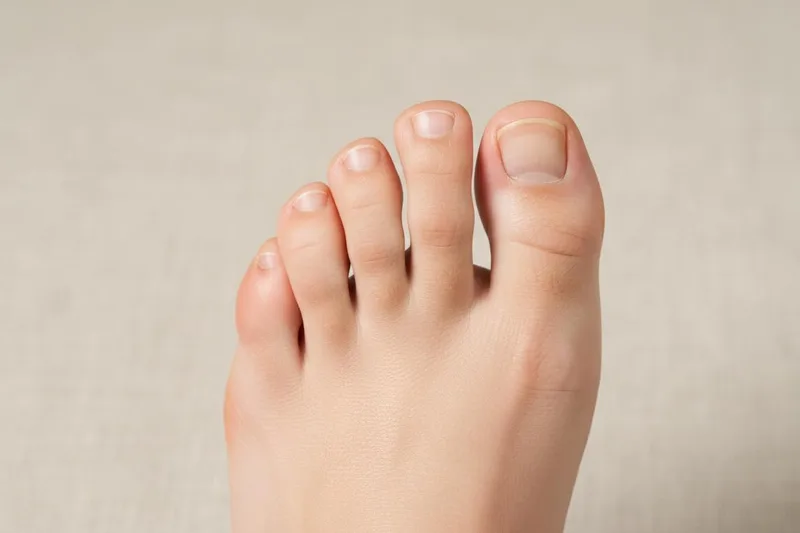
Do you have claw toes like this? Let's learn about these claw toes!

Do you have claw toes like this? Let's learn about these claw toes!

Have you ever looked at your toes and thought, "Huh... these toes look a little weirdly bent down, don't they?" Maybe your toes are getting pinched, bruised, and painful when you put on your shoes. While many people think this is normal, it could actually be a medical condition that needs attention. That's what we're going to talk about today.

Simply put, what are Claw Toes?

As the name suggests, Claw Toes refers to the abnormal downward curvature of the toes, resembling the claws of a bird. This condition usually affects the four toes except for the big toe. The middle joint and the joint at the tip of your toe are the ones that bend downward.

This is not just a case of pulling the toes. This condition is often associated with people who have a high arched foot (also known as a cavus foot ), imbalances in the muscles of the foot, or certain neurological conditions. This is especially true for people with diabetes , who are more likely to develop ulcers due to reduced sensation in the feet.

If you don't treat this early, over time, these bent fingers can become so stiff that they can't be straightened again. That's why it's very important to be aware of this.

Is this painful? Why does it hurt so much?

Yes, claw toes can be painful. Imagine what happens when you put on a shoe when your toes are bent downwards? The toes get stuck under the shoe. Also, the upwardly curved joint of the toe rubs against the top of the shoe.

Due to this ongoing pressure and friction:

  • Corns: The skin on the toes becomes thickened and forms small, round shapes.
  • Calluses: The skin on the soles of the feet or under the toes becomes thick, large, and comes in various shapes.
  • Blisters: Sometimes fluid-filled blisters may appear.
  • Infections: If the skin is injured, infections can rarely occur.

These things can cause pain when walking, running, or even just standing.

There are two main cases of claw toes.

This situation doesn't get worse all at once. There are two main stages to it.

1. Flexible Stage: This is the first stage. At this point, your fingers are bent, but you can straighten them with your hands or with effort. The joints in your fingers are still moving.

2. Rigid Stage: This is the late stage. By this time, the joints of the fingers are completely stiff and locked. You can't straighten those fingers in any way.

If surgery is needed, it is most successful during this flexible period. Therefore, it is very important to see a doctor as soon as symptoms begin.

What is the difference between Claw Toes, Hammertoes, and Mallet Toes?

Many people get confused because all three of these names refer to conditions where the fingers bend. But there are some subtle differences between these three. Let's see what they are.

Status name Flexion joint/joint Simple explanation
Claw Toe Both the middle joint and the end joint Both joints of the finger are bent, curving downward like a bird's claw.
Hammertoe Only the middle joint Only the middle joint of the finger is bent downward, looking like a hammer.
Mallet Toe Only the apex joint Only the joint at the tip of the finger is bent downward.

What are the main causes of claw toes?

This condition is often caused by an imbalance in the muscles and tendons in our feet. Simply put, some of the muscles that control the toes contract too much, tightening the tendons and pulling the joints down. There can be several reasons for this imbalance.

  • Genes: Yes, foot deformities like these can be inherited. If your parents or someone in your family has them, you are more likely to develop them too.
  • Wearing tight shoes: Wearing shoes that are narrow, pointed, or high-heeled, especially those with narrow toes, for long periods of time, can put unnatural pressure on the toes and cause muscle imbalance.
  • Nerve damage: Diabetes or excessive alcohol consumption can damage the nerves in the feet. This can lead to muscle weakness and this condition.
  • Other medical conditions:
  • Joint inflammation, that is , arthritis , especially Rheumatoid Arthritis and Osteoarthritis .
  • Diseases that affect the nervous system, such as Charcot-Marie-Tooth Disease .
  • Spinal cord tumors.
  • Polio and Cerebral Palsy .
  • Stroke: This condition can affect the leg on the side that is paralyzed.
  • Trauma to the foot: A severe accident to the foot can also be a cause of this.

How does a doctor find this?

When you go to see a doctor, the first thing he does is give your foot a thorough physical examination . He will touch your toes and move them to see if they are flexible or rigid.

Additionally, some tests may be done to determine if the cause is a nerve problem. Some nerve diseases can cause weakness in the muscles of the foot, leading to imbalances like this. You may also be referred to a podiatrist or orthopedic surgeon .

Questions you can ask the doctor

  • "Since when did you notice your fingers bending like this?"
  • "Do you have corns or calluses?"
  • "Have you tried any home treatments?"
  • "Does anyone else in your family have this condition?"

What are the treatments?

There are both non-surgical and surgical treatments for this. If your condition is not severe, that is, if you are in the flexible stage, it can often be managed without surgery.

Type of treatment Description
Non-Surgical Treatments
Wearing appropriate shoes Wear shoes with a roomy toe box, flat soles, and good arch support. Avoid tight shoes and high heels completely.
Special equipment You can use pads, arch supports, or other special shoe inserts recommended by your doctor to reduce pressure on your toes.
Exercising Do strengthening and stretching exercises for your finger muscles (we'll talk more about this later).
Finger fixation To keep your fingers in the correct position, you can use a splint or tape to hold the affected finger together. Ask your doctor for advice on this.
Surgical Treatments
Various surgeries If your condition is severe, that is, in the rigid stage, surgery may be necessary. This may involve stretching the tendon, shortening the bone, or fusing the joint. You may also need to temporarily insert a pin to keep the finger straight.

Simple exercises you can do at home

You can do these simple exercises after asking your doctor.

  • Toe Stretching: With your fingers, grasp your toes and straighten them out. Hold for a moment and then release.
  • Picking up objects on the floor: Sit on a chair and try to pick up objects on the floor, such as a small towel, crumpled paper, or marbles, with your toes. This will strengthen the muscles in your toes.

Can't this situation be prevented?

While we cannot control some causes (like genes), there are several things we can do to reduce the risk.

The most important thing is to choose the right shoes. Wear shoes that are comfortable, have room for your toes, are not too high, and have good support. This is the best thing you can do for your feet.

In addition, it's also a good idea to do the toe exercises we talked about earlier. If you have corns or calluses, buff them off with a pumice stone after bathing. But if you have diabetes, be sure to consult your doctor before doing anything to your feet.

Take-Home Message

  • Claw Toes is a condition in which the toes of the foot curve unnaturally downward. This can be painful and make walking difficult.
  • The main causes of this are wearing tight shoes and imbalances in the muscles of the foot. It can also be caused by other medical conditions, such as diabetes.
  • In the early stage (flexible stage), this can be managed without surgery through exercise and wearing appropriate shoes.
  • If you notice any changes, swelling, or pain in your fingers, see your doctor right away. The sooner you start treatment, the better the results.
  • Take care of your feet. They are the ones that carry you everywhere. So give them the best care they need.

Claw toes, Bunion, Toe pain, Hammertoes, Mallet toes, Shoe-related pain, Blackheads

⚠️ Important: The medical articles and information on Nirogi Lanka are for general awareness only, and are by no means a substitute for professional medical advice, diagnosis, or treatment. For any medical problem you have, consult a qualified physician immediately.

💬 Comments (0)

No comments yet. Be the first to share your thoughts here.

Add Your Comment

Please calculate: 2 + 4 =
Do you have claw toes like this? Let's learn about these claw toes!
SymptomsJuly 7, 2026

Do you have claw toes like this? Let's learn about these claw toes!

Have you ever looked at your toes and thought, "Huh... these toes look a little weirdly bent down, don't they?" Maybe your toes are getting pinched, bruised, and painful when you put on your shoes. While many people think this is normal, it could actually be a medical condition that needs attention. That's what we're going to talk about today.

Simply put, what are Claw Toes?

As the name suggests, Claw Toes refers to the abnormal downward curvature of the toes, resembling the claws of a bird. This condition usually affects the four toes except for the big toe. The middle joint and the joint at the tip of your toe are the ones that bend downward.

This is not just a case of pulling the toes. This condition is often associated with people who have a high arched foot (also known as a cavus foot ), imbalances in the muscles of the foot, or certain neurological conditions. This is especially true for people with diabetes , who are more likely to develop ulcers due to reduced sensation in the feet.

If you don't treat this early, over time, these bent fingers can become so stiff that they can't be straightened again. That's why it's very important to be aware of this.

Is this painful? Why does it hurt so much?

Yes, claw toes can be painful. Imagine what happens when you put on a shoe when your toes are bent downwards? The toes get stuck under the shoe. Also, the upwardly curved joint of the toe rubs against the top of the shoe.

Due to this ongoing pressure and friction:

  • Corns: The skin on the toes becomes thickened and forms small, round shapes.
  • Calluses: The skin on the soles of the feet or under the toes becomes thick, large, and comes in various shapes.
  • Blisters: Sometimes fluid-filled blisters may appear.
  • Infections: If the skin is injured, infections can rarely occur.

These things can cause pain when walking, running, or even just standing.

There are two main cases of claw toes.

This situation doesn't get worse all at once. There are two main stages to it.

1. Flexible Stage: This is the first stage. At this point, your fingers are bent, but you can straighten them with your hands or with effort. The joints in your fingers are still moving.

2. Rigid Stage: This is the late stage. By this time, the joints of the fingers are completely stiff and locked. You can't straighten those fingers in any way.

If surgery is needed, it is most successful during this flexible period. Therefore, it is very important to see a doctor as soon as symptoms begin.

What is the difference between Claw Toes, Hammertoes, and Mallet Toes?

Many people get confused because all three of these names refer to conditions where the fingers bend. But there are some subtle differences between these three. Let's see what they are.

Status name Flexion joint/joint Simple explanation
Claw Toe Both the middle joint and the end joint Both joints of the finger are bent, curving downward like a bird's claw.
Hammertoe Only the middle joint Only the middle joint of the finger is bent downward, looking like a hammer.
Mallet Toe Only the apex joint Only the joint at the tip of the finger is bent downward.

What are the main causes of claw toes?

This condition is often caused by an imbalance in the muscles and tendons in our feet. Simply put, some of the muscles that control the toes contract too much, tightening the tendons and pulling the joints down. There can be several reasons for this imbalance.

  • Genes: Yes, foot deformities like these can be inherited. If your parents or someone in your family has them, you are more likely to develop them too.
  • Wearing tight shoes: Wearing shoes that are narrow, pointed, or high-heeled, especially those with narrow toes, for long periods of time, can put unnatural pressure on the toes and cause muscle imbalance.
  • Nerve damage: Diabetes or excessive alcohol consumption can damage the nerves in the feet. This can lead to muscle weakness and this condition.
  • Other medical conditions:
  • Joint inflammation, that is , arthritis , especially Rheumatoid Arthritis and Osteoarthritis .
  • Diseases that affect the nervous system, such as Charcot-Marie-Tooth Disease .
  • Spinal cord tumors.
  • Polio and Cerebral Palsy .
  • Stroke: This condition can affect the leg on the side that is paralyzed.
  • Trauma to the foot: A severe accident to the foot can also be a cause of this.

How does a doctor find this?

When you go to see a doctor, the first thing he does is give your foot a thorough physical examination . He will touch your toes and move them to see if they are flexible or rigid.

Additionally, some tests may be done to determine if the cause is a nerve problem. Some nerve diseases can cause weakness in the muscles of the foot, leading to imbalances like this. You may also be referred to a podiatrist or orthopedic surgeon .

Questions you can ask the doctor

  • "Since when did you notice your fingers bending like this?"
  • "Do you have corns or calluses?"
  • "Have you tried any home treatments?"
  • "Does anyone else in your family have this condition?"

What are the treatments?

There are both non-surgical and surgical treatments for this. If your condition is not severe, that is, if you are in the flexible stage, it can often be managed without surgery.

Type of treatment Description
Non-Surgical Treatments
Wearing appropriate shoes Wear shoes with a roomy toe box, flat soles, and good arch support. Avoid tight shoes and high heels completely.
Special equipment You can use pads, arch supports, or other special shoe inserts recommended by your doctor to reduce pressure on your toes.
Exercising Do strengthening and stretching exercises for your finger muscles (we'll talk more about this later).
Finger fixation To keep your fingers in the correct position, you can use a splint or tape to hold the affected finger together. Ask your doctor for advice on this.
Surgical Treatments
Various surgeries If your condition is severe, that is, in the rigid stage, surgery may be necessary. This may involve stretching the tendon, shortening the bone, or fusing the joint. You may also need to temporarily insert a pin to keep the finger straight.

Simple exercises you can do at home

You can do these simple exercises after asking your doctor.

  • Toe Stretching: With your fingers, grasp your toes and straighten them out. Hold for a moment and then release.
  • Picking up objects on the floor: Sit on a chair and try to pick up objects on the floor, such as a small towel, crumpled paper, or marbles, with your toes. This will strengthen the muscles in your toes.

Can't this situation be prevented?

While we cannot control some causes (like genes), there are several things we can do to reduce the risk.

The most important thing is to choose the right shoes. Wear shoes that are comfortable, have room for your toes, are not too high, and have good support. This is the best thing you can do for your feet.

In addition, it's also a good idea to do the toe exercises we talked about earlier. If you have corns or calluses, buff them off with a pumice stone after bathing. But if you have diabetes, be sure to consult your doctor before doing anything to your feet.

Take-Home Message

  • Claw Toes is a condition in which the toes of the foot curve unnaturally downward. This can be painful and make walking difficult.
  • The main causes of this are wearing tight shoes and imbalances in the muscles of the foot. It can also be caused by other medical conditions, such as diabetes.
  • In the early stage (flexible stage), this can be managed without surgery through exercise and wearing appropriate shoes.
  • If you notice any changes, swelling, or pain in your fingers, see your doctor right away. The sooner you start treatment, the better the results.
  • Take care of your feet. They are the ones that carry you everywhere. So give them the best care they need.

Claw toes, Bunion, Toe pain, Hammertoes, Mallet toes, Shoe-related pain, Blackheads

⚠️ Important: The medical articles and information on Nirogi Lanka are for general awareness only, and are by no means a substitute for professional medical advice, diagnosis, or treatment. For any medical problem you have, consult a qualified physician immediately.

💬 Comments (0)

No comments yet. Be the first to share your thoughts here.

Add Your Comment

Please calculate: 2 + 4 =