
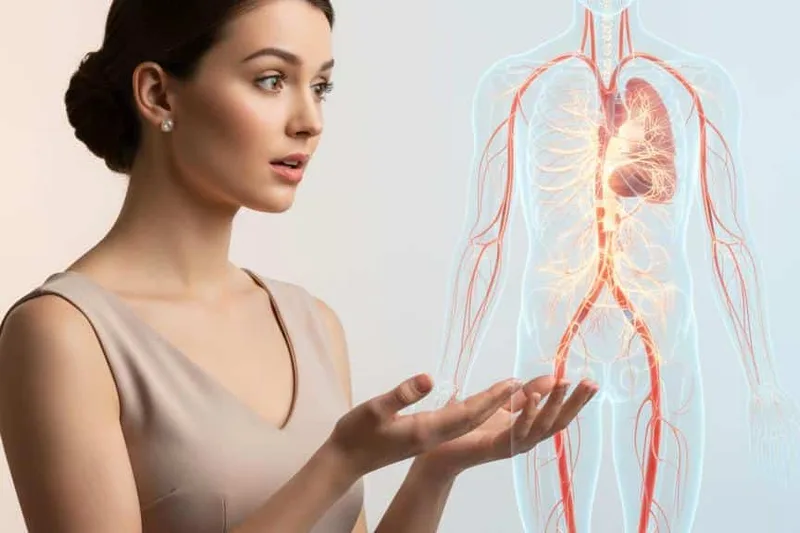
Imagine that there is a huge traffic jam on the main road you always take, and the road is completely blocked. What do you do then? Most of the time, we ask someone who knows the area well or check Google Maps, and take a small side road to get to our destination without getting stuck, right? Surprisingly, this is exactly what happens inside our body. If a major blood vessel in our body, that is, a blood vessel, is blocked for some reason, the body creates a system of 'side roads' that we are going to talk about in this article today.
Simply put, what is collateral circulation?
The name may sound a bit complicated, but it's actually quite simple. Collateral Circulation is the process by which, when a major blood vessel (an artery or vein) in our body becomes blocked or damaged, an alternative, or "backup" system of blood vessels is created to carry blood.
Simply put, this is our body's natural 'bypass' system . Just like I said before, when the main road is blocked, we look for side roads, the body also creates new side roads for blood flow. This is an amazing defense mechanism in our body.
How does this natural bypass system work?
Now you might be thinking, "So these side roads are suddenly created?" Actually, this can happen in two ways.
1. Enlargement of existing small blood vessels: Our body has a network of very small, normally unused blood vessels that are connected to our main blood vessels. When a main vessel starts to become blocked, the body recognizes this situation. Then, based on signals from the brain and various systems in the body, those small blood vessels gradually begin to enlarge and widen. Then, the blood that could not pass through the main vessel starts to travel along these newly widened side roads.
2. New blood vessel formation: Sometimes, especially when a major blood vessel gradually becomes blocked, the body starts to create new blood vessels. In medicine, we call this process angiogenesis . The body realizes that the amount of blood going to an organ is reduced. At that time, that organ itself releases chemical signals, saying, "We don't have enough blood, make new roads." Accordingly, these new blood vessels are formed.
In particular, research has found that regular aerobic exercise , such as running, brisk walking, and swimming, encourages the formation of new blood vessels. That's why exercise is so good for the heart.
Does everyone have these extra blood vessels in their bodies?
Yes, we are all born with some amount of collateral blood vessel system. However , the number of these vessels in each person's body and their size can vary from person to person . It depends on many factors, including genetics and lifestyle.
These extra blood vessels can belong to three main types.
| Blood vessel type | Simply put... |
|---|---|
| Arteries | These are the main, large vessels that carry oxygen-rich blood from the heart to the rest of the body. |
| Veins | These are the vessels that bring used blood (deoxygenated blood) from parts of the body back to the heart. |
| Capillaries | These are the smallest, most delicate blood vessels. Oxygen and nutrients are exchanged from the blood to the cells through these. |
In what types of disease conditions is this collateral circulation important?
This natural bypass system can help us with any condition that blocks blood vessels. This is especially important for people with the following conditions:
- Atherosclerosis: This is the hardening of the arteries due to the build-up of fat and cholesterol in the walls of the arteries. It's like rust building up inside a water pipe. As the artery gradually becomes blocked, the body has time to form collateral arteries.
- Coronary Artery Disease: Blockage of the arteries that supply blood to the heart. This is the main cause of heart attacks. Even if someone with a good collateral system has a heart attack, the damage caused can be reduced to some extent.
- Ischemic Stroke: A stroke caused by a blockage in an artery supplying blood to the brain.
- Peripheral Artery Disease (PAD): Narrowing of the arteries that supply blood, especially to the legs. This can cause pain in the legs when walking.
But here's something very important that we all need to understand. This collateral circulation is not magic or a cure-all . It's just a defense mechanism of the body.
These extra blood vessels cannot always completely prevent ischemia , or reduced blood supply to an organ, caused by these conditions. Sometimes, if the main vessel is suddenly blocked, the extra vascular system may not be able to supply blood as quickly.
Therefore, if you have a condition like this, you should definitely see your doctor and get proper treatment , rather than relying solely on this natural system. This could be the difference between life and death.
How long does this extra vascular system last?
Once collateral circulation is established, those enlarged extra blood vessels can help maintain normal blood flow in the body for months, even years.
However, as we age, these extra blood vessels gradually shrink, or start to shrink in size. We call this rarefaction . This condition can occur especially quickly in people with cardiovascular disease. When extra blood vessels shrink in this way, their ability to help if a new main vessel becomes blocked also decreases. That is why it is said that we should take more care of our health as we age and have other diseases.
In which parts of the body is this system found?
This collateral circulatory system is located in various parts of our body. This protective system can be seen anywhere there is a risk of blood vessel blockage.
| Body part | Importance |
|---|---|
| Heart | Helps reduce damage to the heart during a heart attack. |
| Brain | It helps to some extent to prevent brain cell death in the event of a stroke. |
| Legs and feet | Helps reduce pain when walking in people with peripheral artery disease (PAD). |
| Hands | If the arteries supplying blood to the hands become blocked, it helps maintain hand function. |
| Stomach and lungs | This system also operates in the event of blockages in the major blood vessels connecting these organs. |
In short, collateral circulation is a wonderful ability that our bodies have to fight against a blocked blood vessel. It's not a foolproof way to completely prevent the damage that can occur from a heart attack or stroke. But in some cases, it can be a valuable, life-saving tool.
Medical researchers are currently investigating the possibility of creating artificial collateral blood vessels and transplanting them into patients. If successful, this research could provide great relief to many people suffering from vascular diseases in the future.
Take-Home Message
- Collateral circulation is our body's natural 'bypass' or 'backup' blood vessel system.
- Its function is to provide alternative routes for blood to flow when a major blood vessel becomes blocked.
- Regular aerobic exercise encourages the development of this natural bypass system.
- While this is a very useful defense mechanism, keep in mind that it is not a final solution or cure for conditions like heart disease and stroke.
- If you have symptoms of a blocked blood vessel, such as chest pain, difficulty breathing, or pain in your legs when walking, see your doctor immediately . Trust in natural systems and avoid delaying treatment.


💬 Comments (0)
No comments yet. Be the first to share your thoughts here.
Add Your Comment