

We all want to be healthy, right? But sometimes, things can happen inside our bodies without us knowing. Your colon, the large intestine where the food we eat is digested and the waste products we leave behind, can sometimes develop small growths on the inside. That's what doctors call `(Colon Polyps)`. Don't be scared when you hear this name, okay? Because most of these polyps are harmless. However, there are some types that can turn into cancer if left untreated for a long time. That's why it's very important for us all to be aware of these `(Colon Polyps)`.
So what are these colon polyps?
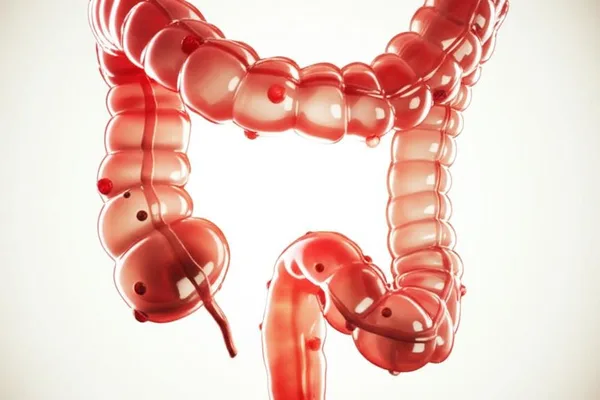
Simply put, these `(Colon Polyps)` are abnormal cell growths that form on the inner wall of your large intestine, that is, the mucous lining. They are like a small tumor. They can start as a single cell mass and gradually grow larger. These polyps can also form in other parts of our body, for example, in the stomach, nose, or in the female reproductive system.
The important thing is, just because you have these polyps doesn't mean they're cancer. However, most of the time, colorectal cancer starts with a polyp like this. That's why doctors look for these polyps during a colonoscopy and remove them if they are.
Are there different types of polyps? How do they differ?
Yes, there are different types of polyps that form in the colon. Doctors classify them based on two main factors.
One is the shape of the polyp .
- There are some polyps that look like little mushrooms that have sprouted. That means they have a little stalk and a head on top of it. These are called ``Pedunculated`` polyps.
- The other type is a flat, lump-like growth that is attached to the intestinal wall without a stalk. These are called ``Sessile`` polyps.
The other way is by the microscopic features of these polyps. That is, by the way the cells are made up. It is the process by which these cells grow that determines whether a polyp can turn into cancer or not. Therefore, the cancerous potential of each type of polyp is different.
Here are some of the main types of polyps seen:
- Adenomatous polyps (adenomas): These are the most common. There are also subtypes of these:
- Tubular adenomas
- Villous adenomas
- Tubulovillous adenomas
- Serrated polyps: There are also different types of these.
- Hyperplastic polyps
- Sessile serrated lesions
- Traditional serrated adenomas
- Hamartomas (juvenile polyps): These are usually seen in young people.
- Inflammatory polyps (or pseudopolyps): These are not actually polyps, we'll talk about that later.
Classification of polyps according to cancer risk: Neoplastic and Non-neoplastic
This is the most important classification. ``Neoplastic`` polyps are the types that can become cancerous. ``Non-neoplastic`` polyps are the types that are not (or have a very low) chance of becoming cancerous.
- (Neoplastic) polyps ( cancer risk ):
- All adenomatous polyps (Adenomas)
- Sessile serrated lesions
- Traditional serrated adenomas
- (Non-neoplastic) polyps (low/no risk of cancer):
- Hyperplastic polyps
- Juvenile polyps (Hamartomas)
- Inflammatory pseudopolyps
How common are these colon polyps?
This is actually a more common condition than you might think, especially as you get older. On average, about 20% of adults, or about one in five, may have these polyps. In people over the age of 50, about 40%, or about four in ten, may have this condition. Don't be surprised, some children also develop them, as many as 6% of them. Anyone, regardless of race, religion, or gender, is at risk of developing these polyps and colon cancer. This condition is slightly more common in Western countries.
How many colon polyps become cancerous?
Here's what you need to understand. Many types of polyps have the potential to become cancerous. That's why doctors remove them during a colonoscopy. However, only a very small number actually become cancerous. Also, it takes a long time for a polyp to become cancerous. That's why it's important to have regular colonoscopy exams and remove these polyps before they become cancerous.
Roughly speaking, about 75% of colon cancers start as adenomatous polyps. Also, about 80% of all polyps found are adenomas. However, only about 5% of these adenomas actually become malignant. It is estimated that a typical polyp has an 8% risk of becoming cancerous in 10 years and a 24% risk in 20 years.
What are the symptoms of colon polyps?
Here's where things get a little confusing. Most of the time, these polyps don't cause any symptoms. Even colon cancer can have no symptoms in the early stages. That's why screening tests are so important. Usually, by the time symptoms appear, the polyp has already turned into cancer.
However, very rarely, the following symptoms may occur:
- Blood in the stool or other symptoms: If a polyp is bleeding, you may see blood in your stool or have blood on your toilet paper. Sometimes the bleeding is so slow that you may not even notice it. But over time, your body will start to notice it. You may develop iron deficiency anemia , which can cause symptoms like extreme fatigue and weakness.
- Unexplained changes in bowel habits: Rarely, some people may suddenly develop persistent diarrhea or constipation . Or they may have an increase in the amount of mucus-like fluid that comes out with their stool. There are many other causes for these symptoms than polyps. However, it's a good idea to see a doctor, especially if you can't figure out what's causing the change.
The most important thing: It is wise to talk to a doctor and get a test like a colonoscopy after the age of 45-50 (or earlier if someone in your family has had this disease) rather than waiting for symptoms to appear.
Why do we get these colon polyps?
Most of the time, these polyps develop sporadically. That is, without any specific cause. However, some people can develop these polyps due to hereditary syndromes. In such cases, there is a possibility of a large number of polyps developing and an increased risk of cancer.
What is the main cause of polyps?
The main cause is genetic mutations . Simply put, when our cells divide and make new cells, small mistakes occur in the genetic code of those cells. Because skin cells, including the colon, are constantly renewing themselves, these mistakes are more likely to occur. When these genes change, the way cells grow and behave changes.
Some genetic mutations are passed down from family to family (hereditary syndromes). Others appear to occur randomly, but there are many possible causes. Researchers believe that random polyps are also caused by genetic factors, as well as environmental risk factors.
What are the additional causes of polyps?
1. Genetics:
If a close family member (parent, sibling, child) has had polyps, you are more likely to develop them. Also, certain genetic conditions can cause polyps. Some examples are:
- Familial Adenomatous Polyposis (FAP)
- Peutz-Jeghers syndrome
- MUTYH-associated polyposis
- Gardner syndrome
- PTEN hamartoma tumor syndrome
- Turcot syndrome
- Serrated polyposis syndrome
- Juvenile polyposis syndrome
2. Environmental and Lifestyle Factors:
This means things like the environment we live in, our lifestyle habits, etc. These can also affect the development of polyps.
- Aging: The risk increases with age.
- Smoking.
- Excessive alcohol consumption.
- High-fat, low-fiber diet: Eating more red meat, processed meats, and fewer fruits and vegetables.
- Lack of exercise.
- Obesity.
- Diabetes.
- Inflammatory Bowel Disease (IBD): Conditions such as Crohn's disease or ulcerative colitis.
Special case: Inflammatory pseudopolyps
As mentioned earlier, these are not “real” polyps that are caused by genetic mutations. They are caused by the healing of ulcers in the colon, which leave behind scar tissue that looks like skin bumps. Chronic inflammation of the colon (or colitis) is the main cause of these lesions. They are often associated with conditions such as inflammatory bowel disease (IBD). They do not turn into cancer.
How do doctors find these polyps?
The best and most accurate way to find polyps in the colon is a colonoscopy. In this, a flexible tube with a small camera and light (colonoscope) is inserted through the anus and the entire colon is examined. Although other ``imaging tests`` can find polyps, the special advantage of ``colonoscopy`` is that it can find polyps, remove them at the same time, and take small pieces for examination (biopsy).
The tissue samples taken in this way are sent to a laboratory and examined under a microscope by a pathologist. Only then can we know exactly what type of polyp it is and whether it contains cancer cells.
A colonoscopy requires special preparation to cleanse the colon the day before the test, and the test is performed under anesthesia, which can be a bit uncomfortable for some people. Therefore, sometimes doctors may first perform simpler screening tests. However, if polyps are found in another test, a colonoscopy will be required to remove them.
There are several additional tests that can be done if polyps are suspected:
- Blood tests: A complete blood count (CBC) can detect anemia caused by prolonged bleeding. A basic metabolic panel can detect electrolyte imbalances in the body. If someone in your family has hereditary polyposis syndrome, you may also have genetic testing to see if you have the gene mutation.
- Stool tests: A ``Fecal occult blood test (FOBT)`` checks for small amounts of blood in the stool that are too small to be seen with the naked eye. Other tests check for ``DNA`` in the stool to see if there are any cancerous changes.
- Imaging tests: As an alternative to a regular colonoscopy, virtual colonoscopy (a type of CT scan) and capsule endoscopy (a small capsule that you swallow to look at your colon) can be done. A barium enema can also sometimes show polyps.
How many polyps are found during a routine colonoscopy?
It’s best to have no polyps at all. However, it’s normal to have one or two polyps, or even a few more. Doctors look at the number of polyps you have, their size, location, and type. Because polyps grow very slowly, having a few small polyps means you’re still at a low risk of developing colon cancer.
However, you may be considered at slightly higher risk of developing cancer in the following cases:
- If there are more than three polyps.
- If the polyps are larger than 10 millimeters (1 centimeter).
- If the polyps are on the right side of the colon (e.g., sigmoid colon or transverse colon).
- If you have polyps of the `(Villous)` or `(Tubulovillous adenomas)` type.
- If you have polyps of the ``Sessile serrated lesions'' or ``Serrated adenomas'' type.
- If you have hereditary polyposis syndrome.
How are these colon polyps treated?
The standard treatment is to remove polyps from your colon . However, if you only have non-neoplastic polyps, which are not at risk of cancer, you may not need to have them removed. However, it is often not possible to tell for sure whether a polyp is neoplastic or non-neoplastic until it is examined under a microscope. It can take a week or two for your biopsy results to come back.
By removing neoplastic polyps, you can reduce your risk of developing colon cancer by about 80%! However, once you have polyps, they can come back. Your doctor will look at the type of polyps you have had and assess your risk of developing polyps in the future. The next colonoscopy will be scheduled based on that risk.
Colon Polyp Removal
The doctor who performs the colonoscopy – usually a gastroenterologist or colorectal surgeon – can remove many polyps during your procedure. This simple procedure is called a polypectomy. However, if you have large or difficult-to-remove polyps, special procedures (endoscopic mucosal resection or endoscopic submucosal dissection) may be used to remove them.
Colonoscopy Surveillance
If your colonoscopy doesn't find any neoplastic polyps, you'll probably need to have your next test in about 10 years. However, if your neoplastic polyps were removed, the timing of your next test may vary. Your doctor may recommend a repeat test in one, three, five, or seven years, depending on your individual risk factors.
Can colon polyps be prevented?
There is no way to prevent the genetic mutations that cause polyps. However, taking good care of your overall health can help reduce your risk of developing polyps to some extent.
- Eating more whole grains, vegetables, and fruits.
- Reducing animal fat (especially red meat, processed meat).
- Exercising regularly.
- Avoid excessive alcohol consumption and smoking.
These things also help prevent colon cancer.
So how serious are these colon polyps?
Colon polyps can be serious because they have the potential to turn into cancer. But remember, most polyps are not cancerous when they are found. Some can become cancerous over time if left untreated. That's why doctors remove them when they are found.
What should I ask my doctor about my colon polyps?
You can ask the doctor some questions like:
- What type of `(Colon Polyps)` do I have?
- Are my polyps ``neoplastic`` (with a risk of cancer) or ``non-neoplastic`` (without a risk of cancer)?
- Is my risk of developing colon cancer low, normal, or high?
- Should I get genetic testing for hereditary polyposis syndromes?
- How soon can polyps grow back after being removed?
- When should I have my next colonoscopy?
Many people dread their scheduled colonoscopy and wonder if they can postpone it. “Why go to all this trouble just to make sure I don’t have polyps?” you may wonder. But if you do have polyps, a colonoscopy is the best way to detect and treat them before you even know it.
It can be scary to find out that you have polyps in your colon. However, many people have this condition, and many never develop cancer. You don't have to worry about a polyp that has been found and removed. The important thing is to find it and remove it in a timely manner, before it becomes cancer.
Finally, things to remember (Take-Home Message)
So, you now know a lot about colon polyps, right? This is nothing to be afraid of.
The most important thing is to talk to a doctor at the right time, especially after the age of 45-50, and get tests like a colonoscopy if necessary. Then these polyps can be identified and simply removed before they become cancerous.
Maintaining a healthy lifestyle can also help reduce this risk. Things like a balanced diet, exercise, and avoiding smoking and excessive alcohol consumption are good for your colon health, as well as your entire body.
If you have any further questions about this, don't hesitate to ask your family doctor or a gastroenterologist. Stay healthy!




💬 Comments (0)
No comments yet. Be the first to share your thoughts here.
Add Your Comment