
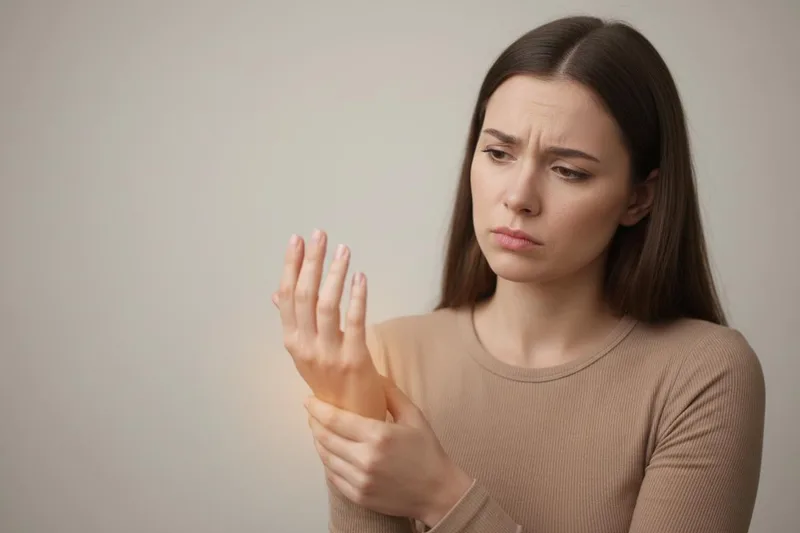
Have you ever had a small wound on your arm or leg, and even after it healed, you still felt an unbearable pain and burning sensation? Sometimes the wound area swelled, the skin changed color, and you sweated strangely? Many people think that this is normal when they experience this. However, this could be a symptom of a rare but very painful condition called 'Complex Regional Pain Syndrome' or CRPS . Let's talk about this in simple terms today.
What exactly is CRPS?
Simply put, CRPS is a condition that causes severe, long-lasting pain in a specific part of your body, especially an arm, leg, hand, or foot . This pain can be accompanied by a number of other symptoms, such as skin discoloration and swelling.
Doctors believe that the main cause of this is a change in the functioning of our nervous system, which is the brain, spinal cord, and the nervous system throughout the body (central and peripheral nervous systems). Think of our body's pain signaling system as an alarm that goes off when a burglar breaks into our house. When we get a minor injury, this alarm goes off, which means we feel pain. But in CRPS, this alarm continues to go off even after the injury has healed. This means that we can no longer control the pain signals.
There are two main types of CRPS:
| CRPS type | Simple explanation |
|---|---|
| Type I | This occurs after an injury or illness that does not directly damage a nerve. For example, this condition can occur after something like a broken arm or leg. It was previously called 'reflex sympathetic dystrophy'. |
| Type II | This occurs when a nerve is clearly damaged by an injury. This was previously called 'causalgia'. |
This condition is slightly more common in women than in men. And although it can develop at any age, it is usually most common after the age of 40.
What are the symptoms of CRPS?
The symptoms of CRPS can vary from person to person, and their severity can vary. Symptoms usually begin to appear within four to six weeks of an injury, fracture, or surgery.
The main and most severe symptom is pain . This pain is not just a normal ache.
- A pain that feels like a constant burning sensation .
- A pain that feels like a needle pricking or tearing .
- Often, the pain feels like it's coming from deep within the arm or leg that is in pain.
In addition to this pain, many other symptoms can be seen in the affected area. For convenience, let's look at these in a table .
| Characteristics category | Explanation |
|---|---|
| Changes in sensitivity | - Feeling unbearable pain even if you get a small bump or a piece of clothing on your body. - Feeling extreme pain from something that normally causes pain (e.g. a small pinch). - Sometimes feeling numb. |
| Skin changes | - Swelling: Swelling can come and go or be constant. - Temperature: Feeling hotter or colder in one arm/leg than the other. - Color: Changes in skin color. It can be patchy, pale, purple, or red in places. - Nature: The skin may become shiny and thin. Or there may be excessive sweating. |
| Changes in functionality | - Inability to move the painful arm/leg properly and feeling of joint stiffness. - Difficulty carrying weight with that arm/leg. |
| Nails and hair | Nails or hair in that area may grow faster than normal or not grow at all. |
The most important thing is to see a doctor as soon as possible if you have these symptoms, because this condition is much easier to treat if it is detected early.
Why does CRPS develop?
Researchers still don't know exactly why one person with the same injury develops CRPS and the other doesn't, but they believe it's due to an abnormal reaction in our immune and nervous systems .
Most (over 90%) cases of CRPS are caused by damage to the very delicate sensory nerve fibers in an arm or leg due to an injury.
Some common reasons are:
- Fracture: A fracture, especially in the wrist , is a major cause of CRPS. Sometimes, even with a cast on, the nerve can be compressed.
- Surgery: During surgery, nerves can be damaged due to the cutting and stitching of the skin.
- Sprain: When a joint is sprained, the nerves around it can become pinched.
- A burn, bruise, or cut: These types of external injuries can also damage the nerves beneath the skin.
Sometimes CRPS can occur without any obvious injury, and some people are at higher risk of developing the condition.
- Nervous system disorders: People with diseases like diabetes have a reduced ability to heal their nerves. People who smoke also have a harder time recovering.
- Immune system problems: People with conditions like asthma have higher levels of inflammatory chemicals (cytokines) in their bodies, which puts them at higher risk of CRPS.
- Genetic causes: Although very rare, there have been reports of several family members developing CRPS.
How does a doctor diagnose CRPS?
There is no specific test to diagnose CRPS. Therefore, a doctor will diagnose the condition based on your symptoms, your medical history (recent injuries, surgeries), and a physical examination.
Your doctor will mainly focus on these things:
- Is there unusually severe pain beyond the size of the wound?
- Is there a change in the appearance, temperature, and texture of the skin in the affected area?
- Are there other medical conditions that can cause these symptoms?
Sometimes an ultrasound scan or MRI scan may be done to look for underlying nerve damage. Also, tests such as EMG (Electromyography) may be done to rule out other neurological conditions that may cause similar symptoms.
What are the treatments for CRPS?
The main goals of CRPS treatment are to reduce pain, restore function in the affected arm/leg, and maintain your quality of life. The sooner treatment begins, the better the outcome. If left untreated, the pain can worsen, the arm/leg may become stiffer, and you may become unable to move it.
A combination of several treatment methods is the most successful method.
Physical & Occupational Therapy
This is an essential and important part of CRPS treatment.
- A physical therapist will teach you specific exercises that can increase blood flow to the area of pain and improve flexibility and strength.
- An occupational therapist teaches new ways to perform daily tasks (e.g., getting dressed, eating) with less pain.
In addition, there are special methods such as 'Mirror Therapy'. In this, you sit in front of a mirror, hide the painful arm/leg, and place the healthy arm/leg in front of you. Then, the mirror shows that the painful arm/leg is moving normally. This has been proven to 'trick' our brains into reducing pain.
Lifestyle changes
- Avoid smoking: Smoking is a major obstacle to nerve healing.
- Managing other diseases: It is essential to manage diseases like diabetes well.
- Elevating the arm/leg: Elevating the painful arm/leg while sleeping or resting, such as on a pillow, will reduce swelling.
- Exercise: Daily exercise is very good for blood circulation.
- Compression stockings: Your doctor may recommend that you wear these to control swelling.
Mental health support
It is common to feel depressed, angry, and anxious when living with chronic pain. These things can make the pain worse. Therefore, seeking psychological counseling can be a great help in coping with the pain mentally and emotionally.
Medicines (drugs)
There is no specific medication approved for CRPS. However, a doctor may prescribe various medications to help control symptoms.
- Painkillers ( NSAIDs )
- Skin pain relief creams
- Some antidepressants and anti-seizure drugs for nerve pain
- Botox injections
Other specific treatments for pain control
If other treatments are difficult to control pain, a doctor may resort to more complex treatments like this.
- Sympathetic nerve blocks: Injecting an anesthetic drug to temporarily 'sleep' the nerves that carry pain signals to the brain.
- Spinal cord stimulation: A thin electrode is surgically inserted near the spinal cord and delivers subtle electrical signals that block pain signals.
- IV ketamine infusion: A low dose of the drug ketamine is given through a vein for several days.
What can you expect when living with CRPS?
Not everyone's experience with CRPS is the same. For many people, over time and with proper treatment, symptoms will decrease and they will almost completely recover.
However, in rare cases, the condition can become severe or spread to other parts of the body. Therefore, it is important to control the pain and maintain function in the arm/leg. With the right treatment plan, many people can live active lives with CRPS.
Is CRPS a mental illness?
No. CRPS is not a mental illness. It is a neurological condition. However, the severe pain and impact on life caused by CRPS can cause or worsen mental health problems such as anxiety and depression.
Take-Home Message
- CRPS is not something you make up in your mind. It's a real, real condition that causes severe pain.
- Usually, after a minor injury, if there is excessive inflammation, pain, and changes in skin color and temperature that are out of proportion to the injury, be concerned.
- It is very important to diagnose the disease and start treatment as soon as possible. This can prevent long-term complications.
- Treatment is not one thing. It is a team effort that combines physical therapy, medication, and psychological support.
- If you have the slightest suspicion about these symptoms, please talk to your doctor about it.


💬 Comments (0)
No comments yet. Be the first to share your thoughts here.
Add Your Comment