
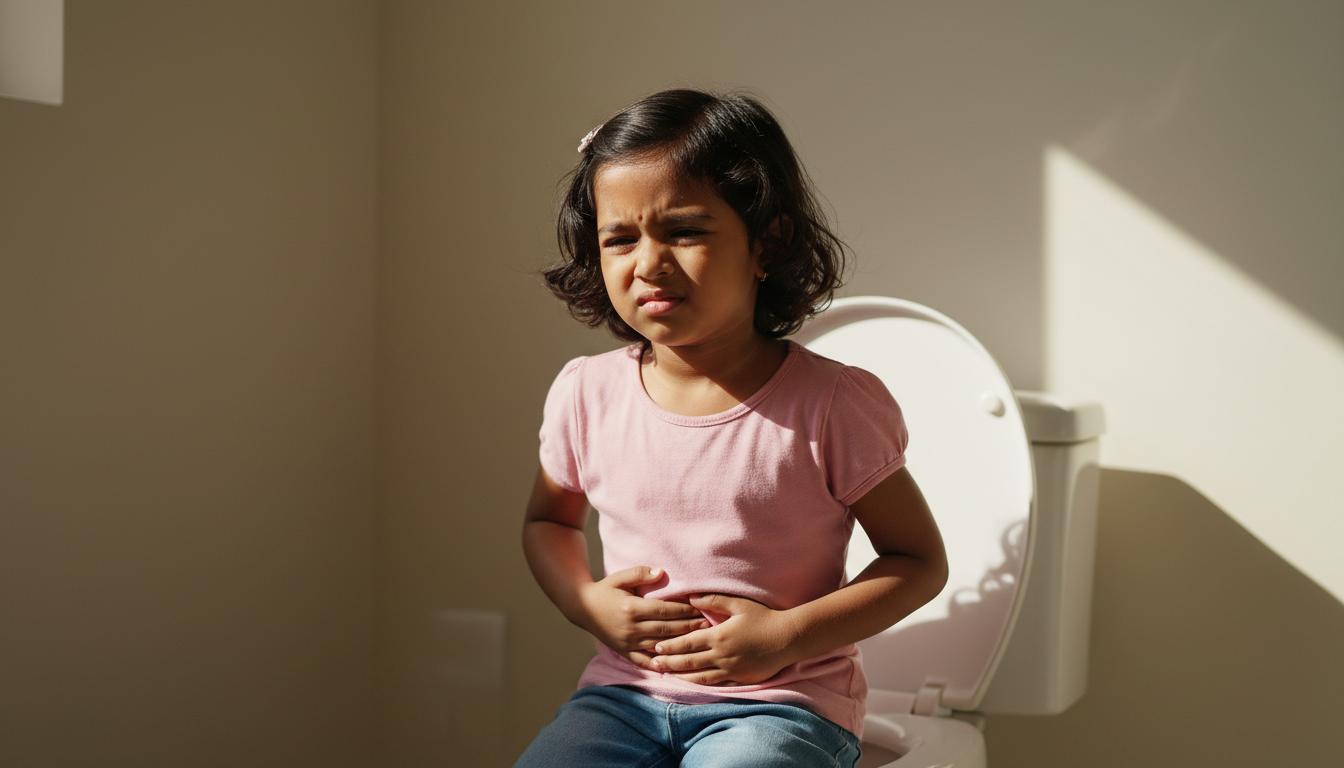
Picture this: It is time for your child’s morning routine, but instead of a smooth start, tension fills the bathroom. Your little one is crying, crossing their legs, or hiding behind the couch, desperately trying to avoid going to the toilet. If this sounds familiar, you are certainly not alone. Childhood constipation is one of the most common digestive concerns parents face worldwide. While it can be deeply distressing for both you and your child, understanding the underlying mechanism can help you restore comfort and regularity with confidence.
- Definition: Constipation involves infrequent bowel movements (fewer than three per week), passing hard or dry stools, or experiencing pain during evacuation.
- Primary Culprit: Inadequate dietary fiber and fluid intake combined with behavioral stool withholding are the leading causes in children.
- First-Line Action: Gradually increase water intake and high-fiber foods (fruits, vegetables, whole grains) while establishing a relaxed daily toilet routine.
- Medical Safety: Never administer over-the-counter laxatives or enemas without consulting a pediatrician.
BMI Calculator
Know your body mass index (BMI) and weight classification
What Exactly Is Childhood Constipation?
From a clinical perspective, constipation is defined by the consistency and ease of passing stool rather than a strict numerical schedule, though having fewer than three bowel movements per week is a standard benchmark. When a child is constipated, stools linger in the colon for too long, allowing the large intestine to absorb excess water. This transforms the stool into a hard, dry mass that is painful and difficult to pass.
Common clinical indicators in children include:
- Straining or crying during bowel movements.
- Hard, pebble-like, or excessively large stools.
- Complaints of abdominal pain, cramping, or bloating.
- Small streaks of bright red blood on the toilet paper due to minor surface fissures (anal fissures).
- Soiling in underwear (encopresis), which occurs when liquid stool leaks around an impacted, hard stool blockage.
Why Does Constipation Happen? Understanding the Root Causes
Childhood constipation is rarely caused by a single factor; it is usually a complex interplay of diet, physiology, and behavioral habits.
1. Dietary Imbalances
A diet low in fluid and dietary fiber is a primary catalyst. Fiber acts as a natural broom, adding bulk and holding water in the stool to facilitate smooth transit through the gastrointestinal tract. Conversely, diets heavy in processed foods, white bread, fast food, and dairy products tend to slow bowel motility.
2. Behavioral Withholding
Many children ignore the urge to defecate. This can be triggered by busy play schedules, anxiety over using public or school restrooms, or a previous painful bowel experience. When a child intentionally withholds stool, the rectum stretches, sensitivity diminishes over time, and the cycle of hard stools worsens.
3. Transition Periods and Toilet Training
Milestones such as transitioning from breast milk or formula to solid foods, moving to cow's milk, or undergoing toilet training can temporarily disrupt a child's bowel habits as their digestive system adapts.
4. Medications and Underlying Conditions
Certain medications, such as iron supplements or specific prescription drugs, can cause constipation. While rare, persistent constipation can occasionally signal an underlying medical condition, requiring thorough clinical evaluation.
When to Seek Emergency Medical Attention
Emergency Red Flags - Seek Immediate Care (Call 911 in the US/Canada, 999 in the UK, or visit your nearest ER / A&E):
- Severe, sudden, or worsening abdominal pain accompanied by persistent vomiting.
- A distended, rigid, or hard abdomen.
- High fever accompanied by gastrointestinal distress.
- Rectal bleeding that is continuous or heavy (not just minor streaks on toilet paper).
- Involuntary weight loss or failure to thrive.
Comparison: Healthy Bowel Habits vs. Constipation Risk Factors
| Clinical Aspect | Healthy Management (Do's) | Risks & Pitfalls (Don'ts) |
|---|---|---|
| Hydration | Encourage regular water intake throughout the day based on age and activity. | Relying solely on sugary juices or sodas that lack proper rehydrating balance. |
| Dietary Fiber | Gradually introduce fruits, vegetables, beans, and whole grains. | Making abrupt, massive increases in fiber without adequate fluid intake. |
| Medication Use | Consult a pediatrician before starting any stool softeners or laxatives. | Administering adult or over-the-counter laxatives/enemas without medical guidance. |
Evidence-Based Management and Prevention Strategies
Managing childhood constipation successfully requires patience, consistency, and a structured approach aligned with pediatric guidelines from organizations like the NHS and Mayo Clinic.
- Gradual Dietary Modifications: Increase fiber intake slowly over several weeks. Pair high-fiber foods with ample water to ensure proper stool softening.
- Structured Toilet Routines: Schedule 5 to 10 minutes on the toilet approximately 15 to 30 minutes after meals, taking advantage of the body's natural gastrocolic reflex. Ensure a footstool is used so the child's knees are higher than their hips, optimizing pelvic floor alignment.
- Encourage Physical Activity: Regular exercise stimulates normal bowel motility and muscle tone.
Scientific References:
1. NHS UK. Constipation in children - Health A to Z. Available from: https://www.nhs.uk/conditions/constipation-in-children/
2. Mayo Clinic. Pediatric Constipation: Symptoms and Causes. Available from: https://www.mayoclinic.org/diseases-conditions/constipation-in-children/symptoms-causes/syc-20354242
3. Centers for Disease Control and Prevention (CDC). Healthy Eating and Digestive Health in Children. Available from: https://www.cdc.gov/nutrition/
4. National Institutes of Health (NIH) / PubMed. Management of Childhood Functional Constipation. Clinical Guidelines Review.






No comments yet. Be the first to share your question or experience below.