
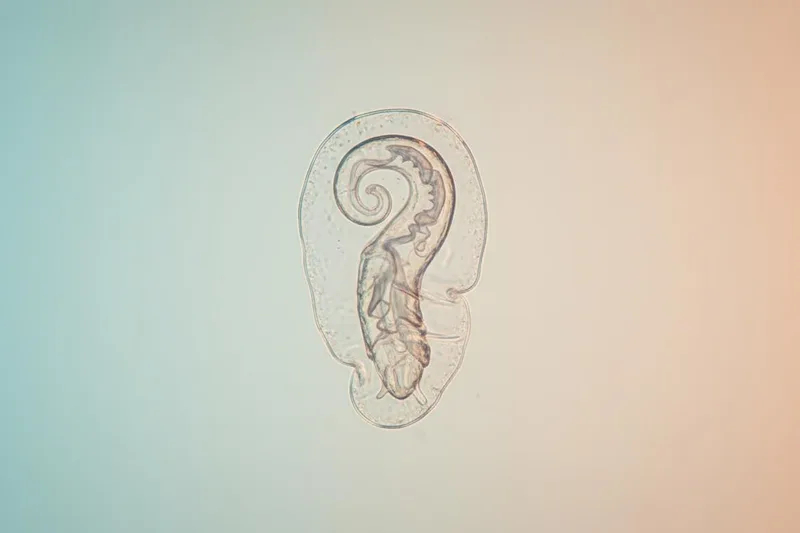
Have you ever heard of this disease called `(Cysticercosis)`? Maybe this name sounds a little strange. But this is something we all need to be aware of, because this is a condition caused by a parasite that grows inside our bodies. Sometimes it can be present in the body without any major symptoms. Let's talk about this in detail and simply today.
What is Cysticercosis?
Simply put, `(Cysticercosis)` is a disease that occurs when pork tapeworm (eggs of the parasite `(Taenia solium)`) enters our bodies. These eggs form small cysts inside our bodies. They are like little sacs filled with water. These cysts are what cause various symptoms.
You can get this if you eat or drink food or drink that contains eggs from the T. solium parasite, or if you touch feces that contain eggs and put your hands in your mouth without washing them properly. When these eggs enter our intestines, they develop into larval tapeworms, which then travel to other parts of the body, such as the brain and eyes, to form cysts.
What is the difference between Cysticercosis and Taeniasis?
It's better not to confuse these two, okay?
- Cysticercosis: This occurs when you accidentally ingest the eggs of the parasite T. solium. These eggs form cysts inside the body.
- Taeniasis: It occurs when you eat undercooked pork that contains the larvae of the parasite ``T. solium''. These larvae develop into large tapeworms inside your intestines.
Then, the eggs that cause `(Cysticercosis)` are released into the environment through the feces of a person with `(Taeniasis). Do you understand?
Who does this affect the most?
Cysticercosis is most common in people living in or traveling to rural areas of Central and South America, sub-Saharan Africa, parts of Asia, and Eastern Europe. It is also more common in people who have migrated from these countries. If someone in your household has Taeniasis (that big tapeworm), you are at risk of developing Cysticercosis.
It is estimated that about 2.7 million people worldwide have cysticercosis. In some areas where the disease is common among pigs, about 10% to 20% of people develop symptoms of cysticercosis. Although it is not as common in North America, cysticercosis has been found to be the cause of about 2% of emergency room visits in the United States for seizures.
What are the symptoms of Cysticercosis?
The symptoms depend on where the cysts are located. These cysts can develop anywhere in the body - in the brain, eyes, heart, lungs, and liver.
However, the most severe and common symptoms occur when these cysts develop in the nervous system, that is, the brain and spinal cord. This is called neurocysticercosis .
Symptoms of Neurocysticercosis (brain and spinal cord cysts):
- Seizures: This is the most common symptom. Sudden loss of consciousness and convulsions. Imagine how scary it would be if someone suddenly had a seizure without warning.
- Headaches: Not just a regular headache, but a severe, persistent headache.
- Nausea, vomiting, and confusion: This is also called ``cysticercal encephalitis.'' These symptoms can occur when the pressure inside the brain increases.
- Stiff neck.
Important: If you have symptoms like these, especially if you have a new seizure, you should see a doctor immediately.
Symptoms of cysts that develop outside the brain and spinal cord (extraneural cysticercosis):
Tumors that develop outside the brain usually do not cause major symptoms, but they can cause problems if they develop in certain locations.
- Subcutaneous cysticercosis: Sometimes small lumps can appear under the skin.
- Ophthalmic cysticercosis: This can cause eye problems:
- Eye pain.
- Double vision (diplopia).
- Inflammation of the eyes (uveitis or retinitis).
- Limited eye movement.
- Protrusion of the eyes (proptosis).
- Loss of vision.
What is the reason for this?
As we mentioned earlier, `(Cysticercosis)` is caused by the ingestion of the eggs of the parasite `(T. solium)`. These eggs are:
- Eating unwashed fruits and vegetables.
- By drinking unclean water.
- By touching feces, touching your mouth with hands that are contaminated with those eggs, or by eating food.
These eggs hatch in our intestines, and the tiny worms (`(larvae)`) that emerge go through the body's tissues and form the so-called cysts. Most of the time, these cysts do not show symptoms unless there are many in one place. You can have them for weeks or even years without knowing that they are in your body. Symptoms appear when these cysts start to die. Then, when our body's immune system is activated and responds to them, the problems begin.
How does Cysticercosis affect the brain?
After the T. solium eggs hatch in the intestines, the larvae can travel to the brain and form cysts. Sometimes these cysts can remain in the brain for a long time without causing any problems.
However, when these tumors start to die, our immune system recognizes them as enemies and starts to attack them. This causes inflammation in the brain. If there are many tumors, they can cause a ``mass effect`` on the brain before they die. This inflammation, or the pressure, can cause the brain to swell and become life-threatening. This is also why neurological problems such as seizures and headaches occur.
After the cysts die, calcifications may remain in the brain. These calcified cysticercosis nodules can also accumulate around them, causing edema.
How is Cysticercosis transmitted?
Cysticercosis is spread through the feces of an infected person. The T. solium worm lays eggs in the human intestine, and the eggs are passed out in the feces. Cysticercosis occurs when you ingest something contaminated with these eggs.
Just think, this feces can end up in the soil, water, plants, and the food we eat. You can accidentally ingest T. solium eggs through things like:
- Drinking unfiltered, unpurified water.
- Eating unwashed fruits and vegetables.
- Touching your mouth or eating food without washing your hands properly after going to the toilet or handling feces.
Important: Eating undercooked pork does not cause `(Cysticercosis)`. It causes `(Taeniasis)`, a disease caused by intestinal worms.
Is Cysticercosis contagious from person to person?
No, `(Cysticercosis)` is not transmitted directly from person to person. For you to get this disease, you have to ingest the `(T. solium)` eggs.
How to diagnose `(Cysticercosis)`?
If you have symptoms, a doctor will examine you and ask about your symptoms. They may also ask about your recent travel history. They may then do tests such as:
- Imaging: If you have symptoms related to your nervous system, your doctor will likely order a CT scan or MRI. This involves putting you inside a machine and taking pictures of your brain. The doctor can use these pictures to see if you have T. solium cysts.
- Blood tests: Sometimes blood is taken and tested. This looks for antibodies (cysticercosis serology test) against T. solium, or for parts of the parasite (antigens).
- Lumbar puncture: If your doctor suspects that you have cysticercosis in your brain or spinal cord , he or she may order a test to check your cerebrospinal fluid (CSF). This involves inserting a thin needle into your lower back and taking a sample of the fluid. This is similar to a blood test, and looks for antibodies or antigens to T. solium. This may sound scary, but it is a safe procedure.
- Biopsy: If you have a visible lump on your skin, your doctor may take a small sample of it and send it to a lab to check for signs of T. solium.
- Eye exam: Your doctor may also want to check for tumors inside your eyes that could be affecting your vision.
How is Cysticercosis treated?
There are various treatments for this. You may not need any treatment at all. Or your doctor may prescribe a combination of medications. Some people may need surgery. Your doctor will tailor a treatment plan to your specific condition.
What medications and treatments are used?
The doctor may prescribe medications or treatments such as:
- Corticosteroids: For example, medications like prednisolone and dexamethasone. These reduce the swelling and inflammation that occurs when the tumor dies.
- Antiepileptic/anticonvulsant medications: Medications like `(phenytoin)` and `(carbamazepine)`. These are given to control seizures.
- Antiparasitic medications: Medications like `(albendazole)` and `(praziquantel)` are sometimes given to treat the infection. However, great care is taken when giving these medications, because when the worms die, the swelling in the brain can increase. That is why these medications are often given along with medications that reduce inflammation.
- Surgery: Surgery may be required to remove some cysts, or if there is pressure due to increased cerebrospinal fluid (CSF), or to insert a small tube (shunt) to divert the fluid to another location.
How to avoid cysticercosis?
This is the most important part! There are simple, but very important things you can do to protect yourself from `(Cysticercosis)`. The most important things are to prepare food and water safely and wash your hands well.
- Wash your hands thoroughly with soap and water often, especially after using the bathroom, changing your baby's diaper, and before eating or preparing food.
- Wash fruits and vegetables thoroughly, and eat them peeled if possible.
- Wash cutting boards, counters, dishes, and cutlery thoroughly with soap after use.
- Do not drink untreated water. If you drink water from an unknown source, drink only bottled or boiled water.
- If you're drinking water, boil it well for about a minute, let it cool down, and then drink it.
- When traveling, if you can filter your water, use an " absolute 1 micron or less " filter (available at camping supply stores), and then dissolve iodine tablets and drink.
Remember: By following these precautions, you can protect yourself not only from `(Cysticercosis)`, but also from many other infectious diseases.
What can I expect if I have `(Cysticercosis)`?
Because cysticercosis often has no symptoms, it's hard to say exactly how the disease will affect you. Your doctor will develop a treatment plan that's specific to you. Sometimes, that may mean not treating cysticercosis at all.
Is Cysticercosis fatal?
Death from cysticercosis is very rare. Most of the symptoms are not caused by the disease itself, but by the immune system's response to the cysts as they die. If you have only a few cysts and mild symptoms, your chances of recovery are very good.
How do I take care of myself with Cysticercosis?
If you have been diagnosed with cysticercosis, keep an eye on your symptoms. Whether you have been prescribed treatment or not, if your symptoms do not improve or get worse, contact your doctor immediately.
When should I see a doctor?
If you have symptoms of cysticercosis, especially seizures, confusion, or unexplained nausea or vomiting, see a doctor immediately or go to the nearest emergency room.
Cysticercosis is a disease caused by the eggs of the parasite Taenia solium. Even if you don't hear much about it where you live, cysticercosis can cause serious illness. Whether you live in an area where cysticercosis is common or are traveling to one, following a few simple hygiene habits can help you stay safe.
Important things to remember (Take-Home Message)
- Cysticercosis is a disease caused by the ingestion of eggs of the pork tapeworm (Taenia solium), which causes cysts inside the body.
- It is spread through contaminated food, water, and poor hygiene, not through eating undercooked pork.
- Symptoms depend on where the cysts are located. If the cysts are in the brain (neurocysticercosis), severe symptoms such as seizures and headaches can occur.
- Washing your hands thoroughly and eating clean food and drinks is the best way to protect yourself from this.
- If you experience symptoms like seizures, severe headaches, or confusion , seek medical advice immediately. Don't worry, this condition can be controlled with proper treatment and medical advice.
I hope this information is useful to you. Stay healthy!
` Cysticercosis, tapeworm, neurocysticercosis, seizures, brain infections, hygiene, parasitic diseases


💬 Comments (0)
No comments yet. Be the first to share your thoughts here.
Add Your Comment