

Do you or someone you care about live with multiple sclerosis? Have you noticed that walking and doing daily chores feel harder lately? Sometimes, your doctor might prescribe a special medicine to help you walk a bit easier and faster.
This guide explains dalfampridine, a medicine designed to help adults with multiple sclerosis improve their walking speed. We will walk through how to take it safely, what side effects to watch for, and important safety tips.
Always talk to your doctor about your health history before starting any new medicine. Let us explore what you need to know about dalfampridine.
Key Takeaways About Dalfampridine
- Dalfampridine helps improve walking speed in people with multiple sclerosis.
- Always swallow the extended-release tablet whole with water. Never crush, chew, or split it.
- Tell your doctor if you have kidney problems or a history of seizures before starting.
- Watch out for dizziness or sleepiness, especially when driving or doing focused tasks.
- Seek medical help right away if you experience seizures or signs of an allergic reaction.
Know your body mass index (BMI) and weight classification
What Is Dalfampridine?
Dalfampridine is a prescription medicine used to help people with multiple sclerosis improve their walking ability. Think of it as a tool that helps boost your walking speed so you can move around more easily each day.
This medicine does not cure multiple sclerosis. However, it can provide helpful relief for one of the common symptoms, which is trouble walking smoothly. You might also hear this medicine called by its brand name, Ampyra.
Your doctor might sometimes use this medicine for other reasons not listed here. Always talk with your doctor if you have questions about why they chose this treatment for you.
Things to Tell Your Doctor Before Taking This Medicine
Before you start taking dalfampridine, your doctor needs to know your full health background. This helps ensure the medicine is safe and right for your body.
Be sure to tell your doctor right away if you have any of the following health conditions:
- Kidney problems: Tell your doctor if your kidneys do not work well, as this affects how your body handles the medicine.
- Seizures: Let your doctor know if you have ever had a seizure or any condition that makes seizures more likely.
- Allergies: Mention if you are allergic to dalfampridine, or any other medicines, foods, or dyes.
- Pregnancy and breastfeeding: Tell your doctor if you are pregnant, plan to become pregnant, or are currently breastfeeding a baby.
Your doctor uses these important details to decide if dalfampridine is the right choice for your treatment plan.
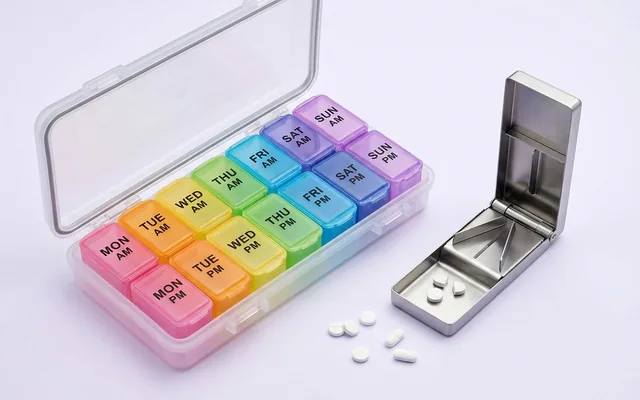
Airtight double-lock weekly medication organizer with removable day pods and a surgical stainless-steel tablet cutter for accurate half-tablet splitting and adherence.
View Clinical Details →How to Use This Medicine Correctly
Getting the best results from any medicine means following the directions carefully every single day. Dalfampridine requires specific handling to work safely in your body.
This tablet is an extended-release formula. That means the medicine is designed to release slowly into your body over time. Following the proper rules for taking it is vital for your safety.
- Swallow the tablet whole with a full glass of water.
- Never break, crush, chew, or split the tablet. Doing so releases all the medicine at once, which can cause dangerous side effects like seizures.
- You can take this medicine with or without food. However, if it upsets your stomach, taking it with a meal may help.
- Keep taking this medicine exactly as long as your doctor tells you to continue.
- Your prescription usually comes with a special patient guide or medicine guide. Read it carefully every time you get a refill.
What to Do If You Miss a Dose
Busy days happen, and you might accidentally miss a scheduled dose of your medicine. Do not panic if this happens to you.
Simply skip the missed dose entirely and move on. Take your next dose at the regular scheduled time.
Never try to make up for a missed dose by taking two doses at the same time. Taking extra medicine can be harmful.
What to Do If You Take Too Much
If you think you took more dalfampridine than your doctor prescribed, do not brush it off. Get emergency medical help right away.
Go to the nearest hospital emergency department right away. If you are in the US or Canada, call 911. If you are in the UK, call 999 or go to your local A&E department.
Things to Watch Out For While Taking This Medicine
While taking dalfampridine, you should pay attention to how your body feels and take steps to stay safe.
- Dizziness and sleepiness: This medicine can make you feel dizzy or sleepy. Until you know how it affects your body, avoid driving cars, operating heavy machinery, or doing tasks that require sharp focus.
- Avoid sudden movements: Do not jump up too fast from a sitting or lying position. If you are an older adult, sudden movements can make your head spin and lead to dangerous falls. Stand up slowly after resting.
- Regular medical checkups: Visit your doctor for scheduled checkups. Let your doctor know if your walking symptoms are getting better, staying the same, or getting worse.
Possible Side Effects
Like many prescription medicines, dalfampridine can cause side effects. Some side effects are mild. This others require urgent medical attention.
| Side Effect Type | Common Symptoms |
|---|---|
| Serious Side Effects Requiring Immediate Medical Help | |
| Allergic Reactions | Rash on the skin, itching, swelling of the face, lips, tongue, or throat. |
| Seizures | Sudden body shaking, loss of consciousness, or convulsions. |
| Balance Problems | Stumbling while walking, inability to stay balanced, or confusion. |
| Urinary Issues | Pain, burning, or discomfort when passing urine. |
| Limb Changes | Pain, numbness, tingling, or unusual weakness in the arms or legs. |
| Common Side Effects (Report to Doctor If They Continue) | |
| Mild Dizziness | Feeling lightheaded or unsteady on your feet. |
| Stomach Upset | Mild belly cramps, nausea, or trouble passing stool (constipation). |
| Trouble Sleeping | Difficulty falling asleep or staying asleep at night (insomnia). |
| Back Pain | Aching or discomfort in the lower back area. |
If you experience any unusual symptoms that are not listed here, talk to your doctor right away for guidance.
When to Call Emergency Services
Seek immediate emergency care (call 911 in the US/Canada, 999 in the UK, or go to your closest Emergency Department) if you experience a seizure, severe swelling of your face or throat, trouble breathing, or sudden severe confusion.
How to Store and Dispose of Your Medicine Safely
Proper storage keeps your medicine effective and keeps your household safe from accidental exposure.
- Storage: Store your dalfampridine tablets at room temperature, away from excess heat and moisture. Keep the bottle tightly closed and store it safely out of reach of children and pets. Do not use medicine past its expiration date.
- Disposal: The best way to get rid of expired or unneeded medicine is through a local pharmaceutical take-back program. Ask your local pharmacist if they accept old medicines. If a take-back option is not available, check your medicine package instructions, or mix unneeded pills with used coffee grounds or cat litter inside a sealed plastic bag before putting them in your household trash.


No comments yet. Be the first to share your question or experience below.