

Have you noticed any unusual changes in your child's skin, nails, or inside their mouth? Sometimes these may seem normal, but there may be a rare genetic condition behind them. One such condition is Dyskeratosis Congenita , sometimes abbreviated as (DC) or (DKC). This may sound a bit complicated, but let's keep it simple and easy to understand.
What exactly is Dyskeratosis Congenita?
Simply put, dyskeratosis congenita is a very rare genetic condition. It can affect many parts of your child's body. Often, the first symptoms appear on the skin, nails, and inside the mouth before the child is 10 years old. In some children, the first sign of the condition may be something like bone marrow failure. This can sometimes lead to serious complications, such as cancer, in childhood, adolescence, or adulthood.
This condition, called dyskeratosis congenita, belongs to a large group of telomere biology disorders . Think of it like the little plastic caps at the end of our shoelaces. These are located at the ends of our chromosomes – the structures that contain our genes (DNA). These telomeres protect our genes. They are what keep our organs and tissues in our body growing and working properly. But in a child with dyskeratosis congenita, these telomeres are shorter than they should be. That's why a variety of problems arise.
There are several other telomere disorders like these:
- Hoyeraal Hreidarsson Syndrome (HH)
- Revesz syndrome (RS)
- Coats plus syndrome
What are the symptoms of dyskeratosis congenita?
Researchers first identified three main characteristics in children with "classic dyskeratosis congenita" (classic DC):
1. Skin color abnormalities: The skin on the baby's neck, upper chest, and arms may appear in a mesh or lace-like pattern. The affected skin may be lighter or darker than the baby's normal skin color.
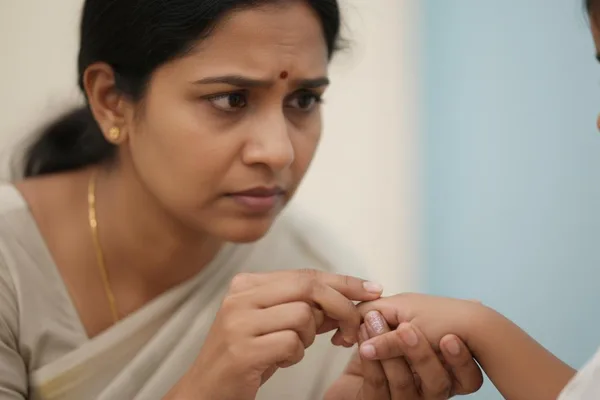
2. Nail deformities or loss: You may notice ridges or cracks in your fingernails and/or toenails. They may peel off, grow slowly, or become shorter than normal. Sometimes, your nails may become shorter than normal, or they may disappear completely. These changes may only affect some nails, while others may remain normal.
3. Leukoplakia: Thick, white patches may appear on the child's tongue or inside the cheeks.
Doctors call these three symptoms the "mucocutaneous triad.""Muco" refers to the lining of the mouth, and "cutaneous" refers to the skin. However, dyskeratosis congenita is a very complex condition that affects each child a little differently.
For example, some children may develop bone marrow failure before these three symptoms appear. Doctors may then diagnose dyskeratosis congenita when they are doing tests to find the cause of the bone marrow failure.
Other children may have many different symptoms that seem unrelated, but it is only after testing that doctors realize that dyskeratosis congenita is the cause.
Other possible symptoms:
- Bone-related problems: Osteoporosis (thinning of the bones), fractures, and avascular necrosis of the bones in the hips and shoulders.
- Cancer: Leukemia, skin cancer , head/neck squamous cell cancer.
- Balance and coordination problems: Difficulty with things like walking (ataxia).
- Decreased production of sex hormones (hypogonadism).
- Weakening of the immune system (immunodeficiency).
- Dental problems: Excessive tooth decay, loose teeth.
- Developmental delays or disabilities.
- Esophageal narrowing: This can cause difficulty swallowing, vomiting, and weight gain.
- Excessive sweating.
- Hair loss or premature graying.
- Liver disease.
- Lung diseases.
- Short stature .
- Small head `(microcephaly)` .
- Urethral narrowing .
- Watery eyes and eyelid infection.
What causes dyskeratosis congenita?
Dyskeratosis congenita is caused by genetic variations/mutations . Specifically, as I mentioned earlier, it affects the genes that control the function of your child's telomeres .
When telomeres don't work properly, some of the cells in the child's body can't function properly. This can lead to blood cell deficiencies, organ dysfunction, and other complications.
Is this something that comes from generations?
Yes, dyskeratosis congenita can be passed down from generation to generation. A child can inherit it from one or both parents. However, it is also possible for a child to develop it for the first time, even if no one in the family has had the condition before.
What genes are involved in dyskeratosis congenita?
Here are some of the genes that researchers most commonly link to dyskeratosis congenita and telomere biology disorders:
``DKC1, TERC, TERT, TINF2, ACD, CTC1, DCLRE1B, NHP2, NOP10, NPM1, POT1, RPA1, STN1, TCAB1, PARN, RTEL1.`
What are the possible complications of dyskeratosis congenita?
This condition can lead to various complications, some of which are:
- Bone marrow failure: This is the most common complication. It usually occurs before the age of 30.
- Pulmonary fibrosis
- Myelodysplastic syndrome (MDS) (a problem with the production of blood cells in the bone marrow)
- Acute myeloid leukemia (AML) (a type of blood cancer)
- Head and neck cancer
- Skin cancer
- Liver fibrosis
At what age is dyskeratosis congenita diagnosed?
Most often, this disease is diagnosed during childhood or adolescence, because that is when the first symptoms appear. However, some people may not show symptoms until adulthood, and may not even be diagnosed with the disease.
How do doctors diagnose this condition?
Doctors do the following to diagnose dyskeratosis congenita:
- You will be asked about your child's symptoms.
- The medical history of the child and family is reviewed.
- Doing a physical examination.
- Special tests are ordered.
Doctors look for known symptoms of the disease (such as skin changes, nail changes, white spots in the mouth) and then use test results to confirm whether or not dyskeratosis congenita is the cause of those symptoms.
Tests for Dyskeratosis Congenita (DKC)
Your doctor may order several tests for your child. Some will help directly with the diagnosis, while others may reveal additional symptoms that may affect your child's health and treatment plan.
The two main tests to diagnose dyskeratosis congenita are:
- Flow cytometry: This measures how long your child's telomeres are. The test results provide a telomere length and a percentile. This percentile shows how your child's telomere length compares to the telomere length of other children their age.
- Genetic testing: This checks for genetic mutations associated with dyskeratosis congenita.
Most often, a blood sample is taken for these tests. In special cases, other tissue samples, such as a small piece of skin (skin biopsy), may also be taken.
Additional tests
Some other tests your child may need:
- A dental checkup
- Endoscopy (inspection of internal organs using a tube with a camera)
- Eye examination
- Skin test
- Bone marrow examination
- Imaging tests to examine various parts of the body (such as the brain, heart, lungs, liver, bones)
- Pulmonary function tests
- Immune system function tests
- Neuropsychological testing
How is dyskeratosis congenita treated?
Doctors plan treatment based on your child's needs. There is no one-size-fits-all treatment plan for every child, as this condition affects each child differently.
Some of the treatments available include:
- Blood transfusions: To provide healthy red blood cells and platelets.
- Androgen therapy: May help maintain healthy blood cell counts and may temporarily lengthen telomeres.
- Stem cell transplant: Bone marrow failure, MDS, or leukemia can be cured. However, this is only done in certain cases, when the benefits outweigh the risks.
Your child's medical team will talk to you about the treatment options available to you. Current treatments cannot completely cure dyskeratosis congenita or permanently change telomere length. Instead, treatments are aimed at controlling specific symptoms or complications of the disease. Researchers are working hard to find new treatments that can help children and adults with this condition.
What kind of doctors will treat my child?
Treatment is planned by a multidisciplinary team of doctors. Your child may have a "medical home" or primary care physician who works closely with you and coordinates with other doctors.
Your child's care team may include general pediatricians, as well as pediatric specialists such as:
- Dentists
- Dermatologists
- Endocrinologists
- Gastroenterologists
- Hematologists/oncologists
- Immunologists
- Neurologists
- Eye specialists `(Ophthalmologists)`
- Ear, nose and throat specialists (Otolaryngologists)
- Pulmonologists
- Geneticists
If my child has dyskeratosis congenita, what should I expect?
It's hard to say exactly what your child's future will be, or what will happen in the future. Dyskeratosis congenita may limit a child's lifespan. But it's hard to say by how much.
There are many uncertainties with dyskeratosis congenita. Your child's medical team will give you as much information as possible, and will explain how often your child will need tests and doctor's appointments.
What is the most common cause of death in dyskeratosis congenita?
The most common cause of death among people with dyskeratosis congenita is bone marrow failure , which causes severe infections and bleeding due to the lack of healthy blood cells.
Other common causes of death include lung disease and cancer.
Can dyskeratosis congenita be prevented?
There is currently no known way to prevent this genetic condition. If you or someone in your family has dyskeratosis congenita, it is a good idea to talk to a genetic counselor . They can help you understand the chances that your children will inherit the condition.
What can I do to take care of my child?
Finding out that your child has dyskeratosis congenita can be overwhelming. However, there are many things you can do to support your child's health and reduce the risk of complications.
People with dyskeratosis congenita are at higher risk of certain cancers and lung diseases. Environmental factors such as sun exposure and smoking increase this risk. You can help your child by encouraging them to:
- Use sunscreen and protective gear (such as hats and long-sleeved clothing) when going outdoors.
- Limit your time in direct sunlight.
- Avoid all tobacco products completely.
- Limit or stop drinking alcohol completely.
Your child's medical team will provide advice based on your child's needs. They may also recommend counseling or support groups. For example, there are many organizations that help people with rare diseases. Team Telomere is a group for people with dyskeratosis congenita and other telomere biology disorders.
When should I seek medical help for my child?
Your child will have many doctor appointments. Their medical team will tell you exactly which doctors to see and how often.
These doctor visits are very important. They allow doctors to monitor your child's condition and adjust treatment as needed. Some of the complications of dyskeratosis congenita may not always be visible at home. Things like decreased bone density and early signs of cancer can only be detected through tests.
Doctors may also teach you how to do self-examinations at home for things like skin cancer and oral cancer. These are not a substitute for seeing a doctor. However, they are an important way to recognize some symptoms early and get your child treated quickly.
What questions should I ask my child's medical team?
After being diagnosed with dyskeratosis congenita, these questions may help you learn more:
- What are my child's symptoms?
- What are the possible complications?
- What treatments do you recommend?
- What are the benefits and risks of these treatments?
- Can you recommend a support group or other resources?
- How do I explain this situation to my child?
- Is genetic testing recommended for me or other family members?
It may be helpful to ask these questions to older children and young children:
- How can I help my child take responsibility for his or her own health care in an age-appropriate way?
- How and when should we prepare to transfer my child from pediatrics to adult doctors?
Let's learn a little more about what telomeres are.
Okay, we talked a little bit about telomeres earlier. These are the repeating sequences of DNA at the end of each of your child's chromosomes. Each of your child's genes is located between these two telomeres. Doctors liken them to the plastic caps on the ends of shoelaces. Just as those caps protect the shoelaces from fraying, telomeres protect your child's genes.
Chromosomes are found in almost every cell in a child's body. Those cells are constantly replicating themselves. That's what keeps a child's organs and tissues working properly.
Every time a cell divides, it makes copies of its chromosomes. Each time this happens, the telomeres on a chromosome get a little shorter. This is normal. An enzyme called telomerase comes in and repairs those telomeres to a healthy length so that the cell can continue to divide. If the telomeres get too short, the cell stops dividing.
In dyskeratosis congenita, genetic mutations cause telomeres to become abnormally short. This can happen in a variety of ways. For example, a genetic mutation can interfere with the production of telomerase. Or telomerase can be unable to reach the telomeres. So, your child's telomeres become short and never grow back.
When telomeres in a cell become too short, that cell stops making copies of itself. As more and more cells stop dividing, the various organs and tissues in the child's body lose what they need to function properly. That's how short telomeres cause the symptoms and complications of dyskeratosis congenita.
Is this the same as Zinsser-Cole-Engman syndrome?
Yes, Zinser-Cole-Engman syndrome and dyskeratosis congenita are two names for the same condition. The researchers who discovered the condition in 1906 named it Zinser-Cole-Engman syndrome. But today, most people call it dyskeratosis congenita.
Finally, things to remember (Take-Home Message)
Knowledge is power. But sometimes, even with all the knowledge in the world, you can still feel helpless. When you find out that your child has dyskeratosis congenita, you have a lot of questions. It can be the same even if you have the condition yourself - because genetic conditions passed down through families don't affect everyone the same way.
Your child's doctors can help you understand your child's condition and needs. They are the best source of information about how the condition affects your child's body. Also, remember that there is a whole community of people with rare diseases who are ready to support you. They can give you advice from their experiences. They also value what you have to say. Knowing that you are not alone can help you move forward.
👩🏽⚕️ Additional questions (FAQs)
💬 Is Dyskeratosis Congenita (DKC) a skin disease?
Although it has skin symptoms, this is not a skin disease, it is an extremely rare, genetic 'dangerous chromosomal disease'. The main and most dangerous condition is that the bone marrow in the body is completely dysfunctional due to the abnormally rapid depletion (shortening) of the parts called telomeres in our cells.
💬 What are the main symptoms that can identify a child as having this disease from birth?
There are three clear signs of this disease (Classic Triad). 1. Nails do not grow properly, break, and become deformed (Nail dystrophy). 2. Brown and white lace-like spots appear on the skin (Lacy skin pigmentation). 3. White, non-scaly, and indelible spots form inside the mouth (tongue and cheeks) (Leukoplakia).
💬 Can this rare genetic disease be 100% cured?
There is no cure for this disease that is 100% genetic. Since the bone marrow is dysfunctional and blood is not produced, most patients die from anemia or infections. The only life-saving solution and the last resort is a new bone marrow transplant (Bone Marrow/Stem Cell Transplant) from a compatible person.
` Dyskeratosis congenita, genetic diseases, telomeres, bone marrow, skin symptoms, nail changes, cancer risk




💬 Comments (0)
No comments yet. Be the first to share your thoughts here.
Add Your Comment