
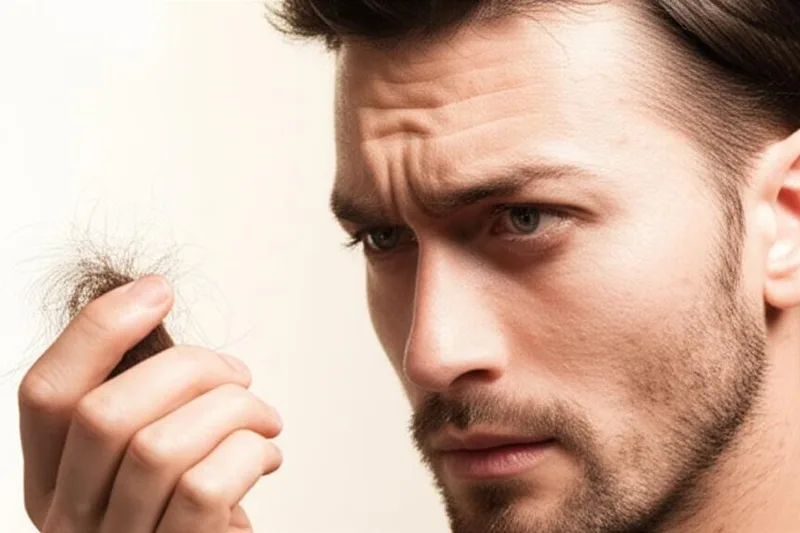
When you comb your hair in the morning, do you find a lot of hair on your comb? When you finish taking a shower, do you see hair all over the bathroom floor? It's normal to feel a little scared and worried when you see something like this. In fact, for some people, even a little hair loss is a big burden. For others, even if their hair falls out to the point of baldness, it's not that much. So today, let's talk about hair loss, which is important to everyone, in a simple way.
First, let's see, what is this hair tree?
Simply put, hair is not just the hair on our skin. We have hair almost everywhere on our bodies, except for places like our palms, soles of our feet, and eyelids. But some of it is so fine that we can't see it.
A hair shaft is made of a protein called keratin . These are produced in tiny follicles in the skin. As new hair cells are produced in these follicles, old cells are pushed out to the surface of the skin. The hair shaft you see is actually a collection of dead keratin cells. On average, an adult has between 100,000 and 150,000 hairs on their head. It is normal to lose about 50 to 100 hairs a day. So, if you have a few hairs on your comb, don't worry.
At any given time, about 90% of the hair on your head is in the growing phase. But each of these hairs has its own unique life cycle.
The life cycle of a hair follicle
This cycle is divided into three main stages.
- Anagen Phase: This is the period when the hair shaft is actively growing. This phase usually lasts about 2 to 8 years.
- Catagen Phase: This is a transitional phase. It lasts about 2 to 3 weeks.
- Telogen phase: This is the resting phase of the hair shaft. This phase lasts for about 2 to 3 months. At the end of this period, the hair shaft falls out and a new hair shaft begins to grow in its place. This is how the cycle begins again.
As you age, the rate at which this hair grows gradually slows down.
Types of Hair Loss
Hair loss is medically known as Alopecia . There are different types of this as well. Let's look at the main types.
| Hair type | Simple explanation |
|---|---|
| Involutional Alopecia | This is something that happens naturally as we age. Hair follicles go into the resting phase more often, and the remaining hair becomes shorter and thinner. |
| Androgenic Alopecia | This is a genetic condition that is passed down through generations. When it affects men, it is called 'male pattern baldness'. Hair starts to fall out from the sides of the forehead and the crown of the head. When it affects women, it is called 'female pattern baldness', where the hair on the crown of the head becomes thinner. |
| Alopecia Areata | This can start suddenly. Hair falls out in patches like a 'scallop'. It often affects children and young adults. But in 90% of cases, hair grows back within a few years. |
| Telogen Effluvium | When the body or mind is under great stress (e.g., a major illness, childbirth, exams), many hair follicles suddenly go into a resting phase. This causes a lot of hair to fall out temporarily. |
| Traction Alopecia | Hair styles that pull the hair tight (e.g., tight braids, tight ponytails) can damage the hair follicles and cause permanent hair loss. |
| Scarring Alopecia | Some skin infections and conditions (e.g. Folliculitis, Lupus) can permanently destroy hair follicles, leaving a scar. Hair will not grow back in these areas. |
Why is this hair falling out? What are the causes?
Doctors still don't know exactly why some hair follicles have a shorter growth cycle than others, but there are several main factors that contribute to hair loss.
- Hormones: Hormonal imbalances, such as male hormones (androgens), can cause hair loss.
- Genes: The tendency to baldness can be determined by the genes inherited from both the mother and father.
- Mental and physical stress: Hair loss can occur a few months after a major illness , childbirth, surgery, or mental stress.
- Some medications: Chemotherapy, blood thinners, and some high blood pressure medications can cause temporary hair loss.
- Other medical conditions: Conditions such as thyroid disease, diabetes mellitus, lupus, iron deficiency, and anemia can cause hair loss.
- Nutritional deficiencies: A diet low in protein, vitamins A, B, C, D, E, and deficiencies in nutrients like zinc and iron can also be a cause.
- Harmful things to do to your hair: Frequent shampooing, bleaching, dyeing, and perming can weaken your hair and cause it to break. However, these do not usually cause baldness.
How to recognize hair loss? (Symptoms)
Hair loss can sometimes be gradual, sometimes it can be sudden. The symptoms vary depending on the cause.
- Gradual thinning at the crown: This is the main characteristic of hereditary baldness.
- Sudden hair loss: This can happen after stress or illness. You may see a lot of hair on your comb, pillowcase, or in the bathroom.
- Patchy, circular patches: This is a symptom of `Alopecia Areata`. It can also occur in areas like the beard and eyebrows.
- Perhaps with other features:
- Scalp inflammation, itching, and pain (may be a sign of infection).
- Scaly, blister-like lesions (may be a sign of a fungal infection).
How does a doctor diagnose this? (Diagnosis)
If you think you're losing too much hair, the best thing to do is see a doctor right away . The sooner the cause is identified, the sooner treatment can begin.
The doctor may do the following:
- You will be asked about your medical history and family details.
- Your scalp will be examined carefully.
- Blood tests are ordered (e.g., iron levels, vitamin D, thyroid hormones).
- Sometimes the scalp is examined with a special camera (trichoscopy) that magnifies it.
- If necessary, a small piece of skin from the scalp may be taken for examination (biopsy).
What are the treatments for this?
Treatment depends on the cause of the hair loss. In most cases, hair loss will stop and then start to grow back once the underlying condition is treated. However, some types (such as alopecia areata) are permanent. While treatment can stop further hair loss, it is difficult to regrow hair that has already been lost.
There are several main treatment methods:
- Medications:
- Medications like `Minoxidil (Rogaine)` for scalp dandruff.
- Pills like `Finasteride (Propecia)` for men (these should only be taken on the advice of a doctor).
- Medications containing steroids (Corticosteroids) for conditions like `Alopecia Areata`.
- Special Treatment Methods (Procedures):
- Hair Grafting: Taking hair from another part of the body and transplanting it into empty areas.
- Light therapy: Stimulation of hair follicles using low-level laser light.
- Platelet-rich plasma (PRP) therapy: Injecting plasma extracted from your own blood into the scalp to stimulate hair growth.
- Scalp micropigmentation: Using a permanent tattoo on bald areas to give the appearance of hair.
The most important thing is that these treatments take time. It can take 3-6 months to see results. Also, don't go after everything that is sold as a "super hair growth medicine." Always seek the advice of a qualified doctor.
Take-Home Message
- It's normal to lose 50-100 hairs a day. If you're losing more than that, are shedding in patches, or have other symptoms, see a doctor.
- There are many reasons for hair loss. It could be hereditary, hormones, stress, nutritional deficiencies, or other medical conditions.
- The sooner the cause is identified, the more successful the treatment can be. Therefore, seek medical advice as soon as you notice a problem.
- Eating a balanced diet, avoiding harmful hair styles, and managing stress are very important for hair health.
- If hair loss is a big burden on your mind, talk to your doctor about it too. Psychological relief is also part of the treatment. Don't give up hope!




💬 Comments (0)
No comments yet. Be the first to share your thoughts here.
Add Your Comment