

Do you sometimes feel like your heart is beating faster than usual, or like it's skipping a beat? Maybe you feel something fluttering in your chest, or like butterflies flying around? These are the things you might feel during a condition called 'Ectopic Heartbeat', which we're going to talk about today. Don't worry, most of the time it's not dangerous.
Simply put, an ectopic heartbeat is a small change in the rhythm of your heart. Specifically, it is when your heart beats a little earlier than it should. For some people, this feels like a heart skip a beat, or like a sudden flutter in your chest. For others, it may feel like your heart is beating faster or like something is fluttering in your chest. Doctors call this an irregular heartbeat called an arrhythmia.
But here's the thing, most of the time, this 'ectopic heartbeat' isn't a big deal. That is, it's usually not caused by an underlying heart condition. Even though your heart is beating irregularly, it's usually working normally. So for most people, it doesn't require any special treatment.
However, sometimes these extra beats can be caused by drinking too much caffeine, such as coffee or tea, drinking alcohol, or being under a lot of stress . If you have any concerns about your heart rate, especially if you already have heart disease, or if you experience these irregular beats frequently, it's best to see a doctor.
What are the main types of 'Ectopic Heartbeat'?
Now let's see. There are two main types of this extra gas.
1. Premature Atrial Contraction (PAC): This is caused by abnormal electrical signals coming from the two upper chambers of your heart, called the atria . More precisely, it is an extra beat coming from the upper part of the heart. Doctors also call this 'atrial premature beats' .
2. Premature Ventricular Contraction (PVC): This is caused by abnormal signals coming from the two lower chambers of the heart, called the ventricles . Simply put, it is an extra beat coming from the lower part of the heart. This is also called ventricular premature beats .
Think about it, the heart is like a musical group. Everyone has to work to the same rhythm. In a PAC, it's like someone on top beats a beat before the rhythm. In a PVC, it's like someone on the bottom beats a beat before the rhythm. Do you understand?
Who is more likely to develop an 'Ectopic Heartbeat'?
This condition, called an 'ectopic heartbeat', is more common in older people. However, it can happen to anyone of any age. If a young child has an extra beat like this, it is most likely a PAC. You are more likely to have this condition, too, if :
- If anyone in your family has this type of 'ectopic heartbeat' (meaning it's hereditary).
- If you have a heart condition (for example , heart disease ) or a structural problem in the heart (for example, valve disease ).
- If you have had a heart attack before.
How common is this condition?
These 'ectopic heartbeats' and palpitations are actually very common. We all get a PVC or a PAC from time to time. But not everyone feels it. Sometimes these come and go without us even realizing it.
What are the causes of this 'Ectopic Heartbeat'?
There may be several reasons for this extra pressure.
- Alcohol and caffeine-containing beverages: Drinking too much coffee or tea. Sometimes foods high in fat, sugar, or carbohydrates can also cause irregular heartbeats. Many people experience heart palpitations after eating.
- Anxiety and Stress: This is a problem that many people have these days.
- Dehydration: Not getting enough water into the body.
- Certain medications: For example, some medications used to relieve nasal congestion contain pseudoephedrine .
- Overweight and Obesity: People who are overweight are at higher risk of developing heart rhythm abnormalities and heart disease.
- Hormonal changes: Hormonal changes during menopause , as well as changes in the body during pregnancy, can also cause palpitations. Palpitations are very common during pregnancy, and most of the time they are not dangerous.
- Smoking.
Occasionally, this 'ectopic heartbeat' can be caused by a heart condition or other health condition. For example:
- Other heart rhythm irregularities (Arrhythmias), such as atrial fibrillation (Afib) or tachycardia (rapid heartbeat).
- Heart disease , coronary artery disease (CAD) and heart failure .
- Lung-related diseases, for example , Chronic Obstructive Pulmonary Disease (COPD) .
- Structural heart problems.
What are the symptoms of an 'Ectopic Heartbeat'?
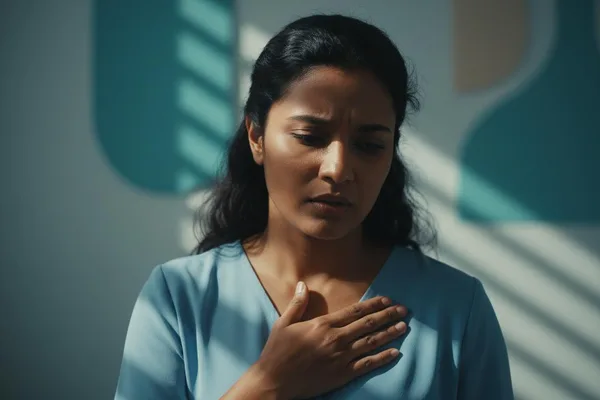
Some people have ectopic heartbeats and don't experience any symptoms. Others may experience them when lying down or trying to sleep (called heart palpitations at night ). You may experience things like:
- An extra heartbeat , or a feeling of a heart attack, or a momentary heart stoppage.
- An irregular heartbeat , which means the heart is racing and feels like it's beating too fast.
- A feeling like a tight chest, or like a butterfly flying .
- A racing heartbeat .
How do doctors diagnose this 'Ectopic Heartbeat'?
When you go to see a doctor, he or she will ask you about your symptoms and listen to your heart. Then they will do a test called an electrocardiogram (EKG or ECG) . This test takes about 15 minutes. It monitors your heart rate through sensors placed on your skin. This test can be done in the doctor's office.
Imagine that you didn't have that strange rhythm when you went to the doctor. Then the EKG wouldn't pick it up. In such cases, the doctor may ask you to use a 'Holter monitor' . This is also a type of 'ambulatory monitor' . This is a small device that you wear on your body. It continuously records your heart rate and when the irregular rhythm occurs. How long you need to wear this Holter monitor depends on how often you have the irregular rhythm. It may be for a couple of days, or even a couple of weeks.
How is this 'Ectopic Heartbeat' treated?
Most of the time, you won't need treatment for an ectopic heartbeat. As we've said before, most PVCs and PACs aren't dangerous. Your doctor may tell you to make some lifestyle changes, such as cutting out caffeine and alcohol. They may also tell you to try relaxation techniques like meditation and yoga to reduce your stress levels.
However, if this 'ectopic heartbeat' occurs frequently and is affecting your daily life, your doctor may prescribe a type of medication called a 'beta-blocker' . These medications slow down your heart rate and make it more regular.
If a medical condition or other problem is found to be causing the ectopic heartbeat, your doctor will treat the underlying cause. The treatment will vary depending on the cause. They may also prescribe arrhythmia medications .
How can I reduce the risk of developing an ectopic heartbeat?
It may not be possible to completely prevent ectopic heartbeats or other heart rhythm irregularities (arrhythmias). However, you can do the following to reduce your risk:
- Avoid caffeine, alcohol, and some cold medicines that can make the heart beat faster.
- If you are overweight, maintain a healthy weight.
- Control anxiety and stress.
- Drink enough water to protect yourself from dehydration.
- If you smoke, talk to your doctor about a plan to quit.
Are there other medical conditions that increase the risk of developing an ectopic heartbeat?
Yes. If you have lung diseases like COPD (Chronic Obstructive Pulmonary Disease), heart disease, structural heart problems, or other heart rhythm disorders (arrhythmias), you are at higher risk of developing ectopic heartbeats. Therefore, it is important to have regular medical checkups to monitor your health.
What is the health status of people with 'Ectopic Heartbeat'? (Outlook)
Most people do not need treatment for ectopic heartbeats, especially if they occur only occasionally or only for a short period of time. Many people find relief from their irregular heartbeats by making some changes to their diet and lifestyle. However, if your PACs or PVCs are so severe that they interfere with your daily life, it is best to talk to a doctor.
Important: If you have heart disease or another medical condition, talk to your doctor to see if this abnormal heart rhythm is related to it. Because results may vary depending on the condition. People with structural heart problems are at risk for life-threatening heart conditions like Ventricular Tachycardia .
When should you see a doctor about an ectopic heartbeat?
If you have any concerns or concerns about your heart rate, it's best to talk to a doctor. It's important to get a medical checkup to make sure your symptoms aren't caused by a serious heart condition or other health condition.
If you have these symptoms, seek medical advice immediately:
- Difficulty breathing or shortness of breath.
- Persistent palpitations .
- Chest discomfort, tightness, or chest pain .
- Dizziness or confusion .
- Fainting (syncope) or loss of consciousness.
- Sudden fatigue .
- Swelling (edema) of the limbs, especially the legs, ankles, and feet .
Ectopic heartbeats are usually not dangerous. Many people find relief from these irregular heartbeats by avoiding caffeine, certain medications, and alcohol. You can also reduce your risk of developing an ectopic heartbeat by managing stress and getting help for anxiety. If you have any concerns about your heartbeat, see a doctor. It's always a good idea to get tested to make sure there are no serious problems. If you have heart disease, have had a heart attack in the past, or have structural problems with your heart, see a doctor right away.
The most important things to remember from this article (Take-Home Message)
Okay, so I hope you now have a better understanding of the 'Ectopic Heartbeat' we talked about today.
- Simply put, this is a slight change in the heart's rhythm, a pre-arrhythmia. Most of the time, this is not dangerous.
- This can be caused by things like caffeine, alcohol, and stress. Small lifestyle changes often provide relief.
- Everyone can get this extra pounding feeling from time to time, but not everyone feels it.
- If you experience this palpitations frequently, have symptoms like chest pain, shortness of breath, dizziness, or if you already have heart disease, be sure to see a doctor.
- Don't be afraid, but it's very important to take care of your body. By following medical advice, you can stay healthy.
` Heartbeat, Extra Beat, Ectopic Heartbeat, Heart Palpitations, PAC, PVC, Heart Disease, Arrhythmia, Caffeine, Stress, ECG, Holter Monitor, Beta Blocker




💬 Comments (0)
No comments yet. Be the first to share your thoughts here.
Add Your Comment