

Have you ever wondered how your body is built and protected both inside and outside? Every single day, your skin, your stomach lining, and your airways work silently to keep you safe from harm. Today, we are going to explore a fascinating and essential type of body tissue known as epithelium. You may have heard this term before during a doctor visit or while reading a health article.
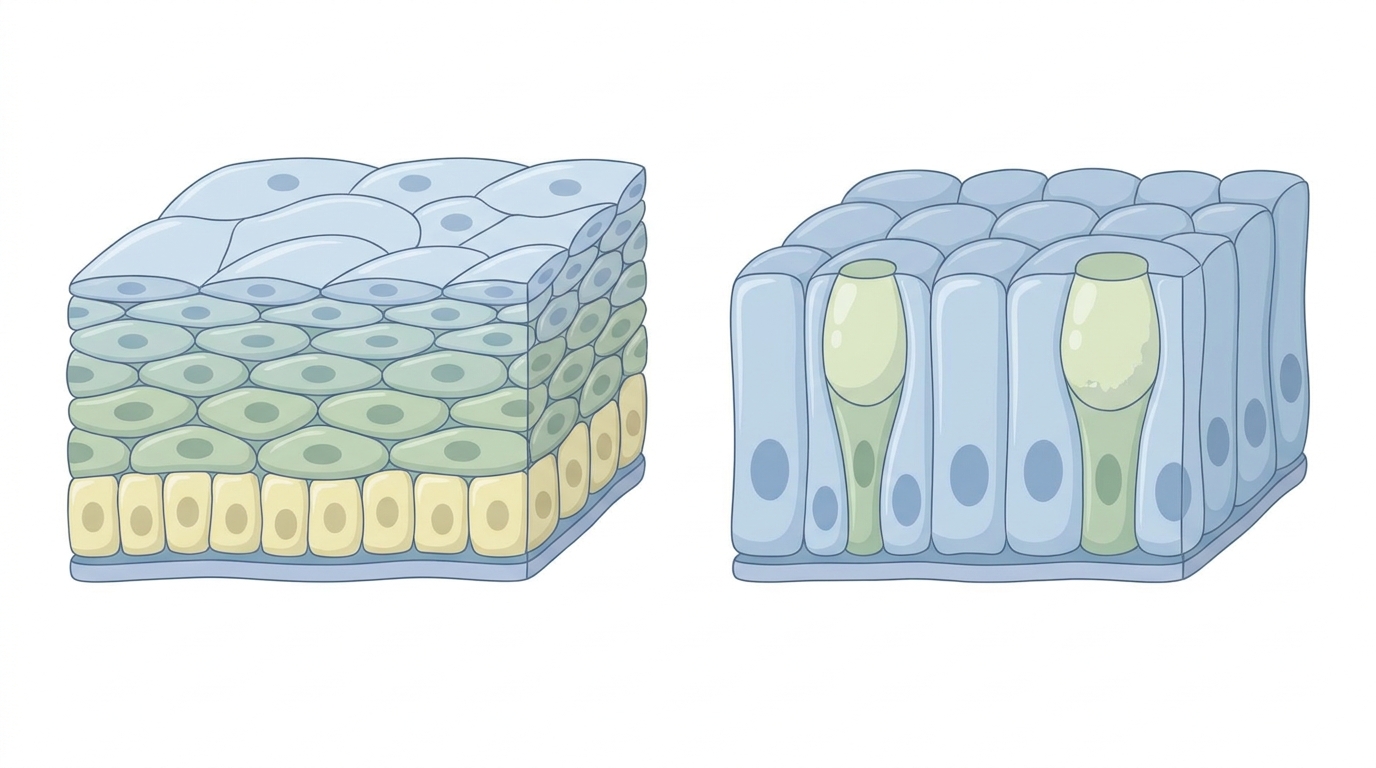
Epithelium plays a critical role in your daily life and overall health. It acts as a protective shield, helps absorb nutrients, and allows your organs to function properly. Let us take a close, simple look at what epithelium is, how it works, and why it matters so much to your well-being.
Key Takeaways About Epithelium.
- Universal Lining: Epithelium covers all outer body surfaces and lines internal cavities and hollow organs.
- Cellular Structure: It consists of tightly packed epithelial cells arranged in single or multiple layers.
- Specialized Surfaces: Some cells feature microvilli for absorption or cilia to move particles away.
- Vital Functions: It provides protection, secretes hormones and enzymes, absorbs nutrients, and filters waste.
- Medical Relevance: Understanding epithelial tissues helps doctors diagnose conditions like celiac disease, asthma, and certain cancers.
What is Epithelium? Let Us Understand It Simply.
Simply put, epithelium is one of the four primary tissue types in your human body. The other three tissue types are connective tissue, muscular tissue, and nervous tissue. Your epithelial tissue forms the outer covering for nearly all internal and external body surfaces.
also, it lines your body cavities and hollow organs, and it makes up the major portion of your glands. Think of your outer skin layer, the inside of your mouth, your gut, your respiratory tract, and your sweat glands. All of these areas rely entirely on epithelial tissue.
You can think of epithelium as a custom-fitted, protective suit designed for your body. It helps secrete helpful fluids and absorbs essential nutrients. Most importantly, any substance that enters or leaves your internal organs must pass through this protective epithelial barrier first.
Get to Know Epithelial Cells.
Now let us look at what makes up this amazing tissue. Epithelial tissue is built from tiny living units called epithelial cells. Just like a brick wall is built from person bricks, your tissues are built when millions of these cells join together.
These cells can vary greatly in shape and arrangement depending on where they live in your body and what job they do. A standard cell is the smallest living building block in your body. Your body contains trillions of these microscopic wonders.
Every single cell generally contains three major parts:
- Cell membrane: This is the outer protective wrapper around the cell that controls what goes in and out.
- Nucleus: This serves as the control center holding your genetic instructions, known as DNA.
- Cytoplasm: This is the jelly-like fluid inside the cell housing smaller functional parts called organelles.
Some specialized epithelial cells feature unique surface structures that help them perform their specific jobs efficiently. Let us examine three remarkable examples of these special cellular structures.
What Are Microvilli?
Microvilli look like tiny, finger-like projections reaching out from the surface of the cell. However, they do not move around on their own. Their main job is to greatly increase the surface area of the cell.
When surface area increases, the cell can absorb substances much faster and more effectively. For example, the epithelial cells in your small intestine feature thousands of microvilli. These tiny helpers absorb vital nutrients from the food you eat every day.
What Are Cilia?
Cilia are tiny, hair-like structures on the surface of certain cells that possess the ability to move back and forth. They can help move an entire cell or sweep fluids and particles across the cell surface.
Your respiratory tract contains millions of epithelial cells lined with cilia. When you breathe in dust and debris, these cilia trap the particles and push them upward away from your lungs to keep you healthy.
Another great example is found in the female fallopian tubes. The cilia here help guide a released egg safely toward the uterus.
Learn About Stereocilia.
Stereocilia are specialized types of microvilli that look somewhat like cilia. They project from the surface of specific epithelial cells in unique regions of the body.
Your inner ear contains epithelial tissues packed with stereocilia. These specialized structures are absolutely essential for your sense of hearing and your ability to maintain physical balance.
Are There Different Types of Epithelial Cells?
Yes, epithelial cells come in several different types. Doctors and scientists classify them based on their physical shape and the number of layers they form.
Classification by Cell Shape.
- Squamous epithelium: These cells are flat and thin, resembling floor tiles or delicate fish scales.
- Cuboidal epithelium: These cells are cube-shaped, meaning their height, width, and depth are roughly equal.
- Columnar epithelium: These cells are tall and narrow, looking much like small columns or pillars.
Classification by Number of Cell Layers.
- Simple epithelium: This type consists of only a single layer of cells resting on a basement membrane.
- Stratified epithelium: This type features two or more stacked layers of cells, providing extra durability.
- Pseudostratified epithelium: This type looks like it has multiple layers because cells vary in height, but every cell actually touches the base.
Common Types of Epithelium in Your Body.
When you combine different cell shapes and layer counts, you get various epithelial tissues designed for specific locations. Here are some of the most common types found throughout your body:
- Simple squamous epithelium: Found lining blood vessels and body cavities, allowing smooth passage of substances.
- Simple cuboidal epithelium: Commonly found in glandular tissues and kidney tubules for secretion and absorption.
- Simple columnar epithelium: Specialized for rapid absorption and secretion, lining your stomach and intestines.
- Stratified squamous epithelium: Provides robust protection against friction and microbial invasion, forming your outer skin layer or epidermis.
- Stratified cuboidal epithelium: A rarer type found lining the excretory ducts of sweat and salivary glands.
- Stratified columnar epithelium: Another rare type found in parts of the eye's mucous membrane, offering protection and secretion.
- Pseudostratified columnar epithelium: Lines your upper respiratory tract, often featuring cilia to trap and sweep away dust.
Specialized Epithelial Cells Have Unique Jobs.
Beyond the standard categories, certain epithelial cells perform such unique functions that they receive special names:
- Transitional epithelium (Urothelium): This tissue consists of multiple cell layers that can stretch and flatten when expanded. It lines most of your urinary tract, allowing your bladder to expand safely when full.
- Glandular epithelium: This specialized tissue focuses on manufacturing and releasing useful chemical substances. It forms the secretory portions of your endocrine and exocrine glands.
- Olfactory epithelium: Located inside your nasal cavity, this tissue contains specialized sensory receptor cells with cilia. Odor molecules bind to these cilia, sending signals to your brain so you can recognize different smells.
What Services Does Epithelium Provide for Your Body?
Epithelial tissue performs many critical functions necessary for life and daily survival. Because these tissues appear everywhere, their specific jobs vary by location:
- Protection: Epithelium shields delicate underlying tissues, blood vessels, and organs from physical damage, harsh chemicals, and harmful bacteria.
- Secretion: Glandular epithelial tissues produce and release vital enzymes, hormones, sweat, and mucus into your body.
- Absorption: Epithelial linings in your digestive tract pull essential vitamins, minerals, and nutrients from your meals into your bloodstream.
- Excretion: Specialized epithelial cells in your kidneys and sweat glands remove metabolic waste products from your body.
- Filtration: Respiratory epithelium filters dust out of inhaled air, while kidney epithelium filters your blood plasma.
- Diffusion: Thin simple squamous epithelia allow gases like oxygen and carbon dioxide to pass easily across membranes.
- Sensory reception: Specialized epithelial structures house nerve endings that allow you to hear, taste food, and maintain balance.
What Medical Conditions Affect Epithelium?
Even though epithelial tissue is remarkably resilient, various diseases and health conditions can disrupt its normal structure and function.
Cancer.
One of the most serious medical risks involving epithelial tissue is the development of cancer. The two most prominent categories include adenocarcinomas and certain specialized carcinomas.
Adenocarcinoma is a common cancer type originating in glandular epithelial cells that line internal organs. This category accounts for a significant percentage of major malignancies:
- Nearly all prostate cancers.
- A vast majority of breast cancers.
- Roughly 96 percent of colorectal cancers.
- Around 95 percent of pancreatic cancers.
- about 40 percent of non-small cell lung cancers.
Papillary thyroid carcinoma is another common epithelial cancer, making up about 80 percent of all thyroid cancers. It typically grows slowly and responds very well to modern medical treatments.
Other Health Conditions.
Aside from cancer, several non-cancerous conditions can damage or alter epithelial tissues:
- Asthma: In asthma, bronchial airways narrow and become inflamed. The bronchial epithelium often undergoes remodeling, making it more fragile and reactive.
- Celiac disease: When people with celiac disease eat gluten, their immune system mistakenly attacks and damages the microvilli on their intestinal epithelial cells, impairing nutrient absorption.
- Human Papillomavirus (HPV): Certain strains of HPV can infect flat epithelial cells in the skin and mucous membranes, leading to warts or other cellular changes.
- Vertigo and Cholesteatoma: Inner ear disturbances can sometimes stem from an abnormal buildup of stratified squamous epithelial cells known as a cholesteatoma, which requires prompt medical evaluation.
| Condition Name. | Affected Epithelium. | Common Symptoms & Impact. |
|---|---|---|
| Celiac Disease. | Small intestine epithelial microvilli. | Digestive discomfort, bloating, and nutrient malabsorption. |
| Asthma. | Bronchial airway epithelium. | Wheezing, shortness of breath, coughing, and airway inflammation. |
| Cervical Dysplasia. | Cervical epithelial lining. | Pre-cancerous cellular changes detected early through routine screening. |
What Tests Check Epithelial Cells?
Because epithelial cells appear throughout your entire body, doctors use several specialized tests to examine them and check for disease. In medicine, studying cells from body tissues or fluids is known as pathology, and specialists who examine them are called pathologists.
Here are some common tests that evaluate epithelial cells:
- Urinalysis: A routine urine test checks for epithelial cells shed from your urinary tract. Finding a few cells is normal, but high numbers can indicate an infection or kidney issue.
- Pap smear: This vital screening test collects epithelial cells from the cervix to check for pre-cancerous changes or abnormal cell growth early.
- Biopsy procedures: Doctors take a small tissue sample to examine under a microscope. Examples include prostate biopsies to check for cancer or intestinal biopsies to diagnose celiac disease.
- Cytology exams: Cytopathology involves analyzing loose cells from bodily fluids or scrapings to diagnose various medical conditions accurately.
What Is the Difference Between Epithelium, Endothelium, and Mesothelium?
These three terms sound similar, but they describe different specialized types of protective cell layers within your body:
- Epithelium: This tissue typically lines surfaces that connect directly to the outside environment, such as your skin, digestive tract, and airways.
- Endothelium: This specialized tissue lines internal circulatory pathways, including your blood vessels, heart chambers, and the inner cornea of your eye.
- Mesothelium: This tissue forms the smooth lining of your major closed body cavities, including the peritoneal cavity in your abdomen, the pleural cavity around your lungs, and the pericardial sac around your heart.
When to Seek Emergency Medical Attention.
While most epithelial conditions develop gradually, certain symptoms require immediate medical intervention. Call 911 (US/Canada), 999 (UK), or go to your nearest Emergency Department (ER / A&E) right away if you experience:
- Sudden, severe shortness of breath or acute asthma attacks that do not respond to rescue inhalers.
- Unexplained coughing up of blood or persistent chest pain.
- Severe, sudden abdominal pain accompanied by persistent vomiting or signs of internal bleeding.
- Sudden loss of balance, extreme dizziness, or neurological deficits.
Things to Remember Final Takeaways.
We have covered a lot of ground regarding epithelial tissue and its vital roles in human health. From shielding your skin and absorbing nutrients in your gut to filtering air in your lungs, epithelium is indispensable to your daily survival.
If your doctor mentions epithelial cells during a lab test or biopsy, remember that it is simply part of understanding how your body functions. Never hesitate to ask your doctor questions if medical terms seem confusing. Staying informed about your health is one of the best things you can do for your future.
A Note from Dr. Priya Sammani.
Maintaining overall wellness starts with understanding your body's foundational systems. If you notice persistent inflammation, unusual respiratory issues, or unexplained digestive symptoms, do not wait. Schedule an appointment with your primary care doctor or a qualified specialist to get personalized guidance and care.


💬 Comments (0)
No comments yet. Be the first to share your thoughts here.
Add Your Comment