

Have you ever wondered about the hidden processes working tirelessly inside your body? Without you noticing, microscopic systems keep you alive and energized every single day. One of the most important players in this daily routine is a remarkable hormone called erythropoietin.
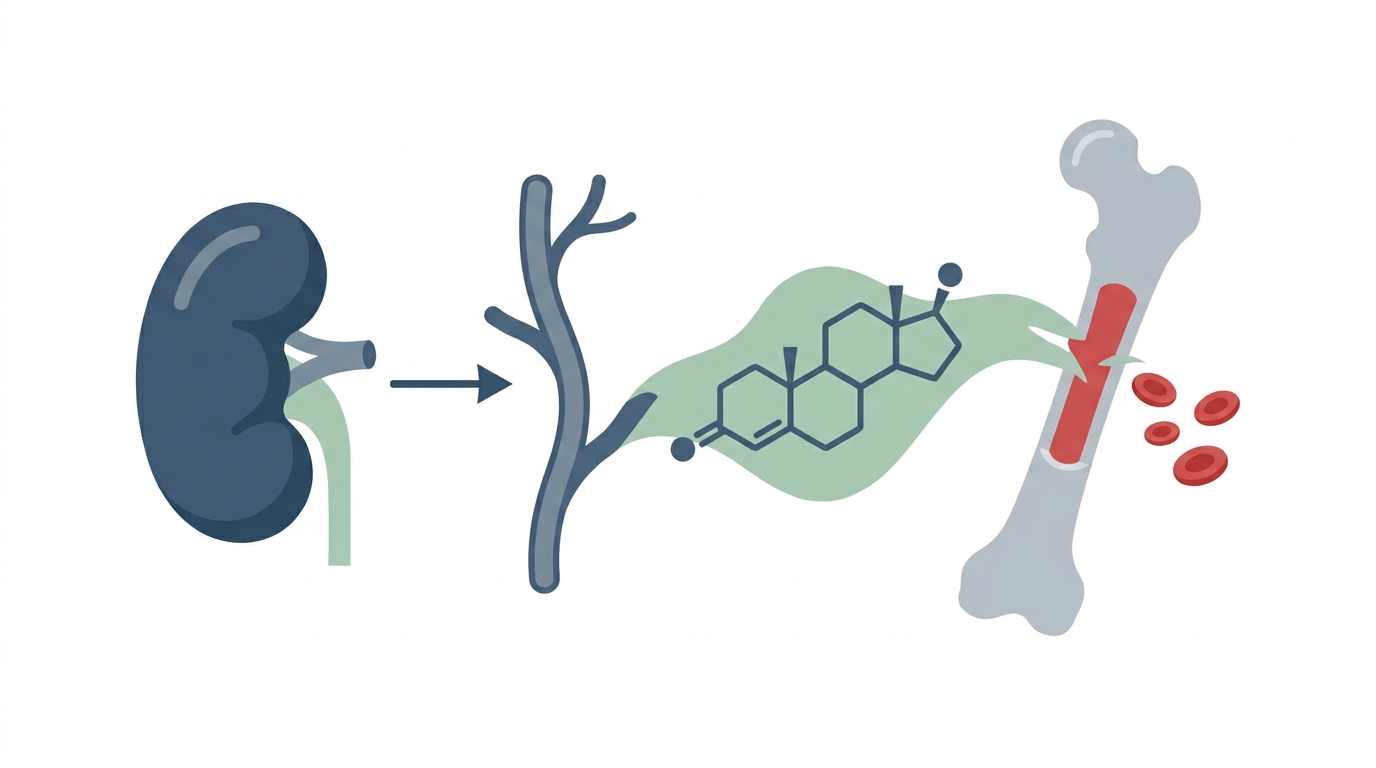
You might not hear this name every day, but it plays a critical role in keeping your energy up and your blood healthy. Let us explore what erythropoietin is, how it works in your body, and why doctors monitor it closely during routine blood tests.
Key Takeaways About Erythropoietin.
- Erythropoietin, or EPO, is a natural hormone produced mainly by your kidneys.
- Its primary job is telling your bone marrow to create healthy red blood cells.
- Red blood cells carry oxygen from your lungs to every tissue and organ in your body.
- Kidney disease can lower EPO production, leading to low red blood cell counts known as anemia.
- Doctors use blood tests to measure EPO levels and diagnose various health conditions.
Renal function (eGFR)
Measure kidney function based on creatinine value
What Is Erythropoietin?
Simply put, erythropoietin is a specialized hormone made primarily by your kidneys. Medical professionals and scientists often refer to it simply as EPO. The main job of EPO is to help keep your red blood cell count at a healthy level.
To be exact, EPO acts as a messenger that tells your bone marrow how many red blood cells to build. Without this vital communication, your body cannot maintain the steady supply of oxygen-carrying cells required for daily life.
There is another side to erythropoietin as well. Doctors sometimes use lab-made, synthetic versions of EPO. This artificial hormone is especially useful for treating anemia caused by long-term kidney disease.
Unfortunately, some athletes misuse synthetic EPO to boost their physical endurance. They do this because extra EPO increases oxygen delivery to muscles. However, using this medicine without medical supervision is dangerous and unethical.
You might also hear alternative medical names for this substance, such as hematopoietin or hemopoietin. Despite these different terms, erythropoietin remains the most widely recognized and used name.
What Does Erythropoietin Actually Do?
Let us take a closer look at what happens inside your body because of EPO. As mentioned earlier, EPO stimulates the creation of red blood cells. These red blood cells carry oxygen from your lungs to every tissue in your body.
Think about how much your body relies on oxygen to create energy. Every muscle, organ, and cell needs a continuous oxygen supply to function correctly. Once those tissues use the oxygen, your red blood cells pick up waste carbon dioxide and carry it back to your lungs so you can breathe it out.
Here is how the feedback loop operates. Specialized cells inside your kidneys constantly monitor your blood. If these kidney cells sense that your blood oxygen level is dropping, they quickly ramp up EPO production.
Once released, EPO travels directly to the spongy center of your bones, known as the bone marrow. It delivers a clear message instructing the bone marrow to produce more red blood cells.
Conversely, if your kidney cells sense that your blood already carries plenty of oxygen, they slow down EPO production. This system acts just like a natural demand-and-supply network in your body.
However, certain medical conditions can disrupt this delicate balance. When disease affects your kidneys, they may fail to release the right amount of EPO. As a result, your red blood cell count can drop too low or rise too high.
What Happens When Erythropoietin Levels Become Too High?
If your body produces an abnormal surplus of EPO, your red blood cell count can increase unnecessarily. Doctors refer to an elevated red blood cell count as polycythemia. Having too many thick red blood cells creates extra strain on your cardiovascular system.
Why Do EPO Levels Rise Unnecessarily?
Understanding why EPO levels climb helps explain how your body reacts to environmental and medical stressors:
- Living in low-oxygen environments: If you smoke heavily or live at high altitudes where the air contains less oxygen, your body adapts by producing more EPO. This altitude-induced rise is a normal, healthy response to low oxygen.
- Anemia unrelated to kidney disease: When you have anemia from other causes, your blood lacks enough functional red blood cells. Your kidneys sense this shortage and release extra EPO to fix the problem.
- Certain types of tumors: In rare cases, specific tumors can cause abnormal, uncontrolled EPO release. This situation requires immediate medical evaluation and treatment.
What Happens When Erythropoietin Levels Drop Too Low?
When your body does not produce enough EPO, various health complications can arise. Low EPO levels prevent your bone marrow from making enough red blood cells.
- Chronic Kidney Disease (CKD): This condition is the most common and frequent reason for low EPO levels. When kidney tissue suffers permanent damage, it loses the ability to manufacture adequate EPO. This shortage often leads to chronic kidney disease-related anemia.
- Polycythemia Vera: This rare blood disorder involves a genetic mutation in the bone marrow that causes it to produce too many red blood cells on its own. Because red blood cells are abundant, your kidneys detect no need for EPO and drastically cut back production.
How Do Doctors Treat Low Erythropoietin Levels?
Treating low EPO levels always starts by identifying and addressing the underlying medical cause. Treating the root issue is the most crucial step in restoring your health.
To directly treat anemia caused by low EPO, doctors often prescribe recombinant erythropoietin. Medical teams also call these drugs erythropoiesis-stimulating agents, or ESAs. These therapies use laboratory-cloned human genes to replicate natural EPO. When given as an injection, they stimulate your bone marrow to resume healthy red blood cell production.
Doctors prescribe ESAs primarily for patients having severe anemia from chronic kidney failure. They may also use them in select cancer treatment scenarios.
Like all medical treatments, ESAs can sometimes cause side effects. Potential side effects include:
- High blood pressure.
- Fever.
- Dizziness.
- Nausea.
- Mild discomfort or pain at the injection site.
How Do Doctors Measure Erythropoietin Levels?
Your doctor can evaluate your EPO levels using a straightforward blood test. This laboratory test helps determine if abnormal red blood cell counts stem from improper EPO production. It assists in diagnosing conditions like polycythemia, anemia, and various bone marrow disorders.
During the procedure, a nurse or technician cleans a small area of skin over a vein in your arm using an antiseptic wipe. They then use a thin needle to draw a small sample of blood. Afterward, they send this sample to a certified laboratory for detailed analysis.
Once the lab completes the analysis, your doctor will review the numbers with you, explain what the findings mean, and answer any questions.
Keep in mind that even if your EPO test falls within a normal range, your doctor may still recommend further testing depending on your overall clinical symptoms.
What Are Normal Erythropoietin Levels?
Laboratories measure EPO levels in milliunits per milliliter, abbreviated as mU/mL. For a healthy adult, normal resting EPO levels typically fall between 4 and 26 mU/mL.
However, your person target range can vary based on several factors, including:
- Your age.
- Your biological sex.
- Your overall baseline health and medical history.
Because normal ranges vary slightly between testing facilities, your doctor is the best person to interpret your specific laboratory report.
Can You Naturally Support Healthy Erythropoietin Levels?
If you have chronic kidney disease or certain forms of anemia, lifestyle habits alone cannot replace medical care. However, healthy daily choices can support your general wellness:
- Regular Exercise: Studies show that consistent, moderate physical activity encourages your body to use oxygen efficiently. Healthy cardiovascular routines like brisk walking, cycling, or swimming support overall metabolic health.
- Dietary Iron: Iron is a core building block for hemoglobin, the protein inside red blood cells that transports oxygen. Excellent dietary sources include lean red meats, egg yolks, organ meats, beans, tofu, and iron-fortified cereals. Always speak with your doctor before starting iron supplements.
Summary: Points to Remember.
Erythropoietin is an essential hormone that signals your bone marrow to create vital red blood cells. When imbalances occur, your body can experience fatigue, weakness, or other health complications.
Routine blood tests allow your medical team to check your EPO levels and design a safe, personalized care plan. If you experience persistent fatigue, symptoms of anemia, or have kidney health concerns, consult a qualified doctor right away. Never attempt self-diagnosis or self-treatment.
When to Seek Emergency Medical Attention.
Seek emergency medical care right away by calling 911 (US/Canada), 999 (UK), or going to your nearest Emergency Department if you experience severe shortness of breath, sudden chest pain, confusion, dizziness, or signs of a severe allergic reaction.
Overview of Erythropoietin States.
| Condition / Status. | EPO Level Effect. | Primary Medical Implication. |
|---|---|---|
| Chronic Kidney Disease. | Low. | Reduced kidney function leads to decreased hormone synthesis and anemia. |
| Polycythemia Vera. | Low. | Bone marrow overproduces red blood cells independently, suppressing EPO. |
| High Altitude / Hypoxia. | High. | Low oxygen triggers a normal compensatory surge in hormone production. |
| Synthetic ESA Therapy. | Artificially Supplemented. | Medical injections stimulate red blood cell production for anemic patients. |


💬 Patient Questions & Comments (0)
No comments yet. Be the first to share your question or experience below.