
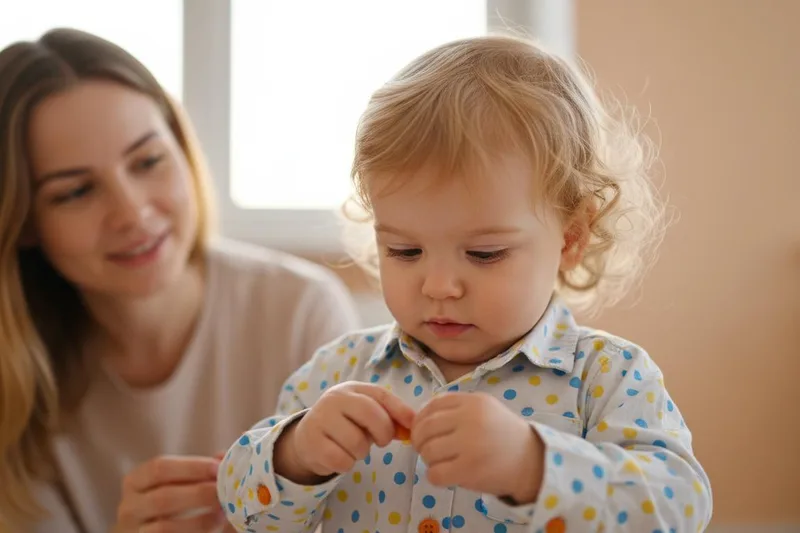
Have you ever watched your little one struggle to pick up a small toy? Or how they struggle to button their shirt or tie their shoelaces? Today we are going to talk about the amazing and complex ability behind these simple tasks that we do so often in our daily lives. In medical terms, we call this fine motor skills.
Simply put, what are these fine motor skills?
Simply put, this refers to the very fine, precise, and controlled movements we make with our hands, fingers, toes, and toes. When we usually talk about this, we think of the hands and fingers most of the time. Like using your index finger and thumb to pick up something small.
But this is not just another thing. This is a very complex process. Our brain, nerves, muscles, and joints all work together, like a musical ensemble, and work in perfect coordination to make these subtle movements.
There are several essential things for this fine motor control:
- Awareness and planning: Thinking about something before doing it and planning the necessary movements in your mind.
- Coordination: Having a good connection between the eyes, brain, and muscles.
- Muscle strength: The small muscles in the fingers and hands are strong enough.
- General sensation: Good sense of touch in hands and fingers.
- Precision/Dexterity: The ability to do what is required precisely and neatly.
Fine motor skills problems can occur at any age. But as doctors, we pay most attention to this when we talk about child development . There are four main areas of a child's development. These fine motor skills belong to the first.
1. Physical development
2. Cognitive development
3. Language development
4. Social and emotional development
We look closely at a child's development to see if these skills are developing at the right age and in the right way. Because delays in these skills can sometimes be a sign of an underlying neurological or physical condition. So the sooner we identify something like that, the sooner we can get the child the help they need.
Why are these skills so important?
Just think... What would our lives be like if we didn't have these fine motor skills? From brushing our teeth in the morning, to eating a mouthful of rice, to making a cup of coffee, to putting on a shirt, to sending a message on our phone, we need this ability for almost everything we do.
These skills are essential for our independence and self-care . They are also necessary for the things we do for fun, such as playing a musical instrument, drawing, or playing computer games.
For a child, this is essential for schoolwork. This ability is essential for things like holding a pencil and writing, cutting with scissors, and drawing. Not only that, but many of the jobs we do as adults also require this ability. Think of someone who uses a computer, a surgeon, or a technician who works with delicate equipment.
What are the Fine Motor Skills we use in everyday life?
Let's look at the table below to see the tasks we do every day and how they require this ability.
| Activity | How to use fine motor skills |
|---|---|
| Holding a pencil or pen and writing/drawing | Holding the pencil correctly with the fingertips and moving it with control. |
| Cutting something with scissors | Controlling the scissors with one hand, and manipulating the paper with the other. |
| Buttoning/Zippering | Holding a small button, using your fingertips to put it through the hole. |
| Eating with a spoon or fork | Holding the spoon correctly and bringing food to the mouth. |
| Typing on a computer keyboard | Moving each finger separately, to place it on the correct key. |
| Tying shoelaces | Using both hands together, hold the laces and tie a complex knot. |
How a child's fine motor skills develop according to age (Developmental Milestones)
During a child's development, certain abilities develop at roughly a certain age. We call these 'Developmental Milestones'. But keep this in mind, not all children are the same . Some children may take a little longer to achieve these things. That's normal. But this will help you get a rough idea.
| Age | Expected capabilities |
|---|---|
| 0 - 3 months | Grasp reflex, bringing the hand to the mouth when something is placed in the hand. |
| 3 - 6 months | Putting hands together, hitting hanging toys, holding and shaking a toy. |
| 6 - 12 months | Transferring an object from one hand to another, picking up small objects with the index finger and thumb (pincer grasp). |
| 1 - 2 years | Placing several blocks on top of each other, turning the pages of a book, holding a crayon and drawing lines. |
| 2 - 3 years | Trying to attach large beads, trying to twist and unscrew things like a water bottle cap. |
| 3 - 5 years | Cutting paper with scissors, holding a pencil correctly with three fingers, and buttoning. |
How can we help our child develop these abilities?
In fact, the best way to develop a child's fine motor skills is to let them play . While playing, the child is practicing these skills without even realizing it. You can do simple things like this together with your child.
For Infants/Toddlers
- Play-doh (clay) toys: Making small balls out of Play-doh, crushing them, and making long rolls is a good exercise for the fingers.
- Playing with Blocks: Building towers by stacking large blocks on top of each other and holding them develops hand dexterity.
- Water play: Put some water in a basin, give a sponge and let it wring. It's also good to pour water back and forth from cups.
- Finger painting: This is something that children really enjoy doing. It gives the fingers good sensation and control.
For Preschoolers
- Beading: Give them beads with large holes and a thick string and let them string them. This helps develop hand-eye coordination.
- Cutting with scissors: Give children safety scissors and let them cut along the lined paper. Practice cutting simple lines first, then shapes like circles and squares.
- Lego toys: Assembling and taking apart small Lego pieces is great for finger strength and precision.
- Help with cooking: Involve your child in simple tasks like kneading chapati dough or chopping vegetables by hand.
The most important thing is not to force these things on the child. It is to allow them to do these things as a game, with fun.
What medical conditions can affect fine motor skills?
As we discussed earlier, any problem that affects the brain, spinal cord, nerves, muscles, or joints can affect these fine motor skills. The effect can range from mild to severe. It may take a little longer to press a button, or it may not be possible to do it at all.
There are hundreds of conditions that can cause this. Some of them can be cured or controlled with treatment. Some of them can even cause permanent problems.
Some of the most common conditions seen in children are:
- Autism Spectrum Disorder
- Cerebral Palsy
- Developmental Delay
- Down Syndrome
- Writing difficulties (Dysgraphia)
- Sensory Processing Disorder
Conditions that commonly affect adults and children:
- Genetic conditions
- Brain tumor
- Muscular Dystrophy
- Injuries to bones, joints, or nerves
- Stroke
- Traumatic Brain Injury
Common conditions among adults:
- Rheumatoid Arthritis
- Carpal Tunnel Syndrome
- Parkinson's Disease
- Dementia
- Peripheral Neuropathy (nerve disease affecting the hands and feet)
What to do if there is a problem? When should I see a doctor?
It can be a little disconcerting at first to learn that you or your child has some difficulty with these fine motor skills. But the best thing is that there are plenty of ways and devices to adapt to these problems and make everyday tasks easier.
There is a specialist who can help you with this. That is an occupational therapist. They help people of all ages improve their ability to do everyday tasks independently and easily. They will teach you exercises, activities and special devices that you can use at home.
The most important thing is to talk to a doctor about it if you suspect there is a problem.
When to see your doctor:
- If you think your child is not reaching the developmental milestones that are appropriate for their age , don't panic and talk to your pediatrician about this. He or she will conduct the necessary tests and give you the right advice.
- If you or your child suddenly loses a skill they were good at (regression) , meaning they can no longer do something they were good at before, it's a condition that should be reported to a doctor immediately , as it could be a sign of a serious underlying condition.
Remember, these fine motor skills are something that develop gradually from birth. These skills develop by allowing the child to play and explore the environment. As parents, we can add some simple, fun activities that help with this. If you have any doubts or questions, never hesitate to talk to a doctor.
Take-Home Message
- Fine motor skills are essential for performing daily tasks and living independently.
- Every child develops at their own pace, so avoid comparing them to other children. But it's important to be aware of normal developmental milestones.
- The best way to develop these skills in a child is to engage them in simple, fun games like Play-doh, blocks, and beading.
- If you have any concerns about your child's development or a sudden loss of ability, consult your pediatrician without delay.


💬 Comments (0)
No comments yet. Be the first to share your thoughts here.
Add Your Comment