
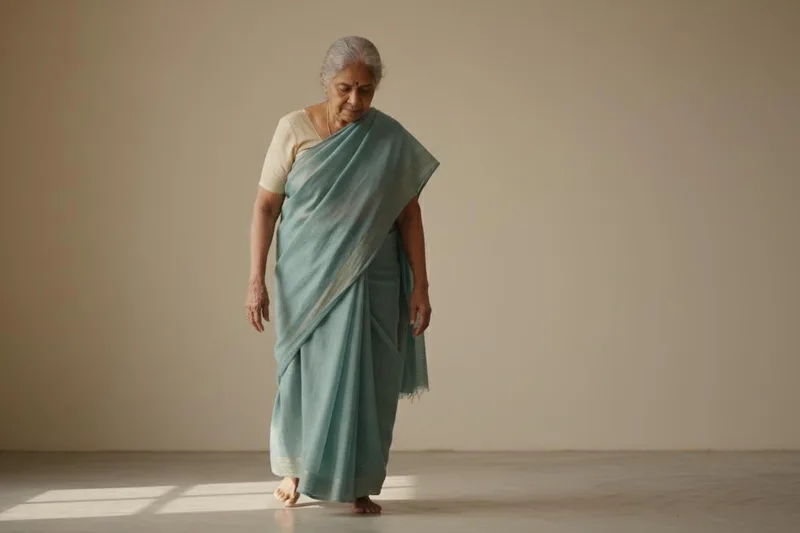
We all walk. It's something we do in our daily lives. We don't even think about it much, do we? But have you ever felt a little different, uncomfortable, painful, or out of balance while walking? Perhaps you've noticed that the way an elderly person in your family walks has changed a little. That's what we're going to talk about today.
First, let's look at what 'gait' is.
Gait is a very simple thing. It is the way you walk. Just like everyone's signature is different, everyone's walking style is also a little different, it is unique to us. When we walk, our body's muscles, brain, nervous system, eyes, and ears, which control balance, all work together in a very coordinated way.
So what is an 'unusual travel style'?
Abnormal gait is any change in your normal walking pattern. Doctors sometimes call this ``Ambulatory Dysfunction.'' These changes can be caused by things like an accident or an illness. Simply put, anything that affects your brain, spinal cord, legs, or feet can change your gait.
These are the commonly seen symptoms:
- Limping
- Dragging fingers along the floor
- Shuffling
- Walking with very small steps
- Difficulty supporting body weight while walking
- Loss of balance and coordination
The important thing is, if you notice a change like this, don't ignore it. It could be a sign of an underlying health problem.
What are the main types of walking problems?
There are several types of gait abnormalities. Each has a different cause and appearance. Let's take a look at the most common types. Understanding these will make it easier for you to identify what the problem is for you or a loved one.
| Name of the problem (Type of Gait) | What happens in it? (Description) |
|---|---|
| Antalgic Gait | This is the most common type. Limping is caused by pain. Due to the pain in the leg or foot, the person tries to reduce weight on that leg and its contact with the ground as much as possible. That's why they limp. |
| Propulsive Gait / Parkinsonian Gait | This is commonly seen in people with Parkinson's Disease. They stand with a stooped, stiff posture . The head and neck are bent forward. They have very small, quick feet to help them maintain balance. |
| Scissors Gait | When walking, the knees and thighs come together or cross like scissors. The steps are slow and small. This can be seen in conditions such as Spastic Cerebral Palsy. |
| Spastic Gait / Hemiplegic Gait | This involves walking with one leg stiff and straight. When that leg is lifted, it can be dragged along the ground, or it can be rotated in a semicircle to the side and then brought forward. This is seen in conditions such as paralysis (hemiplegia). |
| Steppage Gait / Neuropathic Gait | In this, the leg is raised from the hip. That is, the leg is raised higher than normal. The foot may appear floppy. The toes may touch the ground when walking. This can be caused by conditions such as spinal stenosis, herniated disc, etc. |
| Waddling Gait | This is characterized by excessive swaying of the upper body from side to side. It looks like a duck walking . This condition can be caused by things like hip problems. |
| Shuffling Gait | This is when the feet are dragged without being fully lifted off the ground. This can happen to people with poor balance or who have an injury that prevents them from lifting their legs. |
Are there other types?
Yes, there are several other types. For example, in the type called ``Ataxic Gait'', it is difficult to walk in a straight line, the feet are not placed in one way, and there is a swaying behavior like a drunk person. This can be caused by problems in the cerebellum.
How common are walking problems?
It's very common to have walking problems like this as you get older. Just think, by the age of 60, about 15% of people will have this problem. But by the age of 85, more than 80% of people will have some kind of walking difficulty.
In young children, these types of problems are very rare unless they have an underlying medical condition or an accident.
What causes walking problems?
There are many things that can cause this. Some are very simple, some are a little more complicated.
Commonly affecting simple causes
- Joint pain (e.g. knee pain)
- An accident (fractures, sprains)
- Foot wounds, calluses, ingrown toenails
- Wearing ill-fitting shoes
- Inner ear balance problems
- Nerve damage
- Visual impairments
Underlying medical conditions
Sometimes a change in gait can be a symptom of another illness.
- Parkinson's disease
- Multiple Sclerosis
- Stroke
- Arthritis
- Cerebral Palsy
- Paralysis (Hemiplegia)
- Spinal stenosis, herniated disc
How exactly does the doctor find this?
When you go to see a doctor with a problem like this, he will first ask you a complete history. Then he will do a physical examination. He will specifically look for the following:
- Your muscle strength and coordination
- Leg length (length may vary due to things like hip replacements)
- Your vision and blood pressure
- Neck and spine examination
- Checking your balance
- Joints required for walking (hip, knee, ankle) nevena pramanaya (range of motion)
After this examination, if necessary, you may be referred for tests such as X-rays to determine the exact cause.
What are the treatments for this?
Treatment depends on the type of walking problem you have and its cause, so there is no one-size-fits-all treatment.
- Medication: Giving medication to treat an underlying medical condition (such as arthritis or Parkinson's).
- Rest: If it is caused by an accident, it is important to get plenty of rest.
- Physical Therapy: This is a very important treatment. It involves exercises that strengthen muscles and improve balance.
- Surgery: In some cases, for example, hip or knee replacements may be necessary.
- Assistive devices: You may be advised to use something like a cane or walker to make walking easier.
- Changing shoes: Sometimes shoe lifts or a brace can help resolve the problem.
The most important thing is to protect yourself from falls if you have a walking problem like this. Your doctor will give you the necessary advice for that.
Do you need to see a doctor?
Yes, absolutely. If you have these symptoms, it's very important to see a doctor.
- If there is a sudden change in your walking pattern.
- If you feel pain when walking.
- If you feel like you are losing your balance while standing.
- If you can't walk well as usual.
When should you go to the Emergency Treatment Unit (ETU)?
If you have had an accident such as a fall and have severe pain or swelling , or if you are unable to get up or move, go to the Emergency Department (ETU) immediately or call an ambulance.
Can such problems be prevented?
It's difficult to prevent walking problems caused by an underlying medical condition, but there are things we can do to minimize the problems caused by accidents.
- Wear protective equipment when playing sports or doing risky work.
- Listen to your body. If you are tired or feel pain, rest .
- Rest until you are completely healed after an accident, otherwise the injury may worsen.
- If you exercise, follow the correct technique.
- Get your eyesight checked regularly. Vision impairment can also cause you to lose your balance and fall.
Take-Home Message
- Changes in gait are common, especially as we age, but don't ignore them.
- Some walking problems are temporary (e.g. after an accident). Some require long-term treatment.
- Finding the exact cause of this problem is essential for treatment. Therefore, be sure to see a doctor.
- If you have trouble walking, it's important to protect yourself from falls. Do things like eliminate dangerous areas in your home and use an assistive device if necessary.
- Using an assistive device (cane, walker) is not a weakness. It is a tool that protects you and preserves your independence.





💬 Comments (0)
No comments yet. Be the first to share your thoughts here.
Add Your Comment