
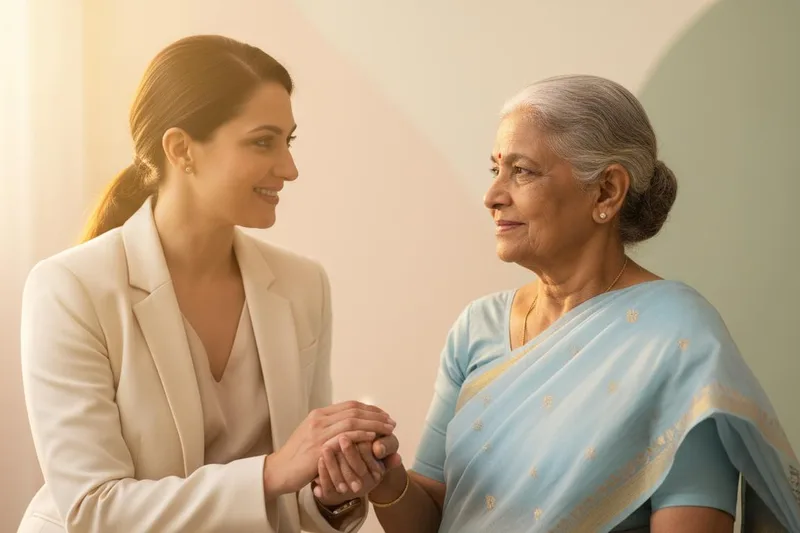
We all think about the health problems that our parents, grandparents, and grandparents face as they age, right? We often talk about diseases like knee pain, high blood pressure, and diabetes, and we take them to the doctors. But does aging only mean illnesses? Imagine their loneliness, being marginalized from society, economic problems, and the helplessness they feel when they can't do anything on their own... How much does all of this affect their lives? That's how we're talking about a group of people today who think about every aspect of aging, have expert knowledge about it, and help improve the quality of life of our elders. They are called Gerontologists .
Simply put, who is this Gerontologist?
Simply put, a Gerontologist is a professional who studies the aging process and the well-being of older adults. Now you might be thinking, "Oh... so that means a doctor who treats older people?" Yes, that's part of it. But the word Gerontologist is much broader than that.
Think of Gerontologist as a big umbrella. Under that umbrella are specialists in various fields. All of them have the common goal of making aging a better, healthier, and happier life. People who can fall under this umbrella are:
- Physicians: These are what we usually call Geriatricians . That is, doctors who specialize in the diseases of the elderly. We will talk about this in more detail later.
- Nurses: Nurses who have received special training in caring for the elderly and taking care of their health.
- Biologists: Those who research changes that occur at the cellular level in the body as we age.
- Psychologists: Those who focus on things like mental changes that occur during aging, memory loss, loneliness, and depression.
- Social workers: People who help provide the elderly with the social support, housing, and economic assistance they need.
- Economists: Those who study the finances of a retiree and how an aging population affects the country's economy.
- Scholars in the arts or humanities: Those who study how the concept of aging is represented in society and culture.
Now you understand, right? A gerontologist is not just one type of person. It's a broad field that combines knowledge from many different fields.
How does a gerontologist think? Seeing the big picture
What's special about a gerontologist is that when they look at an aging person, they don't just look at their illness. They consider the whole person, the environment they live in. They know very well that aging doesn't affect everyone the same way.
Think about these examples:
1. Living in a deprived area: Think about a grandmother in our village. The doctor tells her to eat nutritious food and walk a little every day. But if there is no good shop to buy vegetables and fruits in the village where that grandmother lives, or if there is no safe path or park to walk, how will she follow those instructions? A Gerontologist thinks about practical issues like these.
2. Loneliness and social connections: Some adults have children working abroad, or in remote areas like Colombo. They are alone at home. When they have no one to talk to, not only their mental health but also their physical health deteriorates due to loneliness. A gerontologist understands how important social connections are to them, such as going to the temple, church, temple, or joining a village association.
3. Transportation difficulties: Think about a grandfather who needs to go to the clinic for his period. He can't drive a car on his own. His children are at work. He has to travel by bus, struggling. Because of this, he may even avoid going to the clinic. How does this affect his freedom and self-respect?
4. Ageism: After retirement, when someone tries to find a small job, some organizations say, "Oh, uncle, we're hiring younger people." Not only does this cause them financial problems, but it can also make them feel "I'm no longer useful to society" and make them feel discouraged.
Aging is not just about getting sick. It is just another stage of life. Every adult has the right to live that stage with dignity, happiness, and health. The role of a gerontologist is to guide that.
Geriatrician and Gerontologist: What exactly is the difference between these two?
This is where many people get confused. It is very important to clearly explain the difference between the two. Let's look at this in a table to make it easier.
| Characteristic | Geriatrician (a doctor who specializes in the elderly) | Gerontologist (a specialist in the study of aging) |
|---|---|---|
| Basic qualification | A doctor who has a medical degree (such as MBBS) and has specialized training in the diseases of the elderly. | A person who has obtained at least a Master's degree or Doctorate in a subject related to aging (e.g., psychology, sociology, medicine). |
| Main focus | Identifying , treating and preventing diseases common to older people (diabetes, high blood pressure, arthritis, memory loss). | Studying all aspects of aging - physical, mental, social and economic - and finding ways to improve their quality of life. |
| The work being done | Prescribing medications to patients, referring them for surgery, and treating patients in hospitals and clinics. | Conducting research, formulating policies, consulting, providing education, planning programs in elderly homes, and advising the government. |
| Simple example | The doctor who treats your grandmother's knee pain. | The social worker who advises on a suitable daycare center for that grandmother, because she finds it difficult to stay home alone, or the researcher who pressures the government to create such centers. |
Simply put, every Geriatrician is a Gerontologist, but not every Gerontologist is a Geriatrician (doctor).
Where do these people work? What do they do?
The work of a gerontologist is very diverse. They are not confined to one place.
Work places:
- Hospitals and clinics
- Nursing homes and long-term care centers
- Community centers
- Non-profit organizations and companies
- Research institutes
- Universities
Tasks performed:
- Program planning: Creating health programs, exercise classes, and computer learning classes that are tailored to our seniors.
- Counseling: Advising seniors and their families on retirement planning, financial management, and housing options.
- Policymaking: Pressuring the government to create laws that are favorable to the elderly, and to provide special facilities in public transportation and banks.
- Research: Seeking new knowledge about things like how to maintain brain health as you age? How to live with chronic diseases?
- Providing education: Teaching this subject in universities, creating future gerontologists.
- Direct care: Working in hospitals and nursing homes to directly care for the elderly.
Due to advances in medical science, people are now living longer than ever before. That means the elderly population in our country is increasing. So, it is not enough to just make them live for a few more years. It is very important to create the environment where they can live that life happily, healthily, and with dignity. That is the essential role that Gerontologists play.
What is research done in Gerontology?
Research in this field provides us with a lot of valuable information about aging. Here are a few examples:
- Brain health: It's normal to experience some memory loss as we age, but research is underway to differentiate between dementia and other conditions and ways to keep the brain healthy.
- Impact of chronic diseases: Studying how chronic diseases such as diabetes and chronic obstructive pulmonary disease (COPD) affect the lives of adults.
- Nutrition: What kind of nutrition does an aging body need? What kind of diet is best for them?
- Benefits of vaccination: Research is being conducted to see how vaccines given to adults (e.g., pneumonia vaccine) can protect them from serious diseases.
- Oral Health: Because the health of teeth and gums affects overall health, special attention is paid to the oral health of adults.
- Interaction with animals: Research is also being conducted on how having a pet (dog, cat) can reduce loneliness and stress in older adults, thereby improving their quality of life.
It is by using the knowledge gained from this research that doctors, governments, and social workers work to improve the lives of our elderly.
Take-Home Message
- A gerontologist is a professional in a broad field who studies all aspects of aging (physical, mental, social). Not all of them are doctors.
- When they look at an adult's health problem, they also consider the social, economic, and environmental factors that affect it.
- A geriatrician is a doctor who specializes in treating the elderly. He is just one professional who belongs to the broader category of gerontologist.
- As our country's aging population increases, the services provided by gerontologists will become even more important in the future.
- When caring for an elderly family member, think not only about their physical ailments, but also about their happiness, loneliness, and social connections. If you have any concerns, talk to your family doctor for further advice.




💬 Comments (0)
No comments yet. Be the first to share your thoughts here.
Add Your Comment