
Is your house full of maggots? (Maggots) - Here's the perfect solution to this disgusting problem!

Is your house full of maggots? (Maggots) - Here's the perfect solution to this disgusting problem!
Oh my! What if you open the kitchen trash can and see a swarm of little white worms crawling around? It makes you shudder just thinking about it, doesn't it? Having these worms, or as we say in English, maggots, in your home is a real nuisance and a sign of uncleanliness. But don't worry. This can be easily solved without making a big deal out of it. Today, let's talk about who these worms are, why they appear, and how to get rid of this problem completely.

Who are these maggots? (What Are Maggots?)
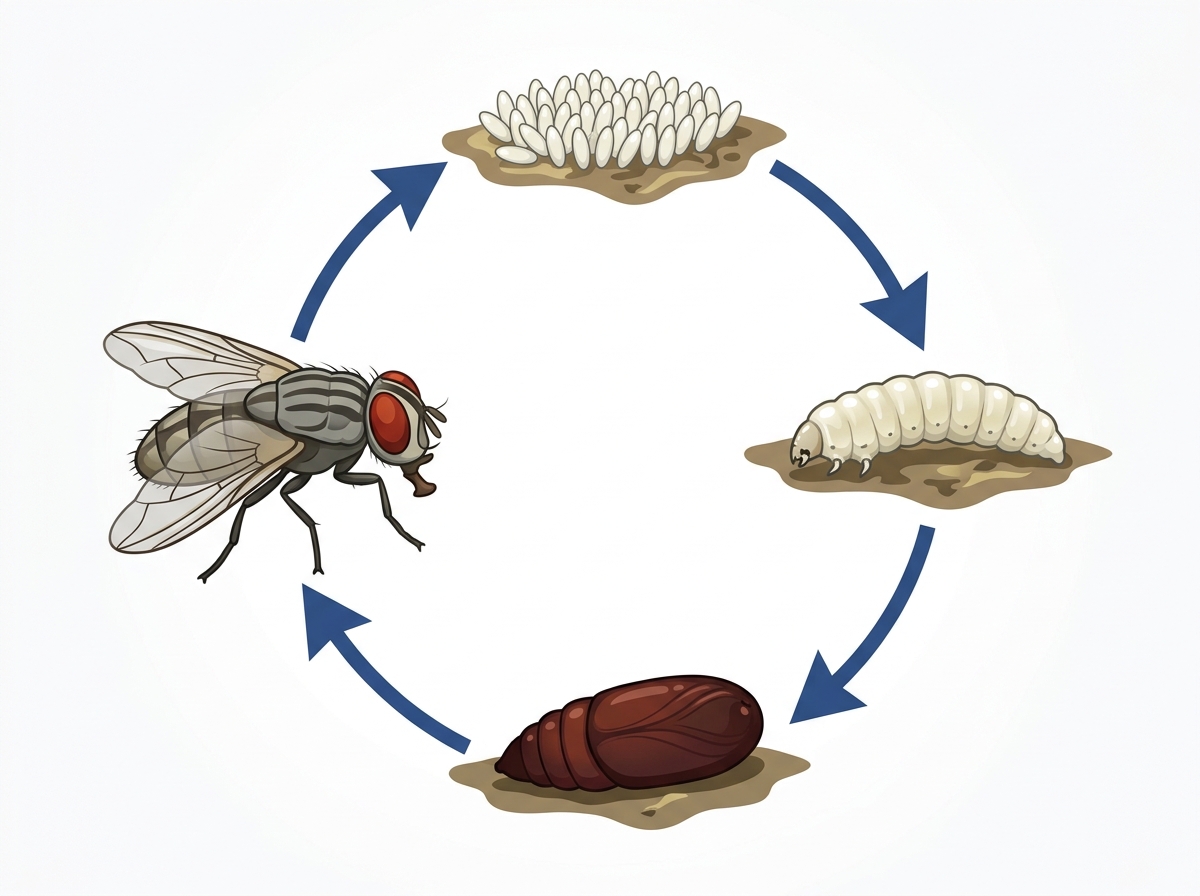
Lifecycle of a housefly showing eggs, larva (maggot), pupa, and adult fly connected in a circle with blue arrows. The image has no text.

Fly lifecycle diagram: eggs, larva (maggot), pupa, adult fly (purely visual illustration, no text).

Simply put, these worms are the larvae of flies . Just as there is a caterpillar before there is a butterfly, there are these worms before there is a fly. They are usually small, worm-like, and white in color. They have a thin head and no limbs. They are often found on decaying, decaying organic matter. They are small, white in color at first, but as they grow, they can sometimes grow to about an inch in size and turn gray or black in color. Then their bodies become a little stiff .
Although these worms are unpleasant to us, they can sometimes be useful. They are also used in forensic entomology and wound debridement.
But they're of no use when they're at home. So the best thing to do is to identify them and get rid of them quickly.

Are there different types of worms?

Yes, just like flies, there are different types of worms. But we don't need to know about all of them. It's enough to know about the types that we mainly see in our homes.
Type of Maggot Where it is usually seen
Blowfly Maggots They often live in things like rotting meat and fish. The body of their mother fly is a shiny metallic color.
House Fly Maggots Our homes are full of trash, piles of garbage, and spoiled fruits and vegetables.
Flesh Fly Maggots As the name suggests, they are often attracted to rotting flesh and animal carcasses.
Soldier Fly Maggots In compost piles, you can see piles of rotting organic matter.

How do you know if there are worms in the house?

Look out for these signs to know if your home is infested with worms:
  • Bad smell: If there is an unbearable bad, musty smell coming from the garbage can or compost pile.
  • Increase in flies : If there are suddenly a lot of flies flying around the house, especially near the kitchen , it could be a sign.
  • Seeing worms: If you see small white worms moving around in the trash, in a piece of food that has fallen on the floor, or around your pet's food bowl.
The life cycle of these worms is short, about 5-10 days. But because they continue to lay eggs and reproduce, this problem will never go away unless the cause is found and eliminated first.

Why do these worms form? How can they be prevented?

The main reason why worms breed is because our home environment creates a suitable place for flies to lay their eggs . Flies like places that are moist, warm, and have rotting things. To prevent worms from breeding, do these things:
  • Manage waste properly: Empty the kitchen trash can every day. Use a trash can with a lid. Wrap leftovers like meat and fish in polythene and put them in the trash can.
  • Keep food well-covered: Keep leftovers, such as fruit , well-covered in the fridge. If you keep them outside, cover them with a food cover.
  • Cleanliness: If food falls on the kitchen floor or counter, clean it up immediately. Clean it regularly using a disinfectant .
  • Eliminate moisture: If there are any areas of standing water in your home, eliminate them. Moisture is essential for worms to survive.
  • Reduce the chances of flies entering your home: It's best to put screens on windows and doors, or keep doors closed as much as possible.
  • Take care of your pets: Wash your pets' food bowls regularly. Remove their feces promptly.

Are there any health risks from worms?

This is a concern for many people. Usually, worms in the home do not cause much harm to a healthy person. However, in some cases, there can be a risk. The main risk is a condition called myiasis . Simply put, this is when fly larvae (worms) infect human or animal tissue . If a fly comes and lays eggs in an unhealthy wound on the body, the worms that hatch from those eggs begin to live inside that wound. This can be a very dangerous condition. If left untreated, serious complications can occur, and even death can occur.
Therefore, if you have a wound that is not healing, especially non-healing wounds on the feet of diabetics, you should be very careful about flies. If you see worms in such a wound, see a doctor without delay.
In addition, if you inadvertently eat spoiled food that contains worms, you can get stomach upset and infections (intestinal myiasis). But remember one thing, worms do not bite people or animals. So you don't need to worry about them biting and spreading diseases.

How do I get rid of these worms?

Okay, now let's see what are the ways to get rid of this trouble.

1. Cleanliness comes first.

This is the best and most permanent solution. Completely remove the place where the worms are, such as the trash can or garbage can. Then wash the area thoroughly with hot water and disinfectant and leave it to dry.

2. Fly Traps

Because flies are the ones that make maggots, fly control is very important. You can catch adult flies using commercially available fly paper and fly traps.

3. Natural methods

  • Diatomaceous earth: This is a powder made from fossilized algae. When applied to worms, it absorbs moisture from their bodies, dehydrating them and killing them. It is harmless to humans and pets. Sprinkle some of this powder where the worms are.
  • Natural enemies: If you have animals like birds and lizards in your garden, they will eat these worms. That is also a natural control method.

4. Chemical Pesticides

You can kill the worms by spraying insecticides, but you need to be very careful when using these.
  • Follow the instructions: Follow the instructions on the bottle exactly.
  • Be safe: Be very careful when using around small children and pets. Do not spray near food or drink.
  • In case of an emergency: If any of this chemical accidentally gets on your skin, gets in your eyes, or is accidentally ingested , go to the nearest hospital Emergency Department (ETU) immediately. Also, call the National Poisons Information Centre at the Colombo National Hospital for further information and advice.

What if there are worms in a pet's wound?

If you see worms in a wound on your pet's body, do not try to treat it at home. This can make the infection worse. Take your pet to a qualified veterinarian immediately. He or she will clean the wound and provide appropriate treatment.

Take-Home Message

  • Maggots are the larvae of flies. They grow on rotting and decaying matter.
  • The best and surest way to get rid of worms is cleanliness. Proper disposal of garbage and keeping food and drink well covered are very important.
  • Worms can cause a dangerous tissue infection called myiasis . If you see worms in a wound on your body, see your doctor immediately.
  • Be very careful when using chemical pesticides . Follow safety instructions exactly.
  • If your pet develops this condition, see a veterinarian immediately.
Worms, maggots, flies, cleanliness, myiasis, infections, home safety


1. What causes maggots in the trash can?

Maggots appear because adult flies are attracted to moist organic waste (like meat or fish scraps) and lay eggs there. In warm conditions, these eggs hatch into larvae in less than 24 hours.

2. How to get rid of maggots quickly without chemicals?

The fastest natural way is to pour boiling water directly over them, then wash the bin with bleach or disinfectant. Diatomaceous earth is also a highly effective natural desiccant.

3. Are maggots dangerous to humans?

They do not bite humans, but they can contaminate surfaces with pathogens. The most serious medical risk is myiasis, which occurs if flies lay eggs in open wounds.

4. What is myiasis?

Myiasis is a parasitic infection caused by fly larvae developing in living tissues of humans or animals. It causes intense pain and requires immediate medical treatment.

5. What should I do if my pet has maggots in a wound?

Take your pet to a qualified veterinarian immediately. Do not apply household insecticides to the wound, as they can poison the animal.

Frequently Asked Questions (FAQ)

1. What causes maggots in the trash can?

Maggots appear because adult flies are attracted to moist organic waste (like meat or fish scraps) and lay eggs there. In warm conditions, these eggs hatch into larvae in less than 24 hours.

2. How to get rid of maggots quickly without chemicals?

The fastest natural way is to pour boiling water directly over them, then wash the bin with bleach or disinfectant. Diatomaceous earth is also a highly effective natural desiccant.

3. Are maggots dangerous to humans?

They do not bite humans, but they can contaminate surfaces with pathogens. The most serious medical risk is myiasis, which occurs if flies lay eggs in open wounds.

4. What is myiasis?

Myiasis is a parasitic infection caused by fly larvae developing in living tissues of humans or animals. It causes intense pain and requires immediate medical treatment.

5. What should I do if my pet has maggots in a wound?

Take your pet to a qualified veterinarian immediately. Do not apply household insecticides to the wound, as they can poison the animal.

⚠️ Important: The medical articles and information on Nirogi Lanka are for general awareness only, and are by no means a substitute for professional medical advice, diagnosis, or treatment. For any medical problem you have, consult a qualified physician immediately.

💬 Comments (0)

No comments yet. Be the first to share your thoughts here.

Add Your Comment

Please calculate: 6 + 2 =
Is your house full of maggots? (Maggots) - Here's the perfect solution to this disgusting problem!
Preventive HealthSeptember 19, 2025

Is your house full of maggots? (Maggots) - Here's the perfect solution to this disgusting problem!

Oh my! What if you open the kitchen trash can and see a swarm of little white worms crawling around? It makes you shudder just thinking about it, doesn't it? Having these worms, or as we say in English, maggots, in your home is a real nuisance and a sign of uncleanliness. But don't worry. This can be easily solved without making a big deal out of it. Today, let's talk about who these worms are, why they appear, and how to get rid of this problem completely.

Who are these maggots? (What Are Maggots?)

Lifecycle of a housefly showing eggs, larva (maggot), pupa, and adult fly connected in a circle with blue arrows. The image has no text.

Fly lifecycle diagram: eggs, larva (maggot), pupa, adult fly (purely visual illustration, no text).

Simply put, these worms are the larvae of flies . Just as there is a caterpillar before there is a butterfly, there are these worms before there is a fly. They are usually small, worm-like, and white in color. They have a thin head and no limbs. They are often found on decaying, decaying organic matter. They are small, white in color at first, but as they grow, they can sometimes grow to about an inch in size and turn gray or black in color. Then their bodies become a little stiff .
Although these worms are unpleasant to us, they can sometimes be useful. They are also used in forensic entomology and wound debridement.
But they're of no use when they're at home. So the best thing to do is to identify them and get rid of them quickly.

Are there different types of worms?

Yes, just like flies, there are different types of worms. But we don't need to know about all of them. It's enough to know about the types that we mainly see in our homes.
Type of Maggot Where it is usually seen
Blowfly Maggots They often live in things like rotting meat and fish. The body of their mother fly is a shiny metallic color.
House Fly Maggots Our homes are full of trash, piles of garbage, and spoiled fruits and vegetables.
Flesh Fly Maggots As the name suggests, they are often attracted to rotting flesh and animal carcasses.
Soldier Fly Maggots In compost piles, you can see piles of rotting organic matter.

How do you know if there are worms in the house?

Look out for these signs to know if your home is infested with worms:
  • Bad smell: If there is an unbearable bad, musty smell coming from the garbage can or compost pile.
  • Increase in flies : If there are suddenly a lot of flies flying around the house, especially near the kitchen , it could be a sign.
  • Seeing worms: If you see small white worms moving around in the trash, in a piece of food that has fallen on the floor, or around your pet's food bowl.
The life cycle of these worms is short, about 5-10 days. But because they continue to lay eggs and reproduce, this problem will never go away unless the cause is found and eliminated first.

Why do these worms form? How can they be prevented?

The main reason why worms breed is because our home environment creates a suitable place for flies to lay their eggs . Flies like places that are moist, warm, and have rotting things. To prevent worms from breeding, do these things:
  • Manage waste properly: Empty the kitchen trash can every day. Use a trash can with a lid. Wrap leftovers like meat and fish in polythene and put them in the trash can.
  • Keep food well-covered: Keep leftovers, such as fruit , well-covered in the fridge. If you keep them outside, cover them with a food cover.
  • Cleanliness: If food falls on the kitchen floor or counter, clean it up immediately. Clean it regularly using a disinfectant .
  • Eliminate moisture: If there are any areas of standing water in your home, eliminate them. Moisture is essential for worms to survive.
  • Reduce the chances of flies entering your home: It's best to put screens on windows and doors, or keep doors closed as much as possible.
  • Take care of your pets: Wash your pets' food bowls regularly. Remove their feces promptly.

Are there any health risks from worms?

This is a concern for many people. Usually, worms in the home do not cause much harm to a healthy person. However, in some cases, there can be a risk. The main risk is a condition called myiasis . Simply put, this is when fly larvae (worms) infect human or animal tissue . If a fly comes and lays eggs in an unhealthy wound on the body, the worms that hatch from those eggs begin to live inside that wound. This can be a very dangerous condition. If left untreated, serious complications can occur, and even death can occur.
Therefore, if you have a wound that is not healing, especially non-healing wounds on the feet of diabetics, you should be very careful about flies. If you see worms in such a wound, see a doctor without delay.
In addition, if you inadvertently eat spoiled food that contains worms, you can get stomach upset and infections (intestinal myiasis). But remember one thing, worms do not bite people or animals. So you don't need to worry about them biting and spreading diseases.

How do I get rid of these worms?

Okay, now let's see what are the ways to get rid of this trouble.

1. Cleanliness comes first.

This is the best and most permanent solution. Completely remove the place where the worms are, such as the trash can or garbage can. Then wash the area thoroughly with hot water and disinfectant and leave it to dry.

2. Fly Traps

Because flies are the ones that make maggots, fly control is very important. You can catch adult flies using commercially available fly paper and fly traps.

3. Natural methods

  • Diatomaceous earth: This is a powder made from fossilized algae. When applied to worms, it absorbs moisture from their bodies, dehydrating them and killing them. It is harmless to humans and pets. Sprinkle some of this powder where the worms are.
  • Natural enemies: If you have animals like birds and lizards in your garden, they will eat these worms. That is also a natural control method.

4. Chemical Pesticides

You can kill the worms by spraying insecticides, but you need to be very careful when using these.
  • Follow the instructions: Follow the instructions on the bottle exactly.
  • Be safe: Be very careful when using around small children and pets. Do not spray near food or drink.
  • In case of an emergency: If any of this chemical accidentally gets on your skin, gets in your eyes, or is accidentally ingested , go to the nearest hospital Emergency Department (ETU) immediately. Also, call the National Poisons Information Centre at the Colombo National Hospital for further information and advice.

What if there are worms in a pet's wound?

If you see worms in a wound on your pet's body, do not try to treat it at home. This can make the infection worse. Take your pet to a qualified veterinarian immediately. He or she will clean the wound and provide appropriate treatment.

Take-Home Message

  • Maggots are the larvae of flies. They grow on rotting and decaying matter.
  • The best and surest way to get rid of worms is cleanliness. Proper disposal of garbage and keeping food and drink well covered are very important.
  • Worms can cause a dangerous tissue infection called myiasis . If you see worms in a wound on your body, see your doctor immediately.
  • Be very careful when using chemical pesticides . Follow safety instructions exactly.
  • If your pet develops this condition, see a veterinarian immediately.
Worms, maggots, flies, cleanliness, myiasis, infections, home safety


1. What causes maggots in the trash can?

Maggots appear because adult flies are attracted to moist organic waste (like meat or fish scraps) and lay eggs there. In warm conditions, these eggs hatch into larvae in less than 24 hours.

2. How to get rid of maggots quickly without chemicals?

The fastest natural way is to pour boiling water directly over them, then wash the bin with bleach or disinfectant. Diatomaceous earth is also a highly effective natural desiccant.

3. Are maggots dangerous to humans?

They do not bite humans, but they can contaminate surfaces with pathogens. The most serious medical risk is myiasis, which occurs if flies lay eggs in open wounds.

4. What is myiasis?

Myiasis is a parasitic infection caused by fly larvae developing in living tissues of humans or animals. It causes intense pain and requires immediate medical treatment.

5. What should I do if my pet has maggots in a wound?

Take your pet to a qualified veterinarian immediately. Do not apply household insecticides to the wound, as they can poison the animal.

Frequently Asked Questions (FAQ)

1. What causes maggots in the trash can?

Maggots appear because adult flies are attracted to moist organic waste (like meat or fish scraps) and lay eggs there. In warm conditions, these eggs hatch into larvae in less than 24 hours.

2. How to get rid of maggots quickly without chemicals?

The fastest natural way is to pour boiling water directly over them, then wash the bin with bleach or disinfectant. Diatomaceous earth is also a highly effective natural desiccant.

3. Are maggots dangerous to humans?

They do not bite humans, but they can contaminate surfaces with pathogens. The most serious medical risk is myiasis, which occurs if flies lay eggs in open wounds.

4. What is myiasis?

Myiasis is a parasitic infection caused by fly larvae developing in living tissues of humans or animals. It causes intense pain and requires immediate medical treatment.

5. What should I do if my pet has maggots in a wound?

Take your pet to a qualified veterinarian immediately. Do not apply household insecticides to the wound, as they can poison the animal.

⚠️ Important: The medical articles and information on Nirogi Lanka are for general awareness only, and are by no means a substitute for professional medical advice, diagnosis, or treatment. For any medical problem you have, consult a qualified physician immediately.

💬 Comments (0)

No comments yet. Be the first to share your thoughts here.

Add Your Comment

Please calculate: 6 + 2 =