
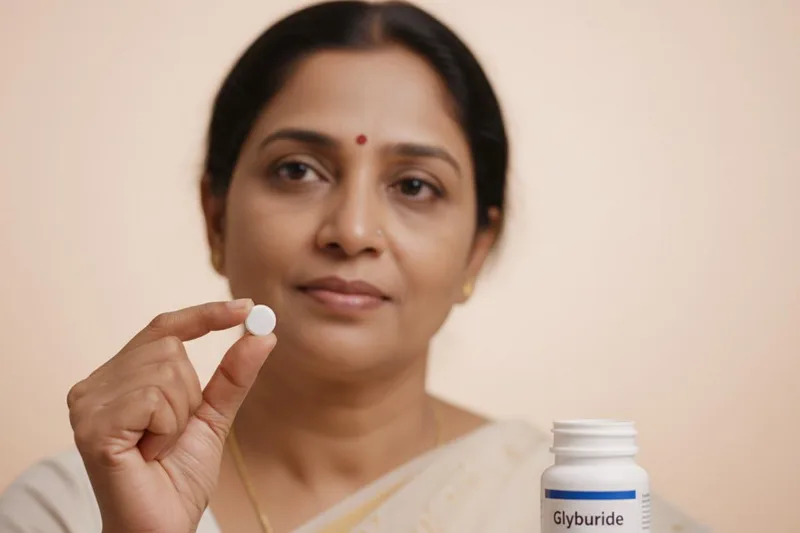
Has your doctor prescribed you a pill called Glyburide to control your type 2 diabetes? Or is someone in your family, like your mother or father, using this medication? Many people have questions about what this medication is, how it works in our bodies, and what special precautions we need to take when using it. So today, let's talk about all this very simply, in a way that you can understand.
What kind of drug is Glyburide?
Simply put, Glyburide is a medication given to people with type 2 diabetes. It belongs to a class of drugs called sulfonylureas.
This mainly does two things:
1. It increases the production of the hormone insulin in your body.
2. Also, it helps to reduce blood sugar levels, that is, glucose levels, by properly utilizing the insulin in the body.
But one thing to remember is that taking this medicine alone is not enough. You need to combine it with a proper diet and exercise . Only then will you get the best results.
Things you need to tell your doctor before taking this medicine
Before you start taking Glyburide tablets, it is important to tell your doctor if you have any of the following conditions, as the dosage or medication you are given may change based on this information.
| Your health condition | Why should you inform? |
|---|---|
| An emergency condition called diabetic ketoacidosis. | This medicine is not suitable because this is a serious complication of diabetes. |
| Kidney or liver disease. | Because medication is eliminated from the body through this organ, the dosage may need to be adjusted in the event of illness. |
| Heart disease. | This medication should be used with caution in people with certain heart conditions. |
| G6PD deficiency (Glucose-6-phosphate dehydrogenase deficiency). | This is a blood-related condition and can cause side effects. |
| Thyroid diseases. | Thyroid hormone levels can affect blood sugar levels. |
| If you have an allergic reaction to glyburide, sulfa drugs, or anything else. | This is essential to prevent the occurrence of serious allergies. |
| If you are pregnant, trying to get pregnant, or breastfeeding. | Because this medicine can affect the baby, your doctor will give you the best option. |
The medicine should be used in the right way.
- Drink this pill with a glass of water.
- Take the same dose, at the same time, as prescribed by the doctor. Never increase or decrease the dose arbitrarily.
- This is usually given once a day. If so, take it with breakfast or the first main meal of the day .
- Make it a habit to take your medicine at the same time every day.
- If you are over 65 years old, your body may react a little more strongly to this medicine. So your doctor may prescribe a lower dose for you.
What if I take too much medicine?
If you suddenly think you have taken an overdose, immediately call the National Poisons Information Centre at the Colombo National Hospital . Or go to the Emergency Treatment Unit (ETU) of the nearest hospital.
This medicine has been prescribed for you only. Do not share this medicine with anyone else for any reason.
What if I miss a dose of medication?
If you forget to take your medicine, take it as soon as you remember. However, if it is almost time for your next dose, skip the missed dose and take your next dose at the scheduled time. Never take a double dose.
Other medications that are risky with Glyburide
Glyburide is a medication that has a high potential for interaction with other medications, so it is very important to tell your doctor about all medications you are taking, even vitamins.
Medicines that should never be taken with this medicine
- Bosentan
Other things and medications that can affect blood sugar levels
The following medications and things can cause your blood sugar levels to either drop or rise unnecessarily . Therefore, it is essential to inform your doctor about these.
- Alcohol or alcoholic beverages.
- Some medications for blood pressure (e.g. enalapril, captopril, metoprolol, propranolol).
- Aspirin and similar medications.
- Medicines for pain and inflammation (NSAIDs) (e.g. ibuprofen, naproxen).
- Some antibiotics (e.g. ciprofloxacin).
- Female hormones (e.g., birth control pills, estrogens).
- Steroid-containing medications (e.g. prednisone, cortisone).
- Some medicines for asthma, cough, and cold.
- Some medications for mental illness (e.g. Fluoxetine, MAO Inhibitors).
- Some herbal supplements.
This list is not complete, so tell your doctor about all the medications, vitamins, herbal products, and anything else you are taking .
Things to be especially careful about when taking this medicine:
1. Regular medical checkups: Go to the clinic on the scheduled days as prescribed by the doctor and get yourself checked.
2. HbA1C test: This is a simple blood test. It looks at how well your blood sugar has been controlled over the past 2-3 months . Your doctor will tell you to do this test every 3 to 6 months.
3. Be aware of your blood sugar levels: Learn the signs of low blood sugar (hypoglycemia) and high blood sugar (hyperglycemia) and how to manage them.
4. Be prepared for an emergency: If your blood sugar level suddenly drops (hypoglycemia), eat something sweet (e.g., a candy bar, a sugar cube, a glucose tablet) and keep it with you at all times. Remember, if you have a seizure or lose consciousness due to low blood sugar, you should not put anything in your mouth. You could choke. If this happens, you should immediately take someone to the hospital's Emergency Treatment Unit (ETU).
5. Don't skip meals: Never skip meals. Ask your doctor for advice about drinking alcohol.
6. Protect yourself from the sun: This medication may make your skin sensitive to the sun. So if you are going to be in the sun, wear clothing that covers your skin and use sunscreen.
7. Wear a medical ID card: Wearing a medical ID card or bracelet that states that you have diabetes and the medications you take is very important in case of an emergency.
What side effects might I experience?
Like any medication, Glyburide can cause side effects in some people.
| If you experience these symptoms, inform your doctor immediately. | |
|---|---|
| Allergic reactions | Skin rash, itching, swelling of the face, lips, tongue or throat. |
| Low blood sugar (Hypoglycemia) | Tremors, sweating, restlessness, dizziness, rapid heartbeat, and confusion. |
| Hemolytic anemia | Feeling unusually tired, dizziness, headache, difficulty breathing, dark urine, yellowing of the skin or eyes. |
| It's usually not serious, but if it persists, tell your doctor. | |
| Heartburn | Burning sensation after eating. |
| Nausea | Feeling like vomiting. |
How should you store your medicine?
- Keep out of reach of children and pets.
- Store at room temperature (between 15-30 degrees Celsius).
- Throw away expired medicine.
Take-Home Message
- Glyburide is a drug used to treat type 2 diabetes that increases insulin action.
- Always take this medicine with the first main meal of the day.
- If you miss a dose, never take two doses at once.
- Inform your doctor about any other medications you take, even vitamins.
- Be aware of the symptoms of low blood sugar (hypoglycemia). Always keep something sweet nearby.
- It is essential to undergo medical examinations and HbA1C tests on the scheduled dates.
- If you have any further questions about this medicine, talk to your doctor.


💬 Comments (0)
No comments yet. Be the first to share your thoughts here.
Add Your Comment