
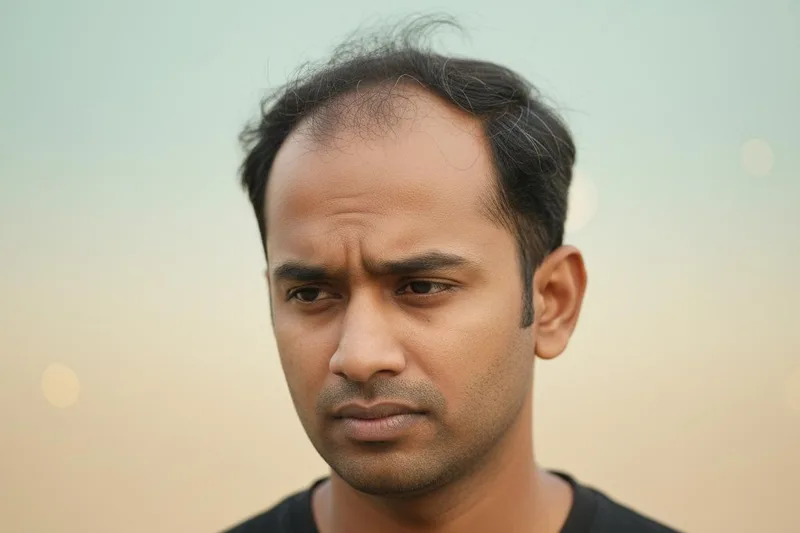
Do you also feel like you have lost a lot of hair and are bald? When you look at the pillow in the morning, or when you take a shower and see the hair floating in the water, do you feel very sad and regretful? Have you tried various oils and shampoos as a solution to this, but to no avail? Then you must have heard the words 'Hair Transplant'. Although many people talk about this, they do not know exactly what it really is, how it is done, and whether there are any risks. So today we will talk about everything in a simple way that you can understand.
What is a hair transplant?
Simply put, a hair transplant is a surgical procedure that involves taking hair from a dense area of your own body (usually the back of your head) and replanting it in a bald spot. It's like taking a lawn mower from a grassy area in a garden.
This is usually done for people who have not had successful results with other treatments, such as medications and oils. This surgery is usually performed by dermatologists or plastic surgeons .
How does this really happen?
Imagine that you have thick hair on the back and sides of your head, but the top and sides of your forehead are balding. This is what the doctor does.
1. Choosing the Donor Site: First, you will select a healthy area with good, thick hair growth, such as the back of your head. This is called the 'Donor Site'.
2. Obtaining the hair graft: Next, very small pieces of skin are removed from the selected area, along with the hair follicles. These small pieces of skin are called 'grafts'. A single graft may contain one, two, or more hair follicles.
3. Replantation: Finally, the grafts are carefully replanted, one by one, into the bald areas of your head.
Once the skin grafted in this way heals, it will start to grow hair again as normal. Since this is your own hair, it looks completely natural.
In what cases is hair transplantation suitable?
There can be many reasons for hair loss. Some are temporary, while others are permanent. A hair transplant is usually best for cases where hair loss is permanent.
- Androgenic Alopecia: This is what we commonly call 'age-related baldness.' It can affect both men and women.
- Alopecia Areata: This is a condition caused by the immune system. The body's own cells attack the hair follicles, causing hair loss in patches.
- Thyroid disease or hormonal imbalances: Some hormonal problems can cause permanent hair loss.
- Injuries or Burns: If the skin on the scalp has been damaged due to an accident or burn and hair does not grow in those areas, this method can also be used on those areas.
Who can have this surgery? Is this suitable for you?
If you're considering a hair transplant, consider whether these factors are right for you.
- You must be in good health .
- You need to have realistic expectations about the results. That means you can't expect thick hair to grow all over your head overnight, it takes time.
- There should still be areas where your hair is growing thickly, like the back of your head. That's where the hair comes from.
The most important thing is to talk to an experienced doctor about this and decide if this is the right treatment for your condition.
What are the main hair transplant methods?
There are several ways to perform this surgery. The doctor will choose the method that best suits you based on your condition and the extent of your baldness.
1. Grafting method
This is the most commonly used method in the world today. As we discussed earlier, this involves taking small pieces of skin (grafts) from areas with hair and planting them in areas without hair. In the past, this was also called "hair plugs." Now, due to advanced technology, even very small micro-grafts, which contain only one or two hairs, are used.
This surgery can take several hours. Most of the time, you are not under anesthesia, which means you are conscious. However, you are given medicine to numb only your skull. So you don't feel any pain. You may need to have several surgeries to get the full results.
2. Scalp Reduction
This is also called 'Alopecia Reduction'. In this procedure, the surgeon removes a small area of skin from the bald spot on your head. Then, the surrounding hairy skin is loosened, pulled to close the gap, and sutured. This procedure is most often used for bald spots on the top and back of the head.
3. Flap Surgery
This method can be used if you have a large bald area near your forehead, that is, at the front of your head. This is a surgery that is performed in several stages over several weeks. In this, the skin in the area where the hair is, is cut on three sides, leaving one side connected to the root skin. This way, the blood supply to that skin is not lost. Then, that piece of skin (flap) is turned over and the bald area is closed. This surgery requires general anesthesia .
4. Tissue Expansion
This method can be used if you have lost hair on your head and your skin has become discolored due to something like a burn. This is also a surgery performed under anesthesia.
- First, a tissue expander is inserted under the healthy skin where the hair is.
- Then, over a period of several weeks, this balloon is gradually inflated. The skin in that area stretches and more skin is formed.
- Finally, a second surgery removes the excess skin and closes the bald area.
What can I expect after surgery? (Risks and side effects)
As with any surgical procedure, hair transplantation can carry some risks and side effects. However, most of these are temporary. It is important to be aware of these beforehand.
| Risks | Temporary Side Effects |
|---|---|
| Allergy to anesthetic drugs. | Formation of crusts or flakes on the scalp wounds. |
| Excessive bleeding. | Itchy scalp. |
| Failure of transplanted grafts (no hair regrowth). | A tingling or numbness in the scalp. |
| Wound infection. | A slight ache or pain. |
| Loss of sensation in the skull. | Swelling of the skull. |
| Scarring. | Feeling of tightness in the skull. |
What are the benefits of hair transplantation?
There are many risks as well as benefits to this.
- Permanent Solution: This is a permanent solution to hair loss.
- Natural look: The look is 100% natural because you use your own hair.
- Increased self-confidence: This is a great help in rebuilding the self-confidence lost due to baldness.
- Low maintenance: Once the transplanted hair grows, it doesn't require any special maintenance. It's just like your normal hair.
How is the recovery time after surgery?
After most hair transplant surgeries, you can go home the same day. Your recovery process will depend on the type of surgery you had. A typical recovery schedule might look like this:
| Time | What can be done? |
|---|---|
| Day 1 | Removing bandages on medical advice. |
| Day 2 | Wash your hair very gently, as directed by your doctor. |
| 3 to 5 days | Engaging in routine work and light activities. |
| After 10 days | Removal of stitches by the doctor. |
| After 3 weeks | Resumption of exercise or sports activities. |
How long will these results last?
The most important thing is this: It can take several months to a year to see the full results of the surgery.
The transplanted hair may fall out in the first few weeks after the surgery. Don't worry, this is normal. This is something that happens as the skin heals. After that, new hair will start to grow in those areas. Sometimes, you may need to have a few more minor "touch-up" surgeries to achieve a completely natural look.
What are the situations when you should see a doctor?
You will be given a few days to see your doctor after surgery. However, if you experience any of the following symptoms, call your doctor immediately.
- Persistent fever.
- Excessive bleeding from the skull.
- Unbearable pain or deep redness in the scalp.
- Signs of infection (such as green or yellow pus draining from wounds).
A hair transplant can make a big difference to your appearance and self-confidence. However, since it is a surgical procedure, it is essential to research it thoroughly and choose an experienced and skilled doctor.
Take-Home Message
- Hair transplantation is a surgical procedure that involves taking hair from your own body and replanting it in empty areas.
- This can be a permanent solution to hair loss, but it's not suitable for everyone.
- Before surgery, have realistic expectations about the results. It can take up to a year to see full results.
- As with any surgery, there are risks and side effects. Talk openly with your doctor about these.
- Be sure to choose a qualified, experienced dermatologist or plastic surgeon for this.


💬 Comments (0)
No comments yet. Be the first to share your thoughts here.
Add Your Comment