

Do you feel tired all the time? Or do you suffer from constant colds and infections? Sometimes these things are considered normal, but they can rarely be a sign of something else. Today we are going to talk about a rare but very important blood cancer that is very important to be aware of. It is called "Hairy Cell Leukemia".
What is this "Hairy Cell Leukemia"?
Simply put, this is a type of cancer that starts in the blood. We have a part of our body called the bone marrow. It is from that bone marrow that the types of cells in our blood are made. Of these, B-cells (also called `B lymphocytes`) are a type of white blood cell. Their main function is to fight germs that enter our body and protect us from diseases.
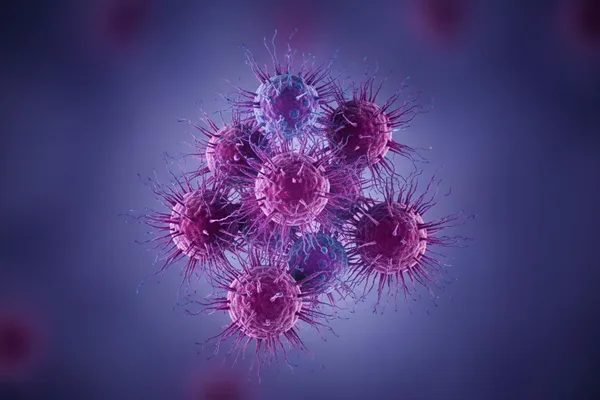
So, in this condition called `Hairy Cell Leukemia`, what happens is that your bone marrow produces abnormal B-cells . When you look at these abnormal cells under a microscope, you can see that they have tiny hair-like protrusions coming out of them. That's why this disease is called ``hairy cell leukemia'' because of that ``hairy'' appearance. It is diagnosed by pathologists who examine the cells under a microscope.
Why does this happen? What happens to the body?
Although it is not yet known exactly why this happens, there are a few things that happen to the body when this condition occurs. Imagine that you have a vegetable garden, and what happens if weeds grow out of control? The good vegetables lose space and don't grow properly, right? That's what happens here too.
- Bone marrow effects: Those abnormal B-cells start to build up in the bone marrow, like weeds. That reduces the ability to produce healthy white blood cells, red blood cells, and platelets (cells that help blood clot).
- Lymph nodes and spleen swelling: These abnormal cells in our lymph nodes and spleen begin to divide and multiply, causing those organs to swell.
- Liver effects: Sometimes these abnormal cells can spread to the liver through the bloodstream and damage it. This can lead to fluid accumulation in the abdomen (a condition called `ascites`).
Is this common?
`Hairy Cell Leukemia` is a very rare disease. Even in a country like America, it occurs in about one in a hundred thousand people. It is also said that this condition is slightly more common among white people than other ethnic groups.
What are the symptoms?
Sometimes people with `Hairy Cell Leukemia` may not have any symptoms . However, when symptoms do appear, they may show things like:
- Fatigue: This fatigue can occur due to a decrease in red blood cell levels (anemia).
- Fever and frequent infections: Due to low levels of healthy white blood cells that fight infection, frequent fevers and severe infections are more likely.
- Left lower abdominal pain: When abnormal cells in the spleen accumulate and cause the spleen to swell, you may experience pain in the left lower abdominal area. The spleen may enlarge and make you feel full, and you may feel full even after eating a small amount. You may also lose weight without trying.
- Pain in the lower right abdomen: If the liver is enlarged, you may experience pain in the right side.
- Difficulty breathing: This is another symptom of anemia.
- Swollen lymph nodes: Painless lumps may appear in the neck, armpits, and abdomen.
- Unusual bruising or bleeding: Because the bone marrow does not produce enough platelets, which help blood clot, even the smallest bruises and bleeding can occur.
Important: Having one or more of these symptoms does not necessarily mean you have Hairy Cell Leukemia. However, if these symptoms persist, it is best to seek medical advice.
What are the causes? Are there any risk factors?
Experts still don't know the exact cause of Hairy Cell Leukemia. However, research has found that about 90% of people with the disease have a genetic mutation. It affects a gene called BRAF. This gene helps cells grow. So, when it changes, abnormal cells start to grow and multiply uncontrollably. This genetic change occurs after we are born. However, it is still not clear what causes that change.
However, some risk factors have been identified that increase the risk of developing this disease:
- Age: This condition most commonly affects people between the ages of 40 and 70. The average age at diagnosis is around 58 years.
- Gender: This disease is more common in men than women.
- Agent Orange exposure: Researchers believe there is a link between this chemical and chronic B-cell leukemia and lymphoma (including hairy cell leukemia).
What complications can this cause?
Hairy Cell Leukemia causes a significant decrease in the number of white blood cells in your body that fight infection, which increases your risk of developing infections . These can be bacterial, viral, or fungal infections. Sometimes, these infections can be life-threatening.
There is also a small chance of developing a second type of cancer many years after diagnosis and treatment. For example, studies that followed people who had been successfully treated for `Hairy Cell Leukemia` for 10-20 years have reported cases of some people developing other cancers.
How is this disease diagnosed?
When you see a doctor, he or she will ask you about things like when your symptoms started and whether you get frequent infections. He or she will also ask about your medical history. Then, they will do a physical exam. They may also check your lymph nodes, spleen, and liver for swelling.
Then, you may be referred to a hematologist or medical oncologist for further tests to confirm the diagnosis. These tests may include:
- Complete blood count (CBC) and differential: This measures the number of red and white blood cells, as well as platelets. The differential measures the number of different types of white blood cells.
- Peripheral blood smear: Pathologists look at a blood sample under a microscope to look for abnormal cells with "hair"-like protrusions.
- Bone marrow aspiration and bone marrow biopsy: These tests can detect abnormal cells in the bone marrow.
- CT scan (Computed tomography - `CT` scan): `CT` scan can take detailed pictures of the inside of the body. This can be used to see the size of the spleen, liver, and lymph nodes, or an ultrasound of the abdomen.
- Flow cytometry: This checks the blood and bone marrow for abnormal cells, such as hair cells. It also checks the size, shape of the cells, and the presence of tumor markers. Tumor markers can be proteins produced by cancer cells.
How is it treated?
If you have an infection, you will need to treat it first. Then, other treatments will be started to control the symptoms of `Hairy Cell Leukemia`. However, as we have said before, not everyone will have symptoms. For such people, your hematologist or oncologist may suggest a method called active surveillance . If there are symptoms, they may prescribe medications.
Active Surveillance
Hairy Cell Leukemia is a very slow-growing disease. It can take years for symptoms to appear. Because cancer treatments can cause side effects and complications, if you are asymptomatic, your doctor may decide to delay starting treatment until symptoms appear.
During active surveillance, you will see your doctor every three to six months. During those visits:
- They will ask about your general health, especially if you feel more tired than usual.
- A physical examination will be performed to check for swelling of the liver and spleen.
- Blood tests are ordered to check the levels of blood cells and platelets.
It can be a little emotionally difficult to wait for symptoms to appear before starting treatment. But your doctor will understand your feelings and explain why active surveillance is recommended.
Medication
The primary treatment for people with hairy cell leukemia is chemotherapy . The most commonly used anticancer drugs are Cladribine (Leustatin®) or Pentostatin (Nipent®).
If chemotherapy does not work, or if the disease recurs, there are other treatments:
- Immunotherapy: `Rituximab (Rituxan®)` is a `monoclonal antibody` treatment used for `Hairy Cell Leukemia`. It can be given as an initial treatment with chemotherapy or if the disease recurs. Another immunotherapy is `Recombinant Interferon Alfa-2b (Intron A®)`.
- Targeted therapy: For relapsed Hairy Cell Leukemia, drugs called Rituximab and Moxetumomab pasudotox (Lumoxiti®) (this is a type of antibody-drug conjugate) can be used.
- Splenectomy: Very rarely, this surgery may be recommended if medical treatments such as chemotherapy do not help and the spleen continues to swell due to abnormal cells in the spleen.
Are there any side effects of the treatment?
Like any cancer treatment, it can have side effects. In particular, chemotherapy drugs for hairy cell leukemia increase the risk of life-threatening infections . Your doctor will explain to you what steps you can take to prevent infections and what changes in your body may be signs of infection.
What can you expect while living with this disease?
There is currently no cure for Hairy Cell Leukemia. However, research shows that treatment, including chemotherapy, can keep the disease in remission for 10 years or more . Remission means that you are free of symptoms and no signs of the disease can be found on tests. A study that analyzed the experiences of people with Hairy Cell Leukemia found that after treatment, they can live as long as people without the disease.
However, hairy cell leukemia can recur several years after initial treatment. However, if that happens, there are treatments that can put the disease back into remission.
Many people need lifelong medical care and support, as doctors need to monitor for recurrences. Even if you have the disease but have no symptoms, you will need to have tests and follow-up appointments every three to six months after diagnosis.
What is the recovery rate?
According to the Leukemia and Lymphoma Society, 90% of people treated with the chemotherapy drug Cladribine are alive five years after treatment. However, your prognosis — what happens after treatment — depends on many factors . Your age, overall health, symptoms, and how your body responds to treatment all play a role. If you have any questions about this, ask your doctor.
How should I take care of my health?
Hairy Cell Leukemia increases the risk of life-threatening infections. You can strengthen your immune system and protect yourself from infections . Here are some suggestions:
- Eat a healthy diet: Things like fruits, vegetables, lean proteins, and whole grains help the immune system function.
- Exercise daily: Being active every day is good for many aspects of your health, including your immune system.
- Get enough sleep: Not getting enough sleep can make your immune system less effective.
- Get your vaccines on time: Vaccines train your body to fight germs that cause disease. Talk to your doctor about which vaccines you need and when to get them.
When should you see a doctor?
Hairy Cell Leukemia and its treatment can increase your risk of developing serious, sometimes life-threatening infections. See a doctor right away if you have these symptoms:
- A fever that is higher than 38 degrees Celsius (100.4 degrees Fahrenheit) and does not go down.
- A sore throat that lasts more than a few days or gets worse.
- Abdominal pain that does not go away or gets worse.
Summary and Finally (Take-Home Message)
Maybe you've been feeling more tired than usual for no reason. Or maybe you've been thinking about a respiratory infection that hasn't gone away despite all the medication you've been taking. Now tests have shown that you have a rare blood cancer called `Hairy Cell Leukemia`, which is completely incurable with treatment.
But don't worry . There are treatments that can keep the condition under control for years without symptoms. A long-term `remission` means that your healthcare team will monitor your health for the rest of your life. And, if Hairy Cell Leukemia does come back, researchers are continuing to look for ways to put the condition back into `remission`.
There are things you can do on your part. For example, cancer treatment can increase your risk of infection. Ask your doctor about vaccinations and other steps you can take to reduce your risk of infection. You are not alone, and there are doctors and health workers who can help you on this journey.
` Hairy Cell Leukemia, leukemia, blood cancer, B cells, bone marrow, spleen, symptoms




💬 Comments (0)
No comments yet. Be the first to share your thoughts here.
Add Your Comment