
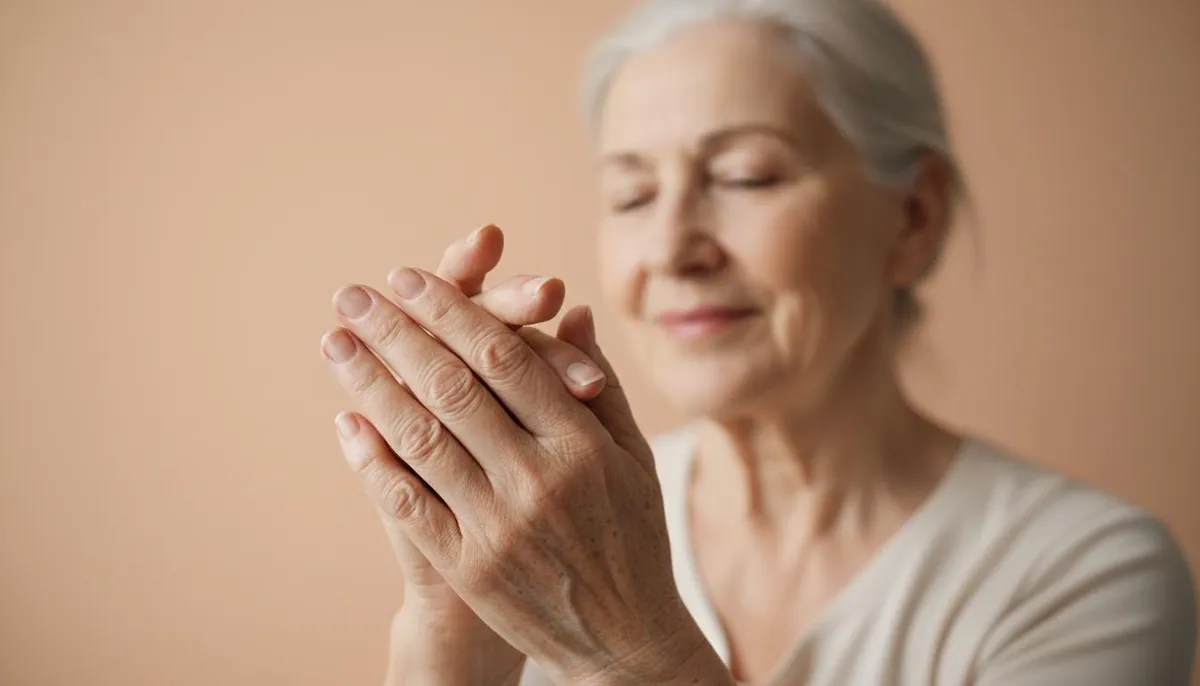
Have you ever looked closely at the hands of an older family member or perhaps your own fingers? You might notice small bumps or swelling right near the tips of the fingers. When you touch these small lumps, you may also feel a mild ache or stiffness.
Many people assume this is just a normal part of getting older. However, this condition has a very clear medical explanation. Let us take a close look at what is happening in your fingers and what you can do about it.
Key Takeaways
- Heberden nodes are hard bony bumps that form on the joint closest to your fingertip.
- They are a common sign of osteoarthritis, which is wear and tear in your joints.
- Symptoms can include finger stiffness, joint swelling, and difficulty doing fine hand tasks.
- You can manage symptoms with rest, warm compresses, hand therapy, and doctor-approved pain medicine.
- Seeing a doctor early helps you protect your hand function and manage joint pain effectively.
What Are Heberden Nodes?
Simply put, Heberden nodes are hard, bone-like bumps that form on the joint closest to your fingertips. Doctors call this specific joint the distal interphalangeal joint.
These bumps are actually new bits of bone growing on the joint. They are usually quite small, roughly the size of a green pea.
The most important thing to know is that these bumps are not a disease on their own. Instead, they are a primary symptom of osteoarthritis, which is a common type of joint wear and tear in the hands.
These bumps get their name from William Heberden, the famous doctor who first described them in medical history.
What Are Bouchard Nodes?
Bouchard nodes are very similar to Heberden nodes. However, these specific bony bumps form on the middle joint of your finger.
Both types of nodes are classic signs of osteoarthritis affecting your hands.
Why Does Osteoarthritis Happen?
Think of your finger joints like door hinges that need good oil to move smoothly. In our bodies, cartilage acts as that smooth, slippery cushion covering the ends of our bones.
Cartilage stops your bones from rubbing directly against each other when you bend your fingers. Osteoarthritis happens when this cartilage cushion wears down over time and use.
Once the cartilage wears away, the smooth protection is gone. The bare ends of the bones begin to rub together during everyday movement.
This rubbing causes inflammation inside the joint, leading to pain and stiffness. To try and fix this damage, your body attempts to make the joint stable again.
Your body creates new small bone growths around the joint to stabilize it. These new bony growths are the nodes or spurs we talk about.
When they form on the top fingertip joint, they are called Heberden nodes. When they form on the middle joint, they are called Bouchard nodes.
This joint condition is very common in women as they age. Research shows that by age 85, about half of all women and a quarter of all men may show signs of hand osteoarthritis.
How Do These Bumps Affect You?
If you have Heberden nodes, it usually means you have hand osteoarthritis. Along with the visible bumps, you might experience several other symptoms.
| Symptom | What It Feels Like |
|---|---|
| Pain, swelling, and stiffness | Your finger joints ache and swell, especially when you wake up in the morning. |
| Hard joint bumps | Hard, bony lumps feel prominent near the ends of your fingers. |
| Reduced movement | It becomes harder to bend your fingers or make a tight fist easily. |
| Daily task trouble | Simple tasks like opening jars, buttoning shirts, or turning keys become difficult. |
What Treatments Are Available for This Condition?
The main goal of treatment is to lower your pain and help your hands work normally again. Your doctor can suggest several different care options.
Things You Can Do Without Medicine
- Give your hands rest: Take breaks when your fingers feel sore and avoid heavy lifting with painful hands.
- Wear a splint: Supportive finger braces or orthosis devices help rest the joint and ease pain.
- Use hot and cold therapy: Warm compresses or paraffin wax treatments soothe aching joints. Alternating warm and cool packs can also bring relief.
- See a hand therapist: A hand therapy specialist can teach you safe exercises and show you tools to make daily tasks easier.
Treatments Using Medicine
Important: Always talk to your doctor before trying any new medicine or pain relief cream.
- Pain relievers: Your doctor may suggest acetaminophen or nonsteroidal anti-inflammatory drugs as pills or topical gels.
- Steroid injections: If your pain and swelling are severe, your doctor can inject steroid medicine directly into the joint for fast relief.
Will You Need Surgery?
Surgery is rarely necessary for this condition. However, if other treatments do not control your pain and daily tasks become impossible, your doctor might discuss surgery.
The most common procedure is a joint fusion. In this surgery, the damaged cartilage is removed and the two bones are joined together permanently.
When Should You See a Doctor?
You should schedule a visit with your doctor if you notice any of the following signs in your hands.
| Reason | What You Should Do |
|---|---|
| You see new bumps or swelling forming on your finger joints. | See a doctor to confirm if these lumps are Heberden nodes. |
| You have trouble doing fine tasks like writing or buttoning shirts. | Get professional advice as this shows reduced joint function. |
| You experience ongoing pain, stiffness, or swelling in your hands. | Start treatment early to control pain and prevent further joint wear. |
When to Seek Emergency Care
If you experience sudden, severe joint swelling accompanied by a high fever, redness, and extreme heat in the hand, seek immediate medical attention. Call 911 (US/Canada) or 999 (UK) or go to your nearest Emergency Department, as this may indicate a serious joint infection rather than routine osteoarthritis.





No comments yet. Be the first to share your question or experience below.