
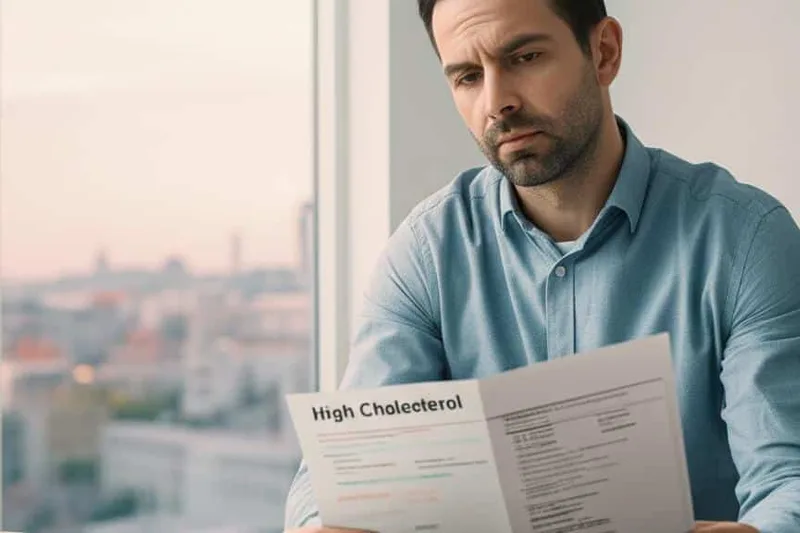
Shall we talk about the causes of high cholesterol (High Cholesterol Risk Factors)?

Shall we talk about the causes of high cholesterol (High Cholesterol Risk Factors)?

We've all heard the word "cholesterol," haven't we? Maybe a doctor has told you that someone in your family, a friend, or even you yourself have high cholesterol. What exactly is cholesterol? Simply put, it's a waxy, oily substance that is produced by our liver and is also found in some animal foods (like milk, eggs, and meat). Although some cholesterol is needed for our body to function, too much of it can greatly increase the risk of heart disease. So, today we'll talk about why cholesterol increases, what causes it, and what we can and cannot control.

What are the reasons that are beyond our control?

There are some things we can't change, no matter how much we want to. Cholesterol is also affected by several factors beyond our control.

  • Gender: Generally, after menopause, when women stop having monthly periods, their LDL cholesterol levels, also known as "bad cholesterol," can increase. This increases the risk of heart disease.
  • Age: The risk of high cholesterol naturally increases with age. In general , men over the age of 45 and women over the age of 55 are at higher risk of high cholesterol and heart disease.
  • Family History: This is a very important factor. For example, if your father or brother had heart disease or high cholesterol before the age of 55, or your mother or sister had it before the age of 65, you may also be at increased risk. There is also a genetic condition called `Familial Hypercholesterolemia (FH) . This is a genetic condition that causes your `LDL` cholesterol levels to be very high from a young age due to a genetic predisposition. Although this is a rare condition, if left untreated, it can get worse over time. Therefore, it is wise to talk to your doctor about your family history and, if necessary, get tested for this `(FH)` condition.

Causes we can change and control

The good news is that we can control many of the main causes of high cholesterol. This means that we can reduce this risk by changing our lifestyle. Let's take a look at what they are.

Controllable risk factor How it affects cholesterol
Diet Eating foods high in oil, sugar, trans fats, and saturated fat increases bad cholesterol (LDL) levels.
Body weight (Weight) Weight gain (obesity) increases bad cholesterol (LDL) and decreases good cholesterol (HDL).
Lack of Physical Activity Exercise can increase good cholesterol (HDL), reduce bad cholesterol (LDL), and control body weight.
Smoking Smoking damages blood vessels, facilitates fat deposition, and also lowers levels of good cholesterol (HDL).
Type 2 Diabetes Diabetes can cause a decrease in good cholesterol (HDL) and an increase in another type of fat called triglycerides.
High Blood Pressure The risk factors for high blood pressure and cholesterol (poor diet, lack of exercise) are often similar. Both are major risk factors for heart disease.

Let's talk about these a little more.

Now you probably understand how much our lifestyle habits affect us.

When it comes to food , the foods we eat that are high in fat, fast food, bakery products, sugary foods, and drinks are the ones that contribute the most to bad cholesterol. Although it is impossible to completely avoid these, it is important to limit them as much as possible. Instead, add more fiber-rich foods like fruits, vegetables, legumes, and nuts.

Exercise may seem like a boring thing to do, but if you do something like brisk walking, running, or swimming for at least 30 minutes a day, it will be a great help to your heart.

There's nothing strange about smoking . It's like scratching your blood vessels from the inside. Then cholesterol can easily build up on those scratches. It's like dirt getting stuck in an old, rusty water pipe. So if you're a smoker, don't be shy about asking for help to quit. Talk to your doctor about this. He or she can help you.

Diabetes and high blood pressure are like friends who go hand in hand with cholesterol. The main causes of all three diseases are poor eating habits and lack of exercise. Therefore, if you have one condition, it is essential to take care of the other conditions as well.

Remember, even though there are things we can't control, like genetics or age, we have a great chance of controlling our cholesterol levels and staying healthy by making the right lifestyle choices.

Take-Home Message

  • Although cholesterol is something our bodies need, an increase in "bad" cholesterol (LDL) is a major risk factor for heart disease.
  • If anyone in your family had heart disease or high cholesterol at a young age, be sure to talk to your doctor about it.
  • Focus on the things we can control. A balanced diet, daily exercise, weight control, and avoiding smoking are the key.
  • To know exactly what your cholesterol level is, get a blood test called a lipid profile as advised by your doctor.
  • Never self-medicate based on hearsay. Always consult a qualified doctor for proper advice and treatment.

Cholesterol, heart disease, LDL cholesterol, HDL cholesterol, cholesterol control, risk factors, Sri Lanka

⚠️ Important: The medical articles and information on Nirogi Lanka are for general awareness only, and are by no means a substitute for professional medical advice, diagnosis, or treatment. For any medical problem you have, consult a qualified physician immediately.

💬 Comments (0)

No comments yet. Be the first to share your thoughts here.

Add Your Comment

Please calculate: 7 + 7 =
Shall we talk about the causes of high cholesterol (High Cholesterol Risk Factors)?

Shall we talk about the causes of high cholesterol (High Cholesterol Risk Factors)?

We've all heard the word "cholesterol," haven't we? Maybe a doctor has told you that someone in your family, a friend, or even you yourself have high cholesterol. What exactly is cholesterol? Simply put, it's a waxy, oily substance that is produced by our liver and is also found in some animal foods (like milk, eggs, and meat). Although some cholesterol is needed for our body to function, too much of it can greatly increase the risk of heart disease. So, today we'll talk about why cholesterol increases, what causes it, and what we can and cannot control.

What are the reasons that are beyond our control?

There are some things we can't change, no matter how much we want to. Cholesterol is also affected by several factors beyond our control.

  • Gender: Generally, after menopause, when women stop having monthly periods, their LDL cholesterol levels, also known as "bad cholesterol," can increase. This increases the risk of heart disease.
  • Age: The risk of high cholesterol naturally increases with age. In general , men over the age of 45 and women over the age of 55 are at higher risk of high cholesterol and heart disease.
  • Family History: This is a very important factor. For example, if your father or brother had heart disease or high cholesterol before the age of 55, or your mother or sister had it before the age of 65, you may also be at increased risk. There is also a genetic condition called `Familial Hypercholesterolemia (FH) . This is a genetic condition that causes your `LDL` cholesterol levels to be very high from a young age due to a genetic predisposition. Although this is a rare condition, if left untreated, it can get worse over time. Therefore, it is wise to talk to your doctor about your family history and, if necessary, get tested for this `(FH)` condition.

Causes we can change and control

The good news is that we can control many of the main causes of high cholesterol. This means that we can reduce this risk by changing our lifestyle. Let's take a look at what they are.

Controllable risk factor How it affects cholesterol
Diet Eating foods high in oil, sugar, trans fats, and saturated fat increases bad cholesterol (LDL) levels.
Body weight (Weight) Weight gain (obesity) increases bad cholesterol (LDL) and decreases good cholesterol (HDL).
Lack of Physical Activity Exercise can increase good cholesterol (HDL), reduce bad cholesterol (LDL), and control body weight.
Smoking Smoking damages blood vessels, facilitates fat deposition, and also lowers levels of good cholesterol (HDL).
Type 2 Diabetes Diabetes can cause a decrease in good cholesterol (HDL) and an increase in another type of fat called triglycerides.
High Blood Pressure The risk factors for high blood pressure and cholesterol (poor diet, lack of exercise) are often similar. Both are major risk factors for heart disease.

Let's talk about these a little more.

Now you probably understand how much our lifestyle habits affect us.

When it comes to food , the foods we eat that are high in fat, fast food, bakery products, sugary foods, and drinks are the ones that contribute the most to bad cholesterol. Although it is impossible to completely avoid these, it is important to limit them as much as possible. Instead, add more fiber-rich foods like fruits, vegetables, legumes, and nuts.

Exercise may seem like a boring thing to do, but if you do something like brisk walking, running, or swimming for at least 30 minutes a day, it will be a great help to your heart.

There's nothing strange about smoking . It's like scratching your blood vessels from the inside. Then cholesterol can easily build up on those scratches. It's like dirt getting stuck in an old, rusty water pipe. So if you're a smoker, don't be shy about asking for help to quit. Talk to your doctor about this. He or she can help you.

Diabetes and high blood pressure are like friends who go hand in hand with cholesterol. The main causes of all three diseases are poor eating habits and lack of exercise. Therefore, if you have one condition, it is essential to take care of the other conditions as well.

Remember, even though there are things we can't control, like genetics or age, we have a great chance of controlling our cholesterol levels and staying healthy by making the right lifestyle choices.

Take-Home Message

  • Although cholesterol is something our bodies need, an increase in "bad" cholesterol (LDL) is a major risk factor for heart disease.
  • If anyone in your family had heart disease or high cholesterol at a young age, be sure to talk to your doctor about it.
  • Focus on the things we can control. A balanced diet, daily exercise, weight control, and avoiding smoking are the key.
  • To know exactly what your cholesterol level is, get a blood test called a lipid profile as advised by your doctor.
  • Never self-medicate based on hearsay. Always consult a qualified doctor for proper advice and treatment.

Cholesterol, heart disease, LDL cholesterol, HDL cholesterol, cholesterol control, risk factors, Sri Lanka

⚠️ Important: The medical articles and information on Nirogi Lanka are for general awareness only, and are by no means a substitute for professional medical advice, diagnosis, or treatment. For any medical problem you have, consult a qualified physician immediately.

💬 Comments (0)

No comments yet. Be the first to share your thoughts here.

Add Your Comment

Please calculate: 7 + 7 =