
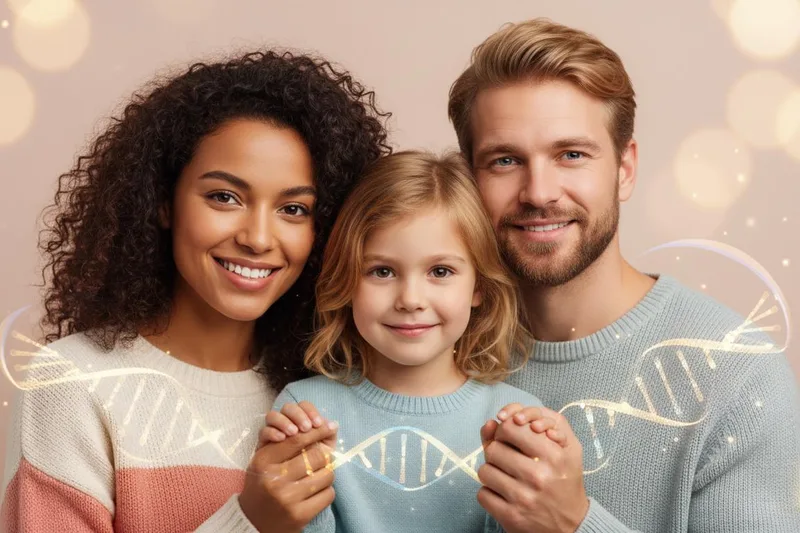
What is Homozygous? Let's learn about your genes in a simple way!

What is Homozygous? Let's learn about your genes in a simple way!

Do you sometimes think, "My eyes are exactly like my mother's" or "My hair is exactly like my father's"? We all inherit various characteristics of our appearance and behavior from our mother and father. The reason for this is genes. So today we are going to talk about a very important thing related to these genes. That is the condition called `(Homozygous)`. Although the name may sound a little complicated, it is actually quite simple. Let's see?

Simply put, what is Homozygous?

Okay, think of it this way. We get two copies of every gene from our biological parents. One from our mother, one from our father. Sometimes the copy of the gene from our mother and the copy of the gene from our father are exactly the same . That's what we call ``Homozygous'' in genetics.

Simply put, for a particular trait (e.g. eye color), you inherit the same set of genetic instructions from both your parents. These identical sets of genes are called alleles. So if you inherit two of the same alleles, you are homozygous for that gene. This is what causes certain traits, such as blue eyes and red hair. But sometimes, if both genes are mutated, certain genetic conditions can occur.

What is an allele?

We all have more than 99% of the same genes in our bodies. But a very small percentage (less than 1%) of genes have slight differences from one person to another. These different 'versions' of a gene are called alleles. These slight differences are what give you your unique characteristics.

What is the difference between Homozygous and Heterozygous?

These two words are a bit similar, so it can be confusing. But the difference is very simple. Let's look at a small table to make this easier to understand.

Characteristic Homozygous Heterozygous
Meaning "Homo" means "same." It means that the same type of alleles are inherited from both parents. "Hetero" means "different." It means that the individual has two different types of alleles from each parent.
Example If you take the gene for eye color, you get the allele for brown from your mother and the allele for brown from your father. If we take the gene for eye color, we get the allele for brown from our mother and the allele for blue from our father.

Simply remember: Homozygous = two copies of the same gene. Heterozygous = two different copies of the gene.

What are 'dominant' and 'residual' traits?

When talking about genes, two words that are definitely worth knowing are `dominant` and `recessive`.

  • Dominant allele: This is like the most mischievous kid in the class. He is the only one who doesn't make noise. That is, if there is a dominant allele, the trait that is expressed by it will definitely be visible. We write these in English capital letters (e.g. B, F, D).
  • Recessive allele: This is a bit like a quiet, withdrawn child. In order for his trait to come out, it needs to be combined with another recessive allele like him. We write these in simple English letters (e.g.: b, f, d).

Now how does this happen in the `(Homozygous)` situation?

You can have two dominant alleles. We call that homozygous dominant (e.g. BB ). Or you can have two recessive alleles. We call that homozygous recessive (e.g. bb ).

If a `(Heterozygous)` person (e.g. Bb ) receives both the dominant (B) and the recessive (b) alleles, only the dominant trait will be visible. But for a `(Homozygous)` person, this will not happen. Since both genes are the same, the trait will be visible in the same way.

What are the common characteristics caused by homozygous?

Many things, such as our appearance and the nature of various parts of our body, are determined by these `(Homozygous)` genes. Let's look at a few examples.

Characteristic Homozygous Dominant Homozygous Recessive
Eye color BB - Brown eyes (this is the dominant trait) bb - eyes of another color, such as blue or green
Freckles FF - Facial freckle location (dominant) ff - No freckles
Curly hair HH - Having curly hair (dominant) hh - having straight (straight) hair
Earplugs UU - Hanging earlobe (dominant) uu - the nature of the earlobes sticking out

Diseases that can be caused by homozygous

As is always the case with good things, sometimes this `(Homozygous)` condition can also lead to genetic diseases. How is that?

Imagine that a mother and father have a defective, recessive gene that causes a certain disease. But neither of them has that disease, because they both have a dominant, healthy gene that suppresses it (that is, both are `Heterozygous`). However, if a child is born with that defective recessive gene from both the mother and the father, that child will be `Homozygous Recessive` for that gene. Then the chance of that genetic disease occurring is high.

Here are some of the diseases that can occur:

  • Cystic Fibrosis: This disease is caused by having two defective copies of the CFTR gene. This causes the body's mucus (fluid like mucus) to thicken, affecting the respiratory and digestive systems.
  • Sickle Cell Anemia: This disease occurs when two defective copies of the HBB gene are inherited. This causes the red blood cells to be deformed (sickling in shape) and unable to carry oxygen properly.
  • Phenylketonuria (PKU): This disease is caused by having two defective copies of the PAH gene. This prevents the body from breaking down the amino acid phenylalanine.

Important: If someone in your family has a genetic condition, or if you have any doubts or fears about it, it is best to talk to your doctor or a medical professional about it. They will give you the advice and guidance you need.

Take-Home Message

  • `Homozygous` means that you receive two of the same genes (alleles) for a certain trait from your mother and father.
  • Many things, like the color of your eyes and the texture of your hair, are determined by these genes.
  • This can be a dominant allele (e.g. BB) or a recessive allele (e.g. bb).
  • Sometimes, inheriting two defective copies of a gene can cause genetic conditions such as Cystic Fibrosis or Sickle Cell Anemia.
  • If you have any concerns about genetic diseases, it is very important to seek advice from a doctor.

Homozygous, heterozygous, gene, allele, dominant, recessive, genetics, DNA, genetic conditions, sickle cell anemia, cystic fibrosis, genes, homozygous, heterozygous, allele, dominant, recessive, genetics

Frequently Asked Questions (FAQ)

What is an allele?

We all have more than 99% of the same genes in our bodies. But a very small percentage (less than 1%) of genes have slight differences from one person to another. These different 'versions' of a gene are called alleles. These slight differences are what give you your unique characteristics.

⚠️ Important: The medical articles and information on Nirogi Lanka are for general awareness only, and are by no means a substitute for professional medical advice, diagnosis, or treatment. For any medical problem you have, consult a qualified physician immediately.

💬 Comments (0)

No comments yet. Be the first to share your thoughts here.

Add Your Comment

Please calculate: 1 + 3 =
What is Homozygous? Let's learn about your genes in a simple way!
How the Body WorksJuly 7, 2026

What is Homozygous? Let's learn about your genes in a simple way!

Do you sometimes think, "My eyes are exactly like my mother's" or "My hair is exactly like my father's"? We all inherit various characteristics of our appearance and behavior from our mother and father. The reason for this is genes. So today we are going to talk about a very important thing related to these genes. That is the condition called `(Homozygous)`. Although the name may sound a little complicated, it is actually quite simple. Let's see?

Simply put, what is Homozygous?

Okay, think of it this way. We get two copies of every gene from our biological parents. One from our mother, one from our father. Sometimes the copy of the gene from our mother and the copy of the gene from our father are exactly the same . That's what we call ``Homozygous'' in genetics.

Simply put, for a particular trait (e.g. eye color), you inherit the same set of genetic instructions from both your parents. These identical sets of genes are called alleles. So if you inherit two of the same alleles, you are homozygous for that gene. This is what causes certain traits, such as blue eyes and red hair. But sometimes, if both genes are mutated, certain genetic conditions can occur.

What is an allele?

We all have more than 99% of the same genes in our bodies. But a very small percentage (less than 1%) of genes have slight differences from one person to another. These different 'versions' of a gene are called alleles. These slight differences are what give you your unique characteristics.

What is the difference between Homozygous and Heterozygous?

These two words are a bit similar, so it can be confusing. But the difference is very simple. Let's look at a small table to make this easier to understand.

Characteristic Homozygous Heterozygous
Meaning "Homo" means "same." It means that the same type of alleles are inherited from both parents. "Hetero" means "different." It means that the individual has two different types of alleles from each parent.
Example If you take the gene for eye color, you get the allele for brown from your mother and the allele for brown from your father. If we take the gene for eye color, we get the allele for brown from our mother and the allele for blue from our father.

Simply remember: Homozygous = two copies of the same gene. Heterozygous = two different copies of the gene.

What are 'dominant' and 'residual' traits?

When talking about genes, two words that are definitely worth knowing are `dominant` and `recessive`.

  • Dominant allele: This is like the most mischievous kid in the class. He is the only one who doesn't make noise. That is, if there is a dominant allele, the trait that is expressed by it will definitely be visible. We write these in English capital letters (e.g. B, F, D).
  • Recessive allele: This is a bit like a quiet, withdrawn child. In order for his trait to come out, it needs to be combined with another recessive allele like him. We write these in simple English letters (e.g.: b, f, d).

Now how does this happen in the `(Homozygous)` situation?

You can have two dominant alleles. We call that homozygous dominant (e.g. BB ). Or you can have two recessive alleles. We call that homozygous recessive (e.g. bb ).

If a `(Heterozygous)` person (e.g. Bb ) receives both the dominant (B) and the recessive (b) alleles, only the dominant trait will be visible. But for a `(Homozygous)` person, this will not happen. Since both genes are the same, the trait will be visible in the same way.

What are the common characteristics caused by homozygous?

Many things, such as our appearance and the nature of various parts of our body, are determined by these `(Homozygous)` genes. Let's look at a few examples.

Characteristic Homozygous Dominant Homozygous Recessive
Eye color BB - Brown eyes (this is the dominant trait) bb - eyes of another color, such as blue or green
Freckles FF - Facial freckle location (dominant) ff - No freckles
Curly hair HH - Having curly hair (dominant) hh - having straight (straight) hair
Earplugs UU - Hanging earlobe (dominant) uu - the nature of the earlobes sticking out

Diseases that can be caused by homozygous

As is always the case with good things, sometimes this `(Homozygous)` condition can also lead to genetic diseases. How is that?

Imagine that a mother and father have a defective, recessive gene that causes a certain disease. But neither of them has that disease, because they both have a dominant, healthy gene that suppresses it (that is, both are `Heterozygous`). However, if a child is born with that defective recessive gene from both the mother and the father, that child will be `Homozygous Recessive` for that gene. Then the chance of that genetic disease occurring is high.

Here are some of the diseases that can occur:

  • Cystic Fibrosis: This disease is caused by having two defective copies of the CFTR gene. This causes the body's mucus (fluid like mucus) to thicken, affecting the respiratory and digestive systems.
  • Sickle Cell Anemia: This disease occurs when two defective copies of the HBB gene are inherited. This causes the red blood cells to be deformed (sickling in shape) and unable to carry oxygen properly.
  • Phenylketonuria (PKU): This disease is caused by having two defective copies of the PAH gene. This prevents the body from breaking down the amino acid phenylalanine.

Important: If someone in your family has a genetic condition, or if you have any doubts or fears about it, it is best to talk to your doctor or a medical professional about it. They will give you the advice and guidance you need.

Take-Home Message

  • `Homozygous` means that you receive two of the same genes (alleles) for a certain trait from your mother and father.
  • Many things, like the color of your eyes and the texture of your hair, are determined by these genes.
  • This can be a dominant allele (e.g. BB) or a recessive allele (e.g. bb).
  • Sometimes, inheriting two defective copies of a gene can cause genetic conditions such as Cystic Fibrosis or Sickle Cell Anemia.
  • If you have any concerns about genetic diseases, it is very important to seek advice from a doctor.

Homozygous, heterozygous, gene, allele, dominant, recessive, genetics, DNA, genetic conditions, sickle cell anemia, cystic fibrosis, genes, homozygous, heterozygous, allele, dominant, recessive, genetics

Frequently Asked Questions (FAQ)

What is an allele?

We all have more than 99% of the same genes in our bodies. But a very small percentage (less than 1%) of genes have slight differences from one person to another. These different 'versions' of a gene are called alleles. These slight differences are what give you your unique characteristics.

⚠️ Important: The medical articles and information on Nirogi Lanka are for general awareness only, and are by no means a substitute for professional medical advice, diagnosis, or treatment. For any medical problem you have, consult a qualified physician immediately.

💬 Comments (0)

No comments yet. Be the first to share your thoughts here.

Add Your Comment

Please calculate: 1 + 3 =