
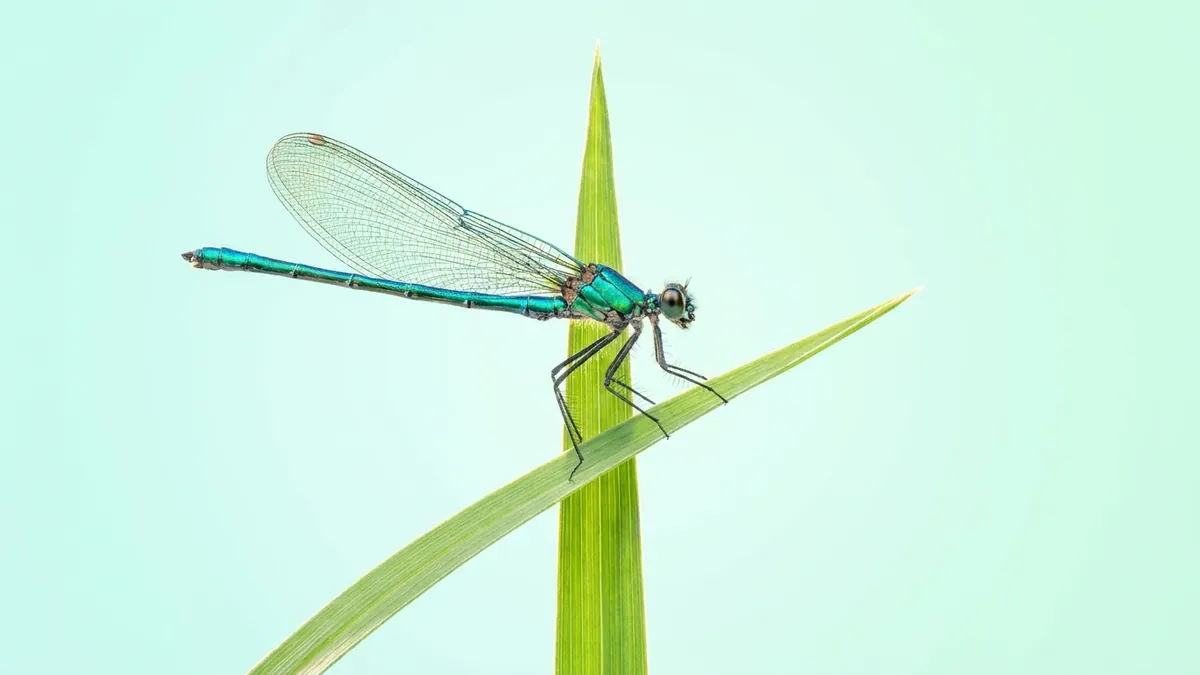
Have you ever ducked out of the way when a giant dragonfly zoomed past your patio, worried it might sting you or leave a toxic rash on your skin? Across the United States, the United Kingdom, Canada, and Australia, old playground myths still call dragonflies "horse stingers" or "devil's darning needles," convincing people that touching one will land you in urgent care.
As family doctors, we hear this worry from parents and outdoor lovers all the time—especially when someone searches, "is it safe to touch a dragonfly?" after one lands on their arm during a summer walk. Let's clear up that myth right now: dragonflies have no stinger, carry zero venom, and do not spread human illnesses. In fact, they are some of the healthiest backyard neighbors you could ever ask for.
📌 Key Takeaways at a Glance
- Safe to touch, better to admire: Dragonflies are completely non-venomous and safe to touch gently, though handling them can damage their fragile wings.
- Bites are rare and defensive: A free-flying dragonfly will never attack you; they only give a mild pinch if squeezed or trapped.
- Zero disease transmission: Unlike mosquitoes or ticks, dragonflies do not bite for blood and do not carry human pathogens.
- Natural mosquito control: A single dragonfly eats hundreds of mosquitoes daily, helping protect your household from insect-borne viruses.
- Simple home care: If a large dragonfly ever pinches your finger, washing with mild soap and cool water is typically all that is needed.
Is It Safe to Touch a Dragonfly?
Yes, it is generally safe to touch a dragonfly, as they are completely non-venomous, do not carry human diseases, and rarely bite unless squeezed or trapped. However, because their delicate wings tear easily and a large dragonfly can give a harmless defensive pinch if held tightly, admiring them hands-free is best.
Think about it for a second—when an insect the size of your thumb hovers inches from your face, your natural instinct is to flinch. Yet if a dragonfly lands calmly on your forearm, your sun hat, or the edge of your lawn chair, you do not need to panic or swat it away. Their feet have tiny, harmless microscopic hooks designed solely for gripping reeds and branches, not piercing skin.
We doctors only advise against grabbing a dragonfly by its wings or squeezing its body. Not only can oils and pressure from human fingers tear their paper-thin wings and ground them permanently, but a frightened dragonfly may also try to defend itself with its jaws. Pretty surprising, right?
How Do Dragonflies Behave Around Humans?
Have you ever wondered why dragonflies seem to follow you around the backyard, circle your head near a lake, or repeatedly return to the exact same patio chair? It is not because they are trying to chase you off. Understanding dragonfly behavior with humans comes down to two simple instincts: hunting and resting.
First, your warm body and the carbon dioxide you breathe out naturally attract mosquitoes, midges, and gnats. To a hungry dragonfly, you are essentially a walking magnet for its favorite meal! When they dart close to your shoulders or ankles, they are usually snapping up biting bugs right before those bugs reach your skin.
Second, dragonflies are cold-blooded insects that rely on sunshine to warm their flight muscles. A brightly colored beach towel, a wooden deck railing, or even your stationary shoulder offers a warm, elevated lookout post. Once they warm up or spot a passing gnat, they lift right back off without bothering you at all.
What Is a Dragonfly, Really? (And How Is It Different From a Fly?)
When most people hear the word "dragonfly," they naturally assume it belongs to the same family as houseflies or horseflies. Despite the shared name, dragonflies are not flies at all. Scientifically, we classify them in an ancient insect order called Odonata, which has been gliding over Earth's wetlands for more than 300 million years.
Look at what happens here when you compare them side by side: an ordinary housefly or biting horsefly has only two wings, whereas a dragonfly has four large, crystal-clear wings that move independently. That unique four-wing setup lets dragonflies hover like helicopters, fly backward, and make hairpin turns in mid-air.
You might also spot slimmer, more delicate cousins near garden ponds called damselflies. While they share the same family tree, damselflies fold their wings neatly along their backs when resting, whereas true dragonflies hold all four wings flat out to the sides like an airplane. Makes sense, right?
What Does a Dragonfly Look Like Up Close?
Dragonflies are among the most striking insects you will ever see in nature, showing off metallic shades of electric blue, emerald green, ruby red, bright yellow, and earthy brown. Depending on the species in your region, an adult dragonfly can measure anywhere from one inch up to roughly five inches long.
If you ever get a close look at one resting on a garden stem, three fascinating body features stand out immediately:
- Wrap-around compound eyes: Two massive eyes cover nearly their entire head, packed with up to 30,000 tiny lenses that give them almost 360-degree vision to spot predators and prey.
- Basket-shaped legs: Their six spiny legs sit far forward under their head, forming a natural scoop to catch mosquitoes mid-flight rather than walking on the ground.
- A long, segmented tail (abdomen): That long, slender tail helps them steer through the air—and despite the old "horse stinger" nickname, there is no stinger at the tip.
What Do Dragonflies Eat—and How Do They Protect Your Health?
Here is the part we doctors love sharing most with families: dragonflies are dedicated carnivores with a massive appetite for household pests. Depending on its size, a single adult dragonfly can catch and eat anywhere from thirty to several hundred mosquitoes in a single day.
Alongside mosquitoes, they also sweep up biting blackflies, midges, gnats, and small moths right out of the air. Because they hunt during the daytime and early dusk—right when families are barbecuing, gardening, or walking the dog—they act like a silent, chemical-free shield around your yard.
We rarely stop to think about that, do we? Fewer mosquitoes around your porch means fewer itchy bites and a meaningful drop in community exposure to mosquito-borne illnesses such as West Nile virus in North America or Ross River virus in Australia.
Are Dragonflies Dangerous, or Do Dragonflies Carry Diseases?
When patients ask us, "are dragonflies dangerous?" or "do dragonflies carry diseases?", we can give an immediate, reassuring no. To transmit an infection to a human, an insect generally needs to either pierce your skin to feed on blood—like a mosquito or tick—or walk across sewage and land on your food, like a housefly.
Dragonflies do neither. They have zero interest in human blood, sweat, or picnic leftovers, and they do not act as biological carriers (vectors) for human viruses, bacteria, or parasites. Simply having a dragonfly land on your skin or brushing against one in the garden will not pass along any infection.
In fact, ecologists use dragonflies as living indicators of a clean environment. Because their young require unpolluted freshwater to survive, seeing healthy dragonflies around your local creek, lake, or backyard pond is a reliable sign of a balanced ecosystem.
Why Is the Life Cycle of a Dragonfly So Amazing?
Most of us only notice dragonflies during the few weeks or months they spend soaring through the summer sky, yet the vast majority of their life happens completely out of sight underwater. A female dragonfly lays hundreds of tiny eggs directly into calm freshwater or onto submerged aquatic plants.
What hatches from those eggs is not a winged insect, but a rugged underwater larva called a nymph (naiad). Depending on the local climate—especially in cooler parts of Canada, the northern United States, or the UK—this underwater nymph can live beneath the surface for one to five years, voraciously eating mosquito larvae and tadpoles.
When the nymph is finally ready to transform, usually under the cover of darkness, it crawls up a reed or dock post into the open air. Its outer shell splits down the back, and a soft, pale dragonfly pulls itself free, pumps fluid into its unfolding wings, and takes off at sunrise. Pretty amazing, right?
Do Dragonflies Really Bite or Sting Humans?
Let's tackle the biggest question head-on: do dragonflies bite? Yes, dragonflies do have strong chewing mouthparts (mandibles) built for crunching hard-shelled beetles and mosquitoes—so technically, a dragonfly can bite a human. However, in real life, it is extraordinarily rare.
Remember how we talked about this earlier? A dragonfly flying freely in your yard will never swoop down to bite you. The only time a dragonfly tries to bite is pure self-defense—for instance, if a child scoops one up in a closed fist, or if one gets trapped inside your shirt collar and feels squeezed.
Even then, most smaller dragonflies lack the jaw strength to break through human skin, feeling more like a light tap or gentle scrape. Only the largest species, such as green darners or giant hawkers, can deliver a brief, sharp pinch that leaves a tiny red mark. And just to be 100% certain: dragonflies cannot sting at all.
What Should You Do If You Get Bitten by a Dragonfly?
Suppose you were trying to rescue a trapped dragonfly from a pool skimmer and it gave your finger a quick pinch. First, take a deep breath—there is no venom entering your body, so you do not need to rush to your Primary Care Physician (PCP) / family GP clinic or local Urgent Care center for a routine pinch.
In almost every case, mild local skin irritation (contact dermatitis) or a small red welt fades within a few hours. Anytime the outer barrier of your skin gets pinched or scratched, though, our main clinical goal as doctors is preventing everyday skin bacteria from causing a minor localized skin infection (cellulitis). Use the quick guide below to match what you see on your skin with the right next step.
| Situation or Skin Symptom | What Is Happening & What You Should Do |
|---|---|
| Mild red pinch mark with unbroken skin | The dragonfly's jaws pressed firmly against your skin in self-defense without piercing the outer skin layer, leaving temporary redness or slight tenderness. What you should do: Wash the area gently with mild soap and cool water, apply a cool damp washcloth for 10 minutes if it feels tender, and let it heal naturally. |
| Tiny superficial scratch or pinpoint bleed | A very large dragonfly managed to nick the top layer of skin while trying to escape being held tightly. What you should do: Rinse thoroughly under running tap water with mild soap, apply a thin layer of plain petroleum jelly or over-the-counter antiseptic ointment, and cover with a clean adhesive bandage. |
| Mild itching or a small localized welt | Your skin's natural histamine response is reacting to minor mechanical pressure, similar to a light scratch. What you should do: Avoid scratching with your fingernails, apply a cold compress, and ask your local pharmacist about an over-the-counter 1% hydrocortisone cream or oral antihistamine if itching bothers you. |
| Growing warmth, swelling, or pus after 24–48 hours | Normal skin bacteria may have entered a small break in the skin, triggering a localized bacterial skin infection (cellulitis). What you should do: Schedule a prompt visit with your Primary Care Physician (PCP) / family GP clinic or walk into a local Urgent Care center so a doctor can examine the skin and prescribe targeted antibiotics if needed. |
Should You Try to Get Rid of Dragonflies From Your Home or Yard?
Not at all! Having dragonflies patrol your backyard, garden beds, or koi pond is like receiving free, around-the-clock mosquito control without spraying harsh chemical insecticides around your children or pets. Rather than chasing them away, welcome them—keeping a clean garden water feature or native tall grasses gives them safe places to perch.
What if a dragonfly accidentally wanders through an open patio door or garage window into your house? Do not grab a broom or try to catch it in your bare hands, which can injure both you and the insect.
Instead, turn off ceiling fans, dim indoor lights, and open one large window or exterior door wide. Because dragonflies instinctively fly toward bright natural sunlight, it will usually spot the exit and glide back outside on its own within a few minutes.
✔️ What You Should Do & ❌ What to Avoid
- ✔️ Do let dragonflies land peacefully: Hold still and enjoy watching them if one rests on your sleeve, hat, or garden chair—they will fly off on their own.
- ✔️ Do wash any rare pinch with soap and water: Simple cleansing removes surface germs and prevents secondary skin irritation.
- ✔️ Do guide indoor dragonflies toward open daylight: Open a bright window or door and turn off spinning ceiling fans so they can exit safely.
- ❌ Do not grab or squeeze a dragonfly by its wings: Rough handling tears their delicate wings and triggers a defensive pinch.
- ❌ Do not spray chemical bug sprays at dragonflies: Killing dragonflies removes one of your yard's best natural predators of biting mosquitoes.
- ❌ Do not scratch a pinched spot with dirty fingernails: Scratching breaks the skin barrier and introduces bacteria that can cause infection.
🚨 When to Seek Immediate Emergency Care (Red-Flag Symptoms)
If you or someone near you develops any of these red-flag symptoms, do not wait — call 911 (US & Canada), 999 or 111 (UK), or 000 (Australia) immediately or go straight to the nearest hospital Emergency Room (ER / A&E):
- Signs of a severe allergic reaction (anaphylaxis): Sudden swelling of your lips, tongue, face, or throat, trouble breathing, wheezing, or throat tightness (though exceedingly rare from a non-venomous dragonfly, any insect encounter can occasionally trigger a severe allergy in sensitive individuals).
- Widespread hives (urticaria) or dizziness: A rapidly spreading itchy rash across your body accompanied by lightheadedness, a racing heartbeat, or feeling faint.
- Rapidly spreading skin infection (cellulitis): Red streaks moving up your arm or leg, severe throbbing pain, rapidly expanding redness, or a fever and chills developing after a skin break.
💡 Key Take-Home Message
- Friendly backyard allies: Dragonflies are harmless, non-venomous insects that eat hundreds of disease-carrying mosquitoes every single day.
- Gentle respect goes a long way: It is safe to let a dragonfly rest on you, but never squeeze or trap one in your hand.
- Basic first aid is plenty: A rare defensive pinch does not inject venom and heals quickly with simple soap, water, and a cool compress.






No comments yet. Be the first to share your question or experience below.