

Are you a new mother ? So you are about to start going back to the office? Or are there times when you need help from a family member to breastfeed your baby? Then a breast pump can be a great help to you. At the same time, it can also provide relief when your breasts are full of milk and hard and painful. So today, let's talk about what a breast pump is and how to use it exactly.
What is a breast pump?
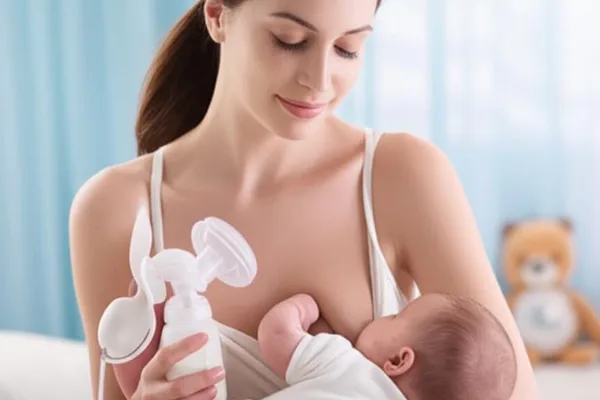
Simply put, a breast pump is a device that is used to remove (express) breast milk from your breasts. This way, we can store the milk that is removed in this way and give it to our baby at a later time. This method is very useful when you are at work, on a trip, or when you need to feed your baby to someone else while you are away.
It is always important to talk to your doctor before you start using a breast pump. Most mothers start pumping as soon as their baby is born. If you are going back to work or school, it is a good idea to start pumping about two weeks before you leave. This will give you and your baby time to get used to it. Try to pump for about 15 minutes every 3-4 hours, the same number of times your baby feeds. A breast pump can also help increase your milk supply and relieve conditions such as engorged breasts or plugged milk ducts.
This is how to use a breast pump correctly.
Not all breast pumps work the same way, so be sure to read the instructions that come with your pump. These are the general steps to follow.
1. Wash your hands: Wash your hands thoroughly with soap and water before handling the breast pump. This is very important.
2. Choose a quiet place: Choose a clean, safe, and private place where you can relax and do this work with peace of mind.
3. Prepare the pump: Assemble the pump parts and double-check that everything is clean.
4. Help your milk flow: When your milk starts to come in, we call it 'letdown'. To make this easier, hold your baby, or look at a photo of your baby. Thinking about your baby will help your milk flow .
5. Attach the Breast Shield: The funnel-shaped part of the breast pump is called the Breast Shield (or Flange). Place this over your breast. Your nipple should be exactly in the middle of the shield .
6. Start pumping: Start with low suction . Once milk starts flowing, gradually increase the suction to a level that is comfortable for you.
7. Pump until your breasts are empty: Pump one breast until it is completely empty (until the milk runs out), then pump the next breast. When you are finished pumping, both of your breasts should feel soft.
8. Store milk: Immediately place pumped milk in the refrigerator or freezer.
9. Clean: Disassemble the pump, rinse thoroughly, and let it air dry. This is essential after every use.
How to store pumped milk safely?
After pumping, the milk should be stored in special milk storage bags or clean, food -grade containers.
A few more things to remember:
- Clearly write the date and time on the bag or bottle of milk.
- Only put the amount your baby needs at a time (usually 2-4 ounces) in one bag/bottle. This way, the milk won't go to waste.
- Do not use plastic containers that are not recommended for storing breast milk.
- Avoid bottles with recycle symbol number 7, as they may contain the harmful chemical BPA.
Why is it important to choose the correct size of Breast Flange?
The Breast Flange (Breast Shield) is the funnel-shaped part of the pump that fits around your nipple. It is very important that this is the right size. If you use the wrong size, you may experience pain and not be able to pump milk properly.
How to measure the correct flange size?
Many breast pump manufacturers have sizing guides on their websites to help you with this. The size of the flange is determined by the diameter of your nipple . This does not include the areola.
Most importantly: Don't pump before taking the measurement. But do stimulate the nipple a little. Because when you pump, the nipple expands.
Use a measuring tape to measure the diameter in millimeters (mm) across the base of your nipple (where the nipple begins). Choose a flange size that is about 1-3 millimeters larger than your measurement. This will give you the most comfort.
| Your nipple measurement (mm) | Matching Flange Size (mm) |
|---|---|
| 17 mm | 21 mm |
| 20 mm | 24 mm |
| 23 mm | 27 mm |
| 26 mm | 30 mm |
| 32 mm | 36 mm |
How do you know if the flange size is wrong?
If the flange fits properly, your nipple should be centered on it and move freely. You should also not feel any pain when pumping. When you are finished pumping, your breast should be completely empty and soft.
If the flange size is incorrect, it can cause nipple pain and incomplete emptying of the breast. If the milk is not removed properly, milk production can decrease, the milk ducts can become blocked, and a painful condition called mastitis can develop.
Mastitis is a condition in which breast tissue becomes infected and swollen. Symptoms include:
- Pain and swelling in the breasts.
- Feeling hot when touching the affected breast.
- Feeling a lump or thickening in the breast.
- Burning or pain when breastfeeding or pumping.
- Redness of the skin.
- Feeling lethargic and having a fever (101°F or higher).
If you have any of these symptoms, see your doctor immediately. If you have an infection, you may need to take antibiotics.
Types of Breast Pumps and Choosing the Right One for You
There are different types of breast pumps on the market. Let's take a look at the main types.
| Pump type | Description |
|---|---|
| Manual Breast Pump | This doesn't require electricity or batteries. It's a manual lever that squeezes to create urine . It's inexpensive and easy to travel with. |
| Electric Breast Pump | These are powered by electricity or batteries. They can control the level of urine . They are faster than a manual pump. |
| Hands-free Breast Pump | These can be worn inside your bra, so you're free to do other things while you pump. |
| Hospital-grade Breast Pump | These are the most powerful type. They are designed to be used by several people. They can usually be rented from hospitals. |
How do you choose the right pump for you?
To choose the pump that best suits you, ask yourself these questions:
- How often do you expect to pump? (Several times a day? Or occasionally?)
- How much time do you have to pump? (Electric pump is faster)
- Do you want something easy to carry around?
- How is your budget?
- Most importantly, does the Breast Shield fit you properly?
Very important: Avoid buying a used breast pump at all costs. These are designed for one person's use only. A pump that has been used by someone else may contain germs that are harmful to you or your baby.
Take-Home Message
- Be sure to wash your hands thoroughly with soap before and after using a breast pump.
- Choosing the right size Breast Flange (Breast Shield) for you is essential to prevent pain and ensure proper milk extraction.
- Store pumped milk in the refrigerator or freezer immediately, recording the date and time.
- After each use, clean all parts of the pump thoroughly and let them dry.
- If you experience symptoms such as pain while pumping, breast lumps, redness, or fever, see your doctor immediately.
- Never buy a second-hand breast pump.




💬 Comments (0)
No comments yet. Be the first to share your thoughts here.
Add Your Comment