
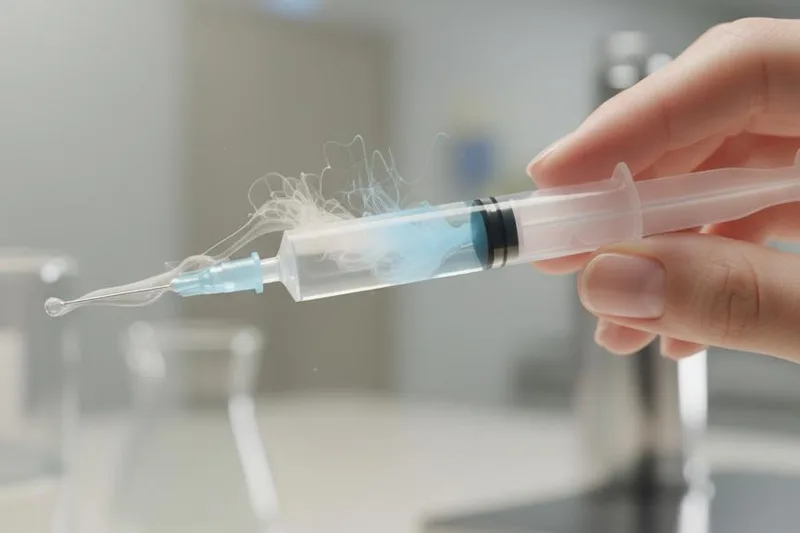
Did you know that when a doctor gives you a medicine, they sometimes give you another medicine to increase the effectiveness of that medicine or to help your body absorb it better? Hyaluronidase is one such "helper" medicine that does a special job. This is something that is usually given together with another injection, rather than a medicine that is given alone. Let's talk about this in a little more detail, and simply, today.
What is Hyaluronidase?
Simply put, Hyaluronidase is a protein that occurs naturally in our bodies. In medicine, it is purified and used as an injection.
Imagine that a main drug that you are given (for example, some types of fluids when you are given saline) needs to be distributed quickly and well between the tissues of the body. At that time, this Hyaluronidase injection is given with that main drug. What happens is that Hyaluronidase temporarily loosens the barriers between the tissues, paving the way for that main drug to move more easily. In other words, this is not a treatment for a main disease, but only an adjunct to another treatment.
This medicine may be available under various brand names in Sri Lanka and abroad, such as `Amphadase`, `Hydase`, and `Wydase`.
What are the things I need to tell the doctor before taking this medicine?
This is very important. Before you are given this vaccine, it is important to tell your doctor the following information.
- Allergies: Tell your doctor if you have a severe allergic reaction to insect stings, such as bees or wasps. Also, tell your doctor if you have an allergy to beef proteins, Thimerosal (a preservative used in some medications), or any other medications, foods, or dyes.
- Existing infections: If there is any infection, wound, or abscess on or around the skin where the injection is to be given, it is important to mention it.
- Pregnancy and breastfeeding: If you are pregnant, trying to become pregnant, or are a breastfeeding mother, it is very important to inform your doctor.
Talking to the doctor without hiding this kind of information is very important for your safety.
How do you use this medicine?
This is not a medicine you can take home. Hyaluronidase injections are only given to you in a hospital or clinic by a trained doctor or nurse . They are usually given under the skin (subcutaneously) or into a muscle (intramuscularly).
Doctors use this medicine in some special cases for young children, even very newborn babies. But special precautions are followed. Therefore, if you are giving this medicine to a child, talk to your pediatrician about it carefully and find out the details.
What if the dosage of the medicine is increased? (Overdose)
Since this is given in a hospital setting, the chances of mistaking the dose are very low. However, if you think you have overdosed or if something like this happens, you should go to the hospital's Emergency Treatment Unit (ETU) immediately . You can also call the National Poisons Information Centre at the Colombo National Hospital for advice if necessary.
Can there be problems with other medications?
Yes, some medications can interact with Hyaluronidase. Therefore, it is very important to tell your doctor about all the medications you are taking, including prescription medications, over-the-counter medications, herbal supplements, vitamins, and herbal remedies.
| Some types of drugs that may react with Hyaluronidase | |
|---|---|
| ACTH (a type of hormone) | Furosemide (a medicine given to remove fluid from the body) |
| Antihistamines (medicines for allergies) | Phenytoin (a medicine for epilepsy) |
| Aspirin and similar drugs | Types of steroids (Steroids - e.g. Prednisone, Cortisone) |
| Benzodiazepines (medications for anxiety or sleep) | Female hormones such as estrogen (Estrogens) |
This list is not complete, so be sure to tell your doctor about anything you are taking.
Possible Side Effects
Like any medicine, Hyaluronidase can cause side effects in some people. Some of these can be serious, so it's important to be aware of them.
| Type of side effect | Characteristics |
|---|---|
| Things to tell your doctor or nurse immediately | |
| Allergic Reactions | Skin rash, itching, hives, swelling of the face, lips, tongue or throat. |
| Breathing difficulties | Difficulty breathing, feeling of tightness in the chest. |
| Changes in heart rate | Rapid, irregular heartbeat, chest pain. |
| Other serious symptoms | Severe nausea or vomiting, chills and fever, weakness, dizziness, and excessive swelling at the injection site. |
| Things that are usually not serious, but should be reported to the doctor if they persist | |
| Minor reactions at the injection site | Redness, slight pain, or swelling at the injection site. |
If you experience any other unusual symptoms not mentioned in this list, please inform your doctor about them as well.
Take-Home Message
- Hyaluronidase is not a main treatment for a disease. It is an "adjuvant" drug that is given to enhance the effectiveness of another vaccine.
- Be sure to tell your doctor about any allergies you have (especially to bee venom and beef) and all other medications you are taking.
- This vaccine is only given by a medical professional in a hospital or clinic. It is not a medicine that can be taken home and used.
- If you experience severe allergic symptoms such as swelling of the face, throat, or difficulty breathing, it is an emergency. Seek medical attention immediately.
- If you have any questions about this medication, the best person to ask is your doctor.


💬 Comments (0)
No comments yet. Be the first to share your thoughts here.
Add Your Comment