Have you ever seen a high cholesterol level in a blood test? Or, has a doctor told you that your "bad cholesterol is a little high and needs to be controlled"? This may be a common experience for many people. So, today we are going to talk about this condition called hypercholesterolemia. Simply put, this means that the level of the "bad" cholesterol in your body, namely low-density lipoprotein (LDL - Low-Density Lipoprotein), is higher than necessary.
What is hypercholesterolemia? Let's understand exactly!
Okay, let's explain a little more. Hypercholesterolemia is
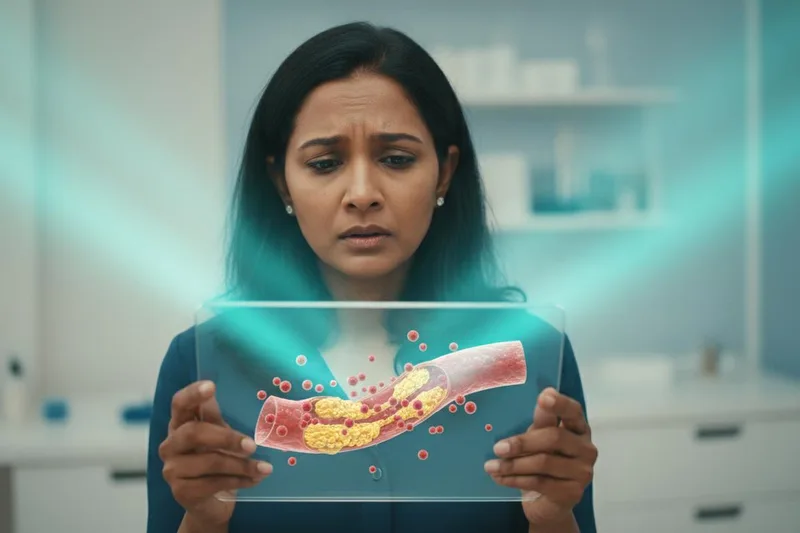
when the bad cholesterol, or ``LDL`` cholesterol, in your blood is too high. This is a lipid disorder. When ``LDL`` increases like this, that extra fat gradually starts to build up in your blood vessels, especially the walls of your arteries. It's like rust building up inside an old water pipe. We call this atherosclerosis.
Imagine, this is like the water pipe in your garden getting clogged with dirt and water. When fat builds up inside the blood vessels , it obstructs blood flow.
This condition, called ``Atherosclerosis,''
increases the risk of serious diseases like heart attack and stroke. In fact, cardiovascular disease is the leading cause of death in the world, and the main cause is this condition, called ``Atherosclerosis.''
What level is considered hypercholesterolemia?
Now you may be wondering, "How high does my cholesterol level have to be before I reach this state of hypercholesterolemia?" Your doctor will determine this not only by looking at your `(LDL)` level, but also by comparing it to other risk factors you have for developing cardiovascular disease. In general, these are the levels that are considered `(LDL)` cholesterol to be high:
- In the absence of other risk factors , LDL level is 190 mg/dL or higher.
- Another major risk factor is a high LDL level of more than 160 mg/dL.
- With two risk factors, LDL level is greater than 130 mg/dL.
Depending on your heart disease risk, doctors may recommend keeping your ``bad'' (LDL) cholesterol level between 116 mg/dL and less than 70 mg/dL.
So, what are these risk factors?
If you have these things, you are at higher risk of developing heart disease:
Are hypercholesterolemia and hyperlipidemia the same thing?
No. These two are slightly different. Hypercholesterolemia is just one type of a larger group called hyperlipidemia. In hypercholesterolemia, we
focus specifically on the increase in ``(LDL)`` cholesterol, that is, the bad cholesterol. However, when we say ``(Hyperlipidemia)``, it can include an increase in any type of fat (lipid) in the blood, not just ``(LDL)``.
Who is affected the most by this situation?
You are more likely to have high ``(LDL)`` cholesterol levels if you:
- If you are over 40 years old.
- If you are of Asian, Indian, Filipino, or Vietnamese descent.
- If you are a post-menopausal woman.
- If it is a woman (in some cases).
How common is hypercholesterolemia?
This is
actually a very common condition. On average, about one in every twenty people may have hypercholesterolemia. Nearly one-third of adults in the United States are reported to have high ``bad'' (LDL) cholesterol levels. This condition is also common in Sri Lanka.
How does this affect your body?
As we mentioned before, hypercholesterolemia can cause problems in the cardiovascular system. The main ones are:
- Stroke
- Coronary artery disease (this is what leads to heart attacks)
- Peripheral artery disease (problems with the veins that supply blood to the arms and legs)
What are the symptoms?
Here's the scary part.
Many people with hypercholesterolemia don't have any symptoms. That means you can be fine, without any discomfort, but your cholesterol levels could be dangerously high. However,
some people with very severe hypercholesterolemiaIf, cholesterol deposits can appear on the skin above the eyelids as yellow lumps (Xanthelasma). Or, in some connective tissues, for example, around the joints of the limbs, cholesterol deposits can appear as Xanthoma. Rarely, cholesterol deposits around the white of the eye can appear as a white ring (Corneal arcus). But these are very rare.
What are the causes of hypercholesterolemia?
There may be several reasons for this.
- Your genes: Some people may have this condition that runs in their family. This is called familial hypercholesterolemia.
- Diet: Eating too many foods high in saturated fat and trans fat (e.g., fatty foods, fast food, some meats, bakery products).
- Lack of exercise: Living a lifestyle with little physical activity.
- Tobacco products: Smoking and the use of other tobacco products.
- Other medical conditions:
- Obstructive liver disease
- Diabetes `(Diabetes Mellitus)`
- Hypothyroidism (underactive thyroid)
- Anorexia nervosa is an eating disorder.
- Chronic kidney failure
- Nephrotic syndrome
- Certain medications: For example, certain medications such as `(Amiodarone)`, `(Rosiglitazone)`, `(Cyclosporine)`, and `(Hydrochlorothiazide)` can also increase cholesterol levels.
How to recognize this?
Typically, when you go for an annual physical exam, your doctor will do the following:
- Ask about your medical history and family health conditions.
- Does a physical examination.
- A blood test called a lipid panel is ordered. This is usually done after fasting for a few hours.
What kind of tests are done?
Once your doctor has ruled out other causes of your hypercholesterolemia, he or she may recommend genetic testing. Your doctor may also recommend that other family members have this test, especially if you have familial hypercholesterolemia.
How is it treated?
The main goal of treating hypercholesterolemia is to lower your ``bad'' (LDL) cholesterol levels and prevent the risk of heart disease. This can be done in several ways:
- Getting more exercise: Something like walking, running, or swimming for at least 30 minutes a day.
- Maintaining a healthy weight: It is very important to maintain a weight that is appropriate for your height.
- Eating a diet low in saturated fat: Reducing foods high in oil and fat.
- Stress reduction: Finding ways to reduce stress.
- Taking cholesterol-lowering medications: Take the medication exactly as prescribed by your doctor.
- Avoidance of tobacco products: Complete cessation of smoking.
- Controlling high blood pressure and blood sugar levels.
- Lipoprotein apheresis: This is only for people with very severe hypercholesterolemia. This involves using a machine to remove lipoproteins (fat particles) from your blood and then re-injecting them back into your body.
What can and cannot be eaten?
To reduce the amount of ``bad'' (LDL) cholesterol in your blood, you can do these things:
- Reduce alcohol consumption: It is best to stay away from alcohol as much as possible.
- Eat more fruits, vegetables, legumes, and whole grains.
- Reducing foods high in saturated fat: Reducing dairy foods (like cheese, butter), some meats (especially red meat), and sweet foods (like cakes, biscuits).
Think about filling your plate with colorful vegetables and fruits. Instead of oily, fried foods, opt for boiled, steamed, and grilled foods. Even when using coconut oil, use it in moderation.
What medications are used?
There are several main types of medications used to treat hypercholesterolemia:
- Statins: These are the most commonly used.
- PCSK9 inhibitors `(PCSK9 inhibitors)`
- Ezetimibe
- Bile acid sequestrants
- Niacin
- Bempedoic acid `(Bempedoic acid)`
Doctors also prescribe other specific medications for people with familial hypercholesterolemia.
Are there any side effects of the treatment?
Like any medication, cholesterol-lowering medications can cause some side effects. However, when compared to the benefits of these medications, these side effects are usually tolerable. Some of the most common side effects include:
- Constipation or diarrhea.
- Pain in muscles or joints.
- Stomach discomfort.
- Headache .
The most important thing is to tell your doctor if you experience any side effects. He or she can adjust the dosage or prescribe a different medication to suit you.
How quickly can results be expected from treatment?
About 8 to 12 weeks after you start taking your medication, your doctor will do another lipid panel test to see if your cholesterol levels have decreased. Based on the results, your doctor will decide if it's necessary to increase your medication dose, switch to a different medication, or add another medication.
How to reduce the risk?
You can reduce your risk of developing hypercholesterolemia by adopting a healthy lifestyle:
- Exercising regularly.
- Maintaining a healthy weight.
- Eating a low-fat diet.
- Avoiding the use of tobacco products.
By doing these things, you can protect yourself from not only cholesterol, but also many other diseases.
What happens if you have hypercholesterolemia?
If you are diagnosed with high LDL cholesterol, it is
something you will have to manage for the rest of your life. But don't worry. Once you make healthy habits a part of your daily life, you won't have to think about it too much. You can start with small things. For example, eating a meatless meal one day a week, or taking a short walk after dinner every day. When you go to the store, choose foods that are low in saturated fat and trans fat. That way, you will always have healthy foods at home. Also, try adding new vegetables and herbs to your diet that you have never eaten before.
How is the outlook?
If you don't treat your hypercholesterolemia, you can develop a condition called `(Atherosclerosis)` (hardening of the arteries). This increases your risk of having a heart attack or stroke.
However, if you adopt a healthy lifestyle, take medication if necessary, and control your `(LDL)` cholesterol levels, you can significantly reduce your risk of heart attack and stroke. Numerous medical studies have found that people who manage their hypercholesterolemia well have much better health.
How do you take care of yourself?
Because cholesterol management is a lifelong
process , you need to continue to make lifestyle changes and take your medications exactly as prescribed by your doctor. Keep these things in mind:
- Exercise more days a week.
- Avoid tobacco products completely.
- Avoid foods high in saturated fat or trans fat.
When do you need to see a doctor?
Don't miss regular check-ups with your doctor. He or she will want to know:
- Is your cholesterol-lowering medication working properly?
- Are you having any side effects from your medication?
- Do you follow his recommendations exactly?
If you have severe side effects, your doctor may switch you to a different medication. He or she may also want to check your cholesterol levels regularly to make sure they are within normal limits.
What questions should you ask the doctor?
When you go to see the doctor, don't hesitate to ask questions like these:
- "What kind of exercise should I do to lower my cholesterol levels?"
- "Can you recommend a program that can help me quit smoking?"
- "Can you give me a referral to see a dietitian for help with my diet?"
If your LDL cholesterol level is high, you're not alone. This is a common problem that many people have. Your doctor is your best friend in helping you get your LDL cholesterol level back to normal. He or she can recommend ways to help you do this. If lifestyle changes alone aren't enough, you could join the millions of people who take cholesterol-lowering medications.
The most important thing we need to remember from this (Take-Home Message)
Okay, so, from what we've talked about, these are the most important things to keep in mind:
- Hypercholesterolemia is an increase in bad (LDL) cholesterol in the blood. This increases the risk of heart attack and stroke.
- Most of the time, there are no symptoms, so it's important to get regular blood tests.
- This condition can be well controlled with lifestyle changes (good diet, exercise, and smoking cessation) and, if necessary, medication as directed by a doctor .
- Don't worry. If you talk to your doctor and manage it properly, you can live a healthy life.
So, take care of your cholesterol levels. Stay healthy!
hypercholesterolemia, cholesterol, LDL, HDL, heart disease, stroke, diet, lifestyle



💬 Comments (0)
No comments yet. Be the first to share your thoughts here.
Add Your Comment