

Have you ever thought that our bodies have amazing communication systems, that is, ways of connecting with each other? It's like a telephone network. One such special system is the HPA axis (Hypothalamic-Pituitary-Adrenal (HPA) Axis) . This is a very important part of our body that is essential for controlling stress . Shall we talk about this in more detail? What is it, how does it work, and what does it do to us?
What does this HPA axis belong to? What kind of organ system does it belong to?
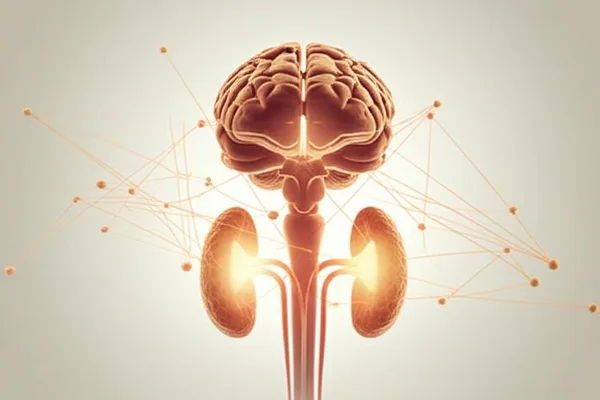
The name may sound a bit complicated, right? But to put it simply, the HPA axis is a collection of three major organs in our body. They work together, like a team. They are all part of our endocrine system , which is the system that produces hormones. It is also called the neuroendocrine system , because it releases hormones into the bloodstream in response to stimuli from the nervous system.
So, what are these three organs?
- Hypothalamus: This is like a little control center deep inside your brain. Think of it like the main switch board in your house. It keeps things like your body temperature, hunger, your mood, and sleep patterns in balance. It does this either by directly influencing your autonomic nervous system or by managing hormones.
- Pituitary gland: This is also a pea-sized gland located under the brain, just below the previously mentioned hypothalamus. Although small, its function is very large. It produces a number of essential hormones that are indispensable to our body. It also controls the activity of many other endocrine glands. The anterior part of this pituitary gland, called the anterior pituitary, is connected to the HPA axis.
- Adrenal glands: These are located on top of your kidneys, like little hats. They are two small, triangular-shaped glands. They also produce special hormones that help control many important functions in our bodies. The outer part of these adrenal glands, called the adrenal cortex, is involved in the HPA axis.
Got it? These three are the main players in the HPA axis.
So, what is the role of this HPA axis? Why is it so important to us?
Simply put, the main and most important function of the HPA axis is to produce and release a hormone called cortisol into the bloodstream. You may have heard of this cortisol as the 'stress hormone'. It belongs to the class of steroid hormones called glucocorticoids .
So, when you experience some kind of pressure, challenge, fear, or anxiety (we call these stressors ), your body immediately prepares to deal with it by activating this HPA axis and releasing cortisol. This is a very automatic, instinctive process.
Imagine, if you were walking down the street and suddenly a dog came running at you, your heart rate would speed up, your body would sweat, and your breathing would quicken, right? At times like that, this HPA axis is what prepares you to face that emergency.
Also, have you heard of the 'fight-or-flight response' ? It's the way our bodies instantly prepare to either fight (fight) or run away (run away) when we see danger. This is also closely linked to the HPA axis, as well as the hormone adrenaline (epinephrine), which is produced by another part of the adrenal glands.
Our human bodies are designed to experience and respond to stress. When we face challenges and changes, our bodies respond in the short term, both physically and mentally, to adapt. This stress response is sometimes good. It keeps us alert, motivates us to take action, and helps us avoid danger. However, chronic , or long-term, stress can be harmful to our bodies.
How does the HPA axis work? How does this chain of hormones work?
This is something that happens like a chain reaction. Imagine you suddenly have a problem, a fear, or a big challenge. Then this is what happens:
1. First, your autonomic nervous system detects this stressful situation and sends a signal to the hypothalamus in your brain, saying, "Emergency! Act now!"
2. Upon receiving that signal, the hypothalamus releases a hormone called corticotropin-releasing hormone (CRH) into the bloodstream.
3. This CRH hormone travels through the bloodstream and tells the anterior pituitary gland , "Okay, now it's your turn!" The pituitary gland then releases another hormone called adrenocorticotropic hormone (ACTH) .
4. Finally, it is this ACTH hormone that travels through the blood and acts on the adrenal cortex , which is located above the kidneys, telling it to "produce cortisol!"
See? It's a process that happens step by step, connected one to the other.
But, this doesn't happen all the time. Because if it did, it wouldn't be good for our bodies. The HPA axis is designed with a very delicate negative feedback loop . That is, when the level of cortisol in the blood increases to the required level, that increased cortisol goes back to the hypothalamus and pituitary gland and signals, "Enough, stop making CRH and ACTH." This is why our stress response is controlled, activated only when necessary, and returns to normal.
However, when we are constantly or excessively stressed, or for some other reason, some irregularities can occur in the functioning of this HPA axis.
What conditions affect the HPA axis? Can problems occur with this system?
Yes, the HPA axis can be overactive, but it can also be underactive.
HPA axis dysfunction
When we are constantly under chronic stress, the function of this HPA axis can become disrupted, and cortisol levels in the body can remain consistently high . This condition is commonly referred to as HPA axis dysfunction . This persistent high cortisol level increases the risk of various health problems. For example:
- Immune system dysfunction: Increased susceptibility to illness, increased inflammation throughout the body, and the risk of developing certain autoimmune conditions (i.e., diseases in which the body's immune system attacks its own cells).
- Mental health problems: Mood disorders (e.g., depression), anxiety disorders , and post-traumatic stress disorder (PTSD) may occur.
- Metabolic diseases: Diabetes Mellitus , obesity , and some types of cancer may increase the risk.
- Cardiovascular diseases: Things like high blood pressure and damage to blood vessels.
Additionally, researchers are finding that HPA axis dysfunction may be linked to memory loss and neurodegenerative conditions such as Alzheimer's disease . HPA axis dysfunction is a complex physiological concept. Its causes and health effects are still being researched.
Is there a treatment for this?
To date, there is no direct treatment that targets HPA axis dysfunction. However, researchers are actively working to link it to various medical conditions and develop treatments.
HPA axis suppression
On the other hand, sometimes the HPA axis can become less active. This is called HPA axis suppression . This condition can occur especially when we use exogenously produced glucocorticoids , or corticosteroids (such as prednisolone), for certain medical conditions over a long period of time.
What are some of the conditions for which corticosteroids are used?
- Asthma
- COPD (Chronic Obstructive Pulmonary Disease) - that is, a chronic lung disease.
- After organ transplantations
- For some types of cancer
- Rheumatologic conditions (e.g. arthritis)
- Some pain disorders
When the HPA axis is suppressed in this way, the body's production of cortisol decreases. This weakens the body's ability to respond to stress and also reduces the body's ability to fight infections. Low cortisol levels increase the risk of frequent, sometimes severe, infections. In extreme cases, HPA axis suppression can lead to a life-threatening emergency called adrenal crisis .
However, not everyone will experience HPA axis suppression from taking corticosteroids. However, if you are taking these medications, it is important to talk to your doctor about the possible side effects and risks and be well informed.
How do we keep our HPA axis healthy?
So, how do we take care of this precious HPA axis and keep it functioning properly? In fact, researchers are still learning a lot about this HPA axis and what we can do to protect it. But, the best and most important thing right now is to control stress and manage it properly.
Of course, we can't completely eliminate all stress from our lives. That's not practical. But we can try to minimize the damage it does to our bodies by preventing it from becoming unbearable.
Here are some simple things you can add to your daily life that will help:
- Try relaxing activities: Try doing things like meditation , yoga , deep breathing exercises, and muscle relaxation techniques for a few minutes a day. These will help calm your mind.
- Take good care of your body: Eat a nutritious, balanced diet. Exercise regularly. Get enough sleep (usually 7-8 hours) each day.
- Maintain a positive attitude: Look at everything positively. Be grateful and happy for what you have.
- Let go of things you can't control: Understand that we can't control everything in this world. There's no point in constantly worrying and worrying about things you can't change.
- Get used to saying 'no': If you are very busy, if you are already feeling stressed, don't take on additional responsibilities and tasks and create more stress.
- Spend time with people who support you and make you happy: Spend more time with good friends and family who calm you down, make you laugh, give you mental strength, and even provide practical help when needed.
If you are concerned about your stress and feel that it is becoming difficult to cope with, do not hesitate to ask your doctor or a trusted health professional for help and guidance.
Finally, the most important thing to remember
Stress is something we all experience to some degree in our lives, it's part of the human experience. Fortunately, our bodies have a very clever and specialized mechanism called the HPA axis to deal with such threats and challenges and protect us from danger.
However, we must also remember that when we are exposed to excessive or prolonged stress, the delicate balance of this HPA axis is lost, its functioning is disrupted, and various health problems can occur. Researchers are still studying the inside and outside of this HPA axis, that is, all its activities in depth.
In the meantime, the best thing we can do is try to stay away from things that cause stress as much as possible and manage the stress that does arise. If you feel like your life is too stressful and you are finding it difficult to cope, talk to a doctor about it. They are ready to help and guide you.
` HPA axis, stress, cortisol, hypothalamus, pituitary gland, adrenal glands, hormones




💬 Comments (0)
No comments yet. Be the first to share your thoughts here.
Add Your Comment