
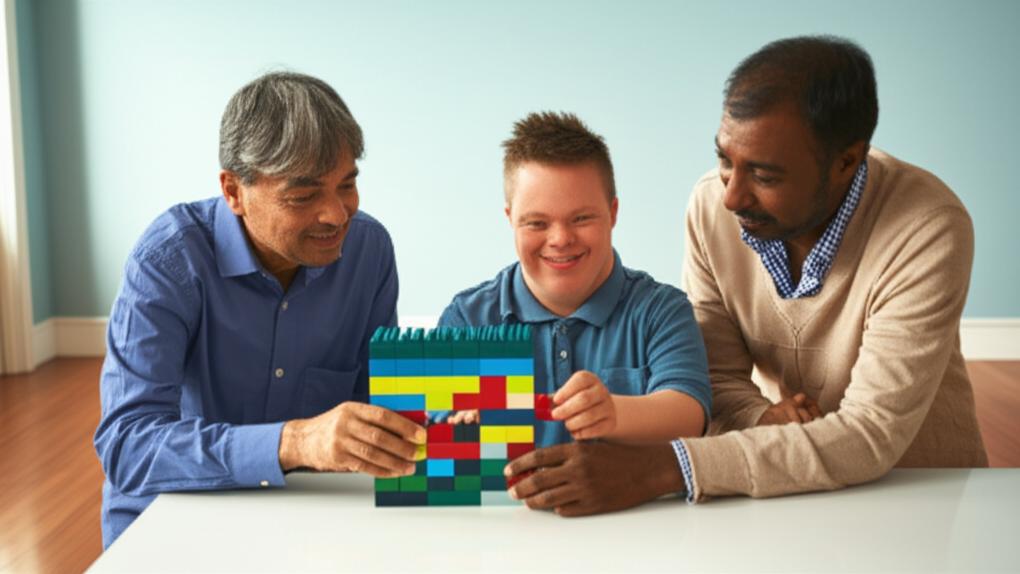
When you walk through your community, work in an office, or visit a local park, you encounter people from all walks of life. You likely notice that everyone thinks, communicates, and experiences the world in their own unique way. For some people, these differences arise from an intellectual or developmental disability, often referred to as an IDD. Interacting with someone who has an IDD might feel unfamiliar at first if you do not know what to expect. You might wonder how best to start a conversation, how to show respect, or how to ensure everyone feels welcome and valued.
Building an inclusive society begins when we move past assumptions and learn how to communicate with kindness and genuine respect. Developmental disabilities are not illnesses to be cured. They are simply natural variations of human diversity. When you take the time to understand these conditions, you help create a safer, warmer, and more supportive environment for everyone around you. Let us explore what developmental disabilities are, how to recognize and avoid ableism, and how you can practice meaningful inclusion in your daily life.
Key Takeaways for Daily Inclusion
- IDDs Are Lifelong Variations: Intellectual and developmental disabilities affect learning, communication, and daily living skills, but they are not medical illnesses.
- Every Person Is Unique: Two people with the same diagnosis can have completely different strengths, needs, and communication preferences.
- Always Ask First: The most reliable way to understand someone's needs is to ask them politely and directly rather than making assumptions.
- Practice Clear Communication: Use simple sentences, speak at a normal pace, listen patiently, and give the person time to gather their thoughts.
- Reject Ableism: Avoid unfair judgments, pity, or the urge to "fix" people, focusing instead on full inclusion and mutual respect.
BMI Calculator
Know your body mass index (BMI) and weight classification
What Are Intellectual and Developmental Disabilities (IDDs)?
Simply put, intellectual and developmental disabilities are lifelong conditions that affect how a person learns, communicates, processes information, and behaves. These conditions typically begin during the developmental period in childhood and persist throughout a person's life span. It is vital to understand that an IDD is not a temporary illness, an infection, or a mental health crisis. It is simply a core part of how an person's brain and body develop.
Think about how human hands have fingers of varying lengths, or how people have different eye colors. Human minds and bodies vary just as naturally. Two people diagnosed with the exact same developmental condition may experience vastly different daily challenges, prefer completely different communication methods, and require unique levels of support. Stereotyping or treating people as a single group ignores their individuality.
To help you understand the diversity of these conditions, the table below outlines several common developmental and neurodivergent conditions that you may encounter in everyday life.
| Condition Name | Brief Clinical Overview |
|---|---|
| Attention Deficit Hyperactivity Disorder (ADHD) | A neurodevelopmental condition marked by ongoing patterns of inattention, hyperactivity, and impulsive behavior that affect focus and daily tasks. |
| Autism Spectrum Disorder (ASD) | A broad condition affecting social interaction, communication styles, sensory processing, and behavioral patterns. |
| Cerebral Palsy (CP) | A group of physical disorders that affect body movement, muscle control, muscle tone, and physical posture. |
| Intellectual Disability | Significant limitations in both intellectual functioning (learning, problem-solving) and adaptive behavior (everyday social and practical skills). |
| Language Disorders | Difficulties expressing spoken thoughts or comprehending verbal and written language communicated by others. |
| Tourette Syndrome | A neurological condition characterized by sudden, involuntary repetitive movements and vocal sounds known as tics. |
Because every person experiences life differently, the golden rule of interaction is simple: always ask the person kindly what their personal needs and preferences are.
Understanding Ableism and Discrimination
The term ableism may sound modern, but it describes a form of discrimination that many people encounter daily. Ableism occurs when society treats people with disabilities unfairly, views them as inferior, or assumes they cannot lead fulfilling lives. People holding ableist views often falsely believe that people with disabilities need to be "fixed" or cured to be valuable members of community. This bias can happen consciously through overt prejudice or unconsciously through ingrained habits.
The exact opposite of ableism is inclusion. Inclusion means accepting human differences exactly as they are and making sure everyone can participate fully and comfortably in daily life. When we practice true inclusion, we empower people with developmental disabilities to live healthy, happy lives and reach their absolute fullest potential.
How Can We Help and Respect These People?
Supporting people with developmental disabilities does not require complex medical training. It requires patience, empathy, active listening, and basic human decency. Because everyone is unique, remember that the most important starting point is asking people directly what helps them feel comfortable.
1. Be Mindful of Invisible Disabilities
Many developmental conditions are entirely invisible to the naked eye. Conditions like ADHD, autism, and learning differences do not come with outward physical signs. You cannot tell whether someone is neurodivergent simply by looking at them. Therefore, you should never make doubting comments like, "You do not look like you have a disability." Such remarks invalidate a person's lived reality and suggest that their challenges are imaginary or unimportant.
2. Respect Their Daily Routines
Many people with intellectual and developmental disabilities find comfort, stability, and lower anxiety in structured daily routines. Predictability helps them navigate a world that often feels overwhelming. If you plan an activity together, give them advance notice of your plans. If any unexpected changes or delays occur, let them know promptly. Respecting their routine minimizes anxiety and builds mutual trust.
3. Create a Calm, Quiet Environment
For people with sensory processing differences, such as those on the autism spectrum, busy public spaces can be exhausting. Loud noises, flashing lights, and large crowds can trigger severe sensory overload. When you meet or work with someone who experiences sensory sensitivities, choose a quiet, calm environment with minimal background noise. Speaking one-on-one in a peaceful setting makes communication much easier.
4. Include Them Actively in Conversations
Society often pushes people with disabilities to the background, acting as though they are invisible. Never ignore someone in a conversation. Make direct eye contact, turn your body toward them, and speak directly to them rather than talking about them to someone else. If they have a support worker or aide with them, direct your questions and conversation to the person themselves, allowing them to answer when possible.
5. Keep Communication Tips in Mind
Effective communication is the cornerstone of mutual respect. Keep these practical tips in mind when talking with someone who has a developmental disability:
- Use Simple, Clear Language: Speak in a normal tone of voice using straightforward sentences. Avoid baby talk or condescending language, and avoid idioms like "it's raining cats and dogs," because many people interpret language literally.
- Give One Instruction at a Time: When asking questions or giving instructions, keep them bite-sized. Instead of saying "stop running around and sit down," say "please walk slowly to your seat.".
- Listen Patiently: Some people may take longer to process information or speak at a slower pace. Give them adequate time to gather their thoughts and respond without rushing them.
- Be Honest If You Do Not Understand: If you miss what someone said, do not pretend you understood. Politely ask them to repeat it or explain it differently. You can say, "I am sorry, I know what you said is important, but I missed that. Could you tell me again?".
6. Respect Different Behaviors and Habits
Some autistic people find it difficult to maintain prolonged eye contact. If someone looks away while you speak, do not take it personally or assume they are being rude. Similarly, if someone with Tourette Syndrome experiences a vocal or physical tic during conversation, wait patiently until it passes and continue your discussion naturally. These behaviors are involuntary and outside their conscious control. They are not disrespecting you.
7. Do Not Assume Anything Needs to Be Fixed or Cured
Remember that having a developmental disability is not a personal weakness or a tragedy. For many people, it is an essential part of their unique identity and perspective.
Many people with developmental disabilities live satisfying, happy lives. They do not view their neurodivergence as a medical flaw that requires fixing. Avoid pitying language, and avoid treating everyday accomplishments as if they are miraculous acts that make someone an inspiration simply for existing.
8. Use the Right Words
Language matters deeply when discussing disability. Using respectful terminology shows fundamental human dignity:
- Person-First Language: Terms like "person with a disability" put the human being ahead of the medical diagnosis.
- Identity-First Language: Many autistic people prefer terms like "autistic person," viewing their neurology as inseparable from who they are.
- Ask for Preference: When in doubt, the best approach is simply to ask, "How do you prefer to be referred to?".
When to Seek Emergency Medical Help
While developmental disabilities are lifelong conditions and not medical emergencies, urgent situations can arise. Seek immediate emergency medical attention by calling 911 (US/Canada) or 999 (UK), or by visiting your nearest Emergency Department (ER / A&E), if an person experiences severe acute distress, sudden high fever, uncontrollable seizures, breathing difficulties, severe physical injury, or signs of acute mental health crisis. Always inform emergency responders about any specific communication needs or sensory sensitivities the person may have.
Comparison: Respectful vs. Unhelpful Approaches
To help guide your daily interactions, review this quick reference table outlining supportive versus unhelpful behaviors:
| Supportive & Respectful Approach | Unhelpful or Ableist Approach |
|---|---|
| Asking the person directly what support or accommodation they prefer. | Assuming what they need without asking or speaking over them. |
| Speaking clearly and directly to the person with patience. | Speaking only to their caregiver or aide while ignoring the person. |
| Respecting daily routines and giving notice before schedule changes. | Dismissing their need for routine as rigid or unnecessary. |
| Using person-first or identity-first language based on personal preference. | Using outdated, stigmatizing, or pitying labels. |
💡 Take-Home Message
Building an inclusive community is an ongoing commitment that requires self-awareness, empathy, and respect. Keep these core principles in mind:
- Always respect the person, and never define someone solely by their disability.
- Politely ask what communication methods and support preferences work best for them.
- Use respectful language, respecting their personal choice between person-first and identity-first phrasing.
- Remember that many disabilities are invisible. Never judge someone based on outward appearances.
- Honor daily routines, communicate schedule changes early, and practice patience in all conversations.
- Consult your doctor or qualified doctor if you have questions or need guidance regarding developmental health.






No comments yet. Be the first to share your question or experience below.