
All about Insulin in a nutshell: The super hormone that controls your body's sugar levels

All about Insulin in a nutshell: The super hormone that controls your body's sugar levels

If you have diabetes, the word 'insulin' is probably very familiar to you. You may even be a daily user of insulin injections. But what exactly is insulin? What does it do inside our bodies? Let's talk about it simply and clearly. You will find the answers to all your questions in this article.

What is Insulin and how does it work?

Simply put, insulin is a hormone that our bodies produce. It is made by an organ called the pancreas, which is located in our abdomen, behind the stomach. So the main job of this insulin is to help convert the food we eat into energy, while also controlling the sugar levels in our blood.

Imagine that you eat something that contains carbohydrates, like a piece of rice or a piece of bread. These carbohydrates are digested in our intestines and become a simple sugar called 'glucose'. This glucose then enters our blood. Then our blood sugar levels rise.

This is when our 'hero' insulin comes out. When the blood sugar level is detected to be increasing, the pancreas releases the hormone insulin into the blood. It's like an AC in our house. When the temperature in the room increases, the AC turns on and cools the room, and when the temperature decreases, it turns off.

So this insulin that is released takes the glucose in the blood and delivers it to the cells of our body. The cells use that glucose to make the energy we need throughout the day. Insulin also tells us to store the extra glucose in our liver and muscles for later use. When the glucose enters the cells in this way, the blood sugar level drops back to normal.

But in some people, the pancreas cannot produce enough insulin, or the body cannot use the insulin it does produce properly. This is also called 'insulin resistance'. In this case, sugar builds up in the blood and the sugar level is always high. We call this condition hyperglycemia . Having too much sugar in the blood over a long period of time is what causes diabetes.

Insulin and Glucagon: Two Friends That Control Sugar

Glucagon , another important hormone produced by our pancreas, along with insulin, works in opposition to each other, but to keep the body's sugar levels in balance.

  • Insulin: Lowers blood sugar levels.
  • Glucagon: Increases blood sugar levels.

Imagine that you haven't eaten on time, or you've exercised a lot. Then your blood sugar level can drop. At this time, the pancreas releases glucagon. Glucagon tells the liver to add the previously stored sugar (glycogen) back into the blood. Then the blood sugar level returns to normal.

In this way, the two hormones insulin and glucagon work back and forth throughout the day, keeping our blood sugar levels within a certain range.

What types of insulin are given for diabetes?

Since a person with diabetes cannot control their own insulin, they have to be given insulin externally in the form of injections. There are several types of insulin. They are divided into three main categories.

1. Onset: How quickly the vaccine starts working after being given.

2. Peak: The time it takes for the vaccine's potency to reach its maximum level.

3. Duration (time it stays in the body): How long a single injection controls blood sugar.

The type of insulin your doctor prescribes for you may vary depending on these factors.

Insulin type (Type) Onset time Peak performance Duration
Rapid-acting
Ex: Insulin aspart, Insulin lispro
About 15 minutes About 1 hour 2-4 hours
Short-acting
Ex: Regular insulin (Humulin R, Novolin R)
About 30 minutes 2-3 hours 3-6 hours
Intermediate-acting
Eg: NPH insulin (Humulin N, Novolin N)
2-4 hours 4-12 hours 12-18 hours
Long-acting
Eg: Insulin glargine (Lantus), Insulin detemir (Levemir)
About 2 hours No Peak Up to 24 hours
Ultra long-acting
Ex: Insulin degludec (Tresiba)
About 6 hours No Peak 36 hours or more

How do you choose the right insulin for you?

This is not something you can decide on your own. Your doctor will determine the type, dose, and timing of insulin that is best for you based on your condition. There are several factors that affect this:

  • The types and amounts of food you eat
  • your age
  • Your physical activity level (do you exercise or not)
  • How to control your blood sugar levels
  • The time it takes for insulin to be absorbed by the body

Ways to get insulin:

  • Syringes: The most commonly used method. The correct dose of insulin is drawn from the vial into a syringe and injected under the skin.
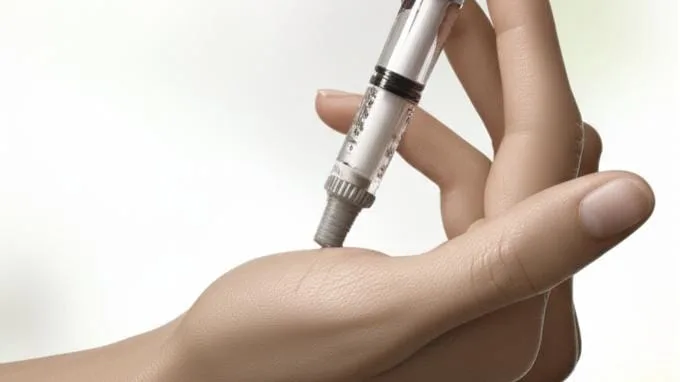
  • Pens: These are very easy to use. They are a pen-like device that contains a cartridge filled with insulin. You can set the correct dose with a dial and then inject it by pressing a button.
  • Insulin Pump: This is a small device that releases insulin into the body gradually over a 24-hour period. It is usually implanted under the skin of the abdomen.

Are there any side effects of insulin injections?

Yes, the main and most common side effect of using insulin is that the blood sugar level drops too low. This is medically known as hypoglycemia . This condition can occur if the blood sugar level drops below 70 mg/dL.

Common symptoms of hypoglycemia:

  • Feeling anxious, restless
  • Sweating profusely
  • Body tremors
  • Feeling very hungry
  • Dizziness , blue eyes
  • Confusion, anger

Important: If you experience any of these symptoms, it could be an emergency. Do not ignore it. As soon as you suspect that you have low blood sugar, drink something sweet (a spoonful of sugar, some glucose, a sweet drink) and call your doctor immediately. In some severe cases, you may need to go to the hospital's Emergency Department (ETU).

Very rarely, allergic reactions such as redness, itching, and swelling may occur at the injection site. If this happens, talk to your doctor about it.

Where exactly do you inject insulin?

Insulin injections should be given into the fatty layer under the skin. This is where it is absorbed into the bloodstream and works properly. The best places for this are:

  • Abdomen: Anywhere on the abdomen, leaving about 2 inches of space around the navel.
  • Back of the arm: The back of the upper arm.
  • Thigh: The front or sides of the thigh.
  • The upper part of the buttocks area.

The most important thing is, don't inject in the same place every day. If you inject in the right arm today, inject in the left arm tomorrow. If you inject in the right side of the stomach today, inject in the left side tomorrow. This type of site rotation is mandatory. Otherwise, if you keep injecting in the same place, small lumps (lipohypertrophy) may form under the skin in those places. Because of those lumps, the body may not absorb insulin properly later.

Take-Home Message

  • Insulin is an essential hormone produced in our body that controls blood sugar.
  • When you have diabetes, the function of this insulin system is impaired, so you have to take insulin from outside.
  • There are several types of insulin. Your doctor will determine the type and dose that is best for your condition.
  • The main risk of using insulin is low blood sugar (hypoglycemia). Always be aware of its symptoms.
  • If you have any questions, concerns, or doubts about insulin, never be afraid to talk openly with your doctor about it.

Insulin, diabetes, blood sugar, pancreas, hypoglycemia, insulin injection, hormones

Frequently Asked Questions (FAQ)

How do you choose the right insulin for you?

This is not something you can decide on your own. Your doctor will determine the type, dose, and timing of insulin that is best for you based on your condition. There are several factors that affect this:

⚠️ Important: The medical articles and information on Nirogi Lanka are for general awareness only, and are by no means a substitute for professional medical advice, diagnosis, or treatment. For any medical problem you have, consult a qualified physician immediately.

💬 Comments (0)

No comments yet. Be the first to share your thoughts here.

Add Your Comment

Please calculate: 3 + 3 =
All about Insulin in a nutshell: The super hormone that controls your body's sugar levels
MedicationsJuly 7, 2026

All about Insulin in a nutshell: The super hormone that controls your body's sugar levels

If you have diabetes, the word 'insulin' is probably very familiar to you. You may even be a daily user of insulin injections. But what exactly is insulin? What does it do inside our bodies? Let's talk about it simply and clearly. You will find the answers to all your questions in this article.

What is Insulin and how does it work?

Simply put, insulin is a hormone that our bodies produce. It is made by an organ called the pancreas, which is located in our abdomen, behind the stomach. So the main job of this insulin is to help convert the food we eat into energy, while also controlling the sugar levels in our blood.

Imagine that you eat something that contains carbohydrates, like a piece of rice or a piece of bread. These carbohydrates are digested in our intestines and become a simple sugar called 'glucose'. This glucose then enters our blood. Then our blood sugar levels rise.

This is when our 'hero' insulin comes out. When the blood sugar level is detected to be increasing, the pancreas releases the hormone insulin into the blood. It's like an AC in our house. When the temperature in the room increases, the AC turns on and cools the room, and when the temperature decreases, it turns off.

So this insulin that is released takes the glucose in the blood and delivers it to the cells of our body. The cells use that glucose to make the energy we need throughout the day. Insulin also tells us to store the extra glucose in our liver and muscles for later use. When the glucose enters the cells in this way, the blood sugar level drops back to normal.

But in some people, the pancreas cannot produce enough insulin, or the body cannot use the insulin it does produce properly. This is also called 'insulin resistance'. In this case, sugar builds up in the blood and the sugar level is always high. We call this condition hyperglycemia . Having too much sugar in the blood over a long period of time is what causes diabetes.

Insulin and Glucagon: Two Friends That Control Sugar

Glucagon , another important hormone produced by our pancreas, along with insulin, works in opposition to each other, but to keep the body's sugar levels in balance.

  • Insulin: Lowers blood sugar levels.
  • Glucagon: Increases blood sugar levels.

Imagine that you haven't eaten on time, or you've exercised a lot. Then your blood sugar level can drop. At this time, the pancreas releases glucagon. Glucagon tells the liver to add the previously stored sugar (glycogen) back into the blood. Then the blood sugar level returns to normal.

In this way, the two hormones insulin and glucagon work back and forth throughout the day, keeping our blood sugar levels within a certain range.

What types of insulin are given for diabetes?

Since a person with diabetes cannot control their own insulin, they have to be given insulin externally in the form of injections. There are several types of insulin. They are divided into three main categories.

1. Onset: How quickly the vaccine starts working after being given.

2. Peak: The time it takes for the vaccine's potency to reach its maximum level.

3. Duration (time it stays in the body): How long a single injection controls blood sugar.

The type of insulin your doctor prescribes for you may vary depending on these factors.

Insulin type (Type) Onset time Peak performance Duration
Rapid-acting
Ex: Insulin aspart, Insulin lispro
About 15 minutes About 1 hour 2-4 hours
Short-acting
Ex: Regular insulin (Humulin R, Novolin R)
About 30 minutes 2-3 hours 3-6 hours
Intermediate-acting
Eg: NPH insulin (Humulin N, Novolin N)
2-4 hours 4-12 hours 12-18 hours
Long-acting
Eg: Insulin glargine (Lantus), Insulin detemir (Levemir)
About 2 hours No Peak Up to 24 hours
Ultra long-acting
Ex: Insulin degludec (Tresiba)
About 6 hours No Peak 36 hours or more

How do you choose the right insulin for you?

This is not something you can decide on your own. Your doctor will determine the type, dose, and timing of insulin that is best for you based on your condition. There are several factors that affect this:

  • The types and amounts of food you eat
  • your age
  • Your physical activity level (do you exercise or not)
  • How to control your blood sugar levels
  • The time it takes for insulin to be absorbed by the body

Ways to get insulin:

  • Syringes: The most commonly used method. The correct dose of insulin is drawn from the vial into a syringe and injected under the skin.
  • Pens: These are very easy to use. They are a pen-like device that contains a cartridge filled with insulin. You can set the correct dose with a dial and then inject it by pressing a button.
  • Insulin Pump: This is a small device that releases insulin into the body gradually over a 24-hour period. It is usually implanted under the skin of the abdomen.

Are there any side effects of insulin injections?

Yes, the main and most common side effect of using insulin is that the blood sugar level drops too low. This is medically known as hypoglycemia . This condition can occur if the blood sugar level drops below 70 mg/dL.

Common symptoms of hypoglycemia:

  • Feeling anxious, restless
  • Sweating profusely
  • Body tremors
  • Feeling very hungry
  • Dizziness , blue eyes
  • Confusion, anger

Important: If you experience any of these symptoms, it could be an emergency. Do not ignore it. As soon as you suspect that you have low blood sugar, drink something sweet (a spoonful of sugar, some glucose, a sweet drink) and call your doctor immediately. In some severe cases, you may need to go to the hospital's Emergency Department (ETU).

Very rarely, allergic reactions such as redness, itching, and swelling may occur at the injection site. If this happens, talk to your doctor about it.

Where exactly do you inject insulin?

Insulin injections should be given into the fatty layer under the skin. This is where it is absorbed into the bloodstream and works properly. The best places for this are:

  • Abdomen: Anywhere on the abdomen, leaving about 2 inches of space around the navel.
  • Back of the arm: The back of the upper arm.
  • Thigh: The front or sides of the thigh.
  • The upper part of the buttocks area.

The most important thing is, don't inject in the same place every day. If you inject in the right arm today, inject in the left arm tomorrow. If you inject in the right side of the stomach today, inject in the left side tomorrow. This type of site rotation is mandatory. Otherwise, if you keep injecting in the same place, small lumps (lipohypertrophy) may form under the skin in those places. Because of those lumps, the body may not absorb insulin properly later.

Take-Home Message

  • Insulin is an essential hormone produced in our body that controls blood sugar.
  • When you have diabetes, the function of this insulin system is impaired, so you have to take insulin from outside.
  • There are several types of insulin. Your doctor will determine the type and dose that is best for your condition.
  • The main risk of using insulin is low blood sugar (hypoglycemia). Always be aware of its symptoms.
  • If you have any questions, concerns, or doubts about insulin, never be afraid to talk openly with your doctor about it.

Insulin, diabetes, blood sugar, pancreas, hypoglycemia, insulin injection, hormones

Frequently Asked Questions (FAQ)

How do you choose the right insulin for you?

This is not something you can decide on your own. Your doctor will determine the type, dose, and timing of insulin that is best for you based on your condition. There are several factors that affect this:

⚠️ Important: The medical articles and information on Nirogi Lanka are for general awareness only, and are by no means a substitute for professional medical advice, diagnosis, or treatment. For any medical problem you have, consult a qualified physician immediately.

💬 Comments (0)

No comments yet. Be the first to share your thoughts here.

Add Your Comment

Please calculate: 3 + 3 =