
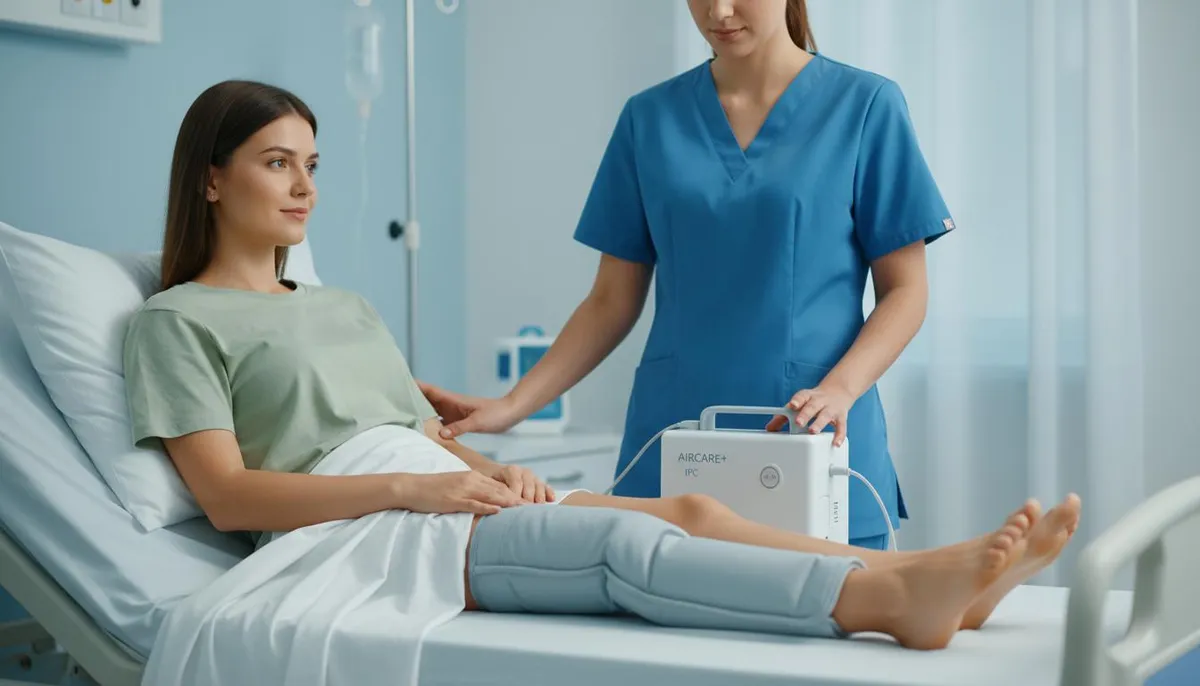
Have you ever been in a hospital bed after an operation and seen a nurse come in and put a strange sleeve on your leg and connect it to a small machine? After a while, the sleeve fills with air, tightens your leg a little, and then the air is released again. It feels like someone is gently massaging your leg. For many people, this is a very strange experience. So, what exactly is this doing? Why is this being done in a hospital? Today, we will talk about this in a simple way that you can understand.
What is Intermittent Pneumatic Compression (IPC)?
Simply put, this is the medical name for the process we talked about above. Intermittent Pneumatic Compression (IPC) is a device that is like an inflatable sleeve. These are usually worn on your calves, that is, the part of your leg below the knee. Sometimes this is also called a Sequential Compression Device (SCD) .
The main purpose of this device is to prevent blood clots from forming in your legs. How does it do that? A small machine attached to this sleeve periodically inflates and deflates it. This way, as the leg tightens and relaxes, blood circulation in the veins in the legs improves.
In what situations are these IPC devices used?
This device is usually used when you are receiving treatment in the hospital, especially when you are unable to move around much. It is worn while you are resting in bed or sitting in a chair.
This is often used:
- After major surgery: It can be difficult to walk for a few days after surgery.
- After a stroke: Stroke patients also have difficulty moving.
- Due to a serious illness: For patients who have to stay in bed for several days due to an illness.
Think of our blood vessels as pipes that carry water. When we stay in one place for a long time, this blood flow slows down. Then, blood can pool in some places and form a small clot. We call this Deep Vein Thrombosis (DVT) .
This DVT condition often occurs in the deep veins of the thigh or groin. This can be very dangerous. Because, if the blood clot breaks away from there, travels with the blood and gets stuck in a vein in the lungs, we call it Pulmonary Embolism (PE) . This can cause severe breathing difficulties, and sometimes even sudden death. So, the IPC device prevents this dangerous DVT condition from occurring.
In addition, this method is also used to prevent blood clots in mothers who are not moving much during pregnancy or after childbirth in the hospital. In addition, these IPC devices are also used as a treatment for a condition called Lymphedema (swelling of the lymphatic system).
How does this work? What are the benefits and risks?
As we said before, this sleeve fills with air about once a minute and tightens the leg, and then the air is released and the leg loosens.
- When the leg is compressed: The blood in the legs is pushed towards the heart.
- When the leg relaxes: Fresh, oxygen-rich blood flows into the arteries of the legs.
This process also helps to release natural substances from the body that prevent blood clots. The biggest advantage of this is that it gives us the same benefits of walking without any medication . This is a very valuable, life-saving device, especially for those who cannot take blood-thinning drugs (anticoagulants) or who are at risk from them.
But like everything, there can be minor inconveniences and very rare risks.
| Inconvenience or danger | A simple explanation |
|---|---|
| Warmth in the legs | Because the sleeve is on, your legs may feel a little hot and sweaty. |
| Difficulty moving | It feels a little difficult to move around in bed while wearing this. |
| Taking time to undress when getting out of bed | It can be a bit annoying because you have to take this off every time you get out of bed, like to go to the bathroom. |
| Skin problems | Sometimes, if the skin is not used to the sleeve, it can become red, itchy, or cause minor injuries. |
| Nerve damage or pressure sores | This is very rare, but it can happen if used incorrectly or excessively. |
The most important thing is that although this device may feel a little strange, it should not cause any pain . If you feel any pain in your leg, it is not normal. Tell your doctor or nurse right away.
At what time should I tell the doctor?
If you experience any of the following symptoms while using the IPC device, it is imperative to notify a doctor or nurse immediately.
- Sudden swelling, warmth, or pain in the leg: These could be signs of a DVT.
- Redness, soreness, or inflammation of the skin where the sleeve is placed: You need to check for skin damage.
- Sudden shortness of breath: This can be a dangerous sign of Pulmonary Embolism (PE), so seek immediate medical attention.
- If the machine is not working properly: that is, if it is not inflated, it will not work. So inform the staff.
What can I do to make this easier?
While you're in bed, point and flex your ankle several times a day. That is, point your toes toward the floor, then pull your face toward you. This simple exercise helps with blood circulation.
Also, as soon as the doctor gives permission, taking a short walk around the ward four or five times a day is the best and easiest way to prevent blood clots. But remember, before going for a walk, be sure to take off this IPC sleeve. If you walk with it on, there is a high chance of getting tangled and falling. If you have difficulty taking it off, ask a nurse for help.
💡 Take-Home Message
- Intermittent Pneumatic Compression (IPC) is a safe method of preventing the formation of dangerous blood clots (DVT) in the legs after surgery or when you are unable to walk due to illness.
- This is about squeezing your legs very slowly and gently to improve blood circulation. It shouldn't be painful, it should feel like a massage.
- If you experience leg pain, swelling, fever, or difficulty breathing, tell your doctor or nurse immediately .
- Before going for a walk, be sure to remove this device to prevent falls. Ask for help.
- As soon as your doctor gives you the okay, walk as much as you can. It's the best natural way to prevent blood clots.






No comments yet. Be the first to share your question or experience below.