
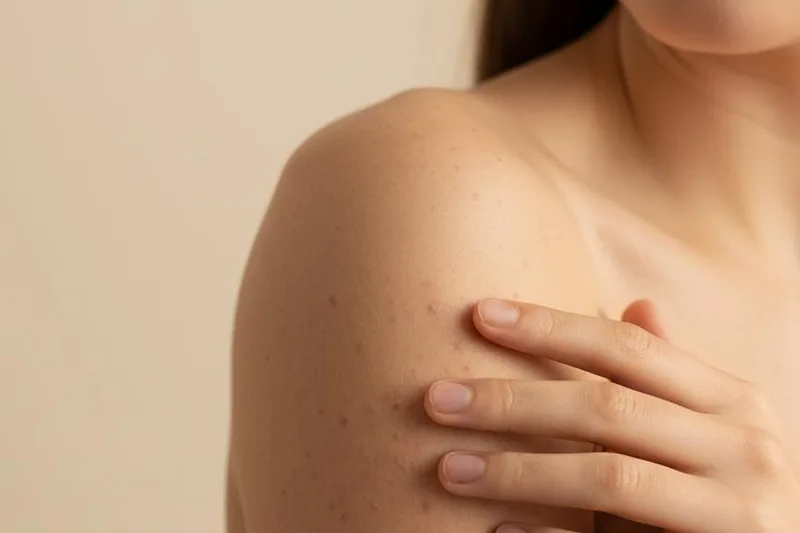
Do you sometimes get small, prickly bumps on the upper part of your arms or thighs? Some people call this 'chicken skin'. It can be a little scary to see, but it's actually not dangerous. It's a very common condition that many people have. So let's talk about it all in detail today.
What is Keratosis Pilaris?
Simply put, keratosis pilaris is a benign skin condition. If you have it, you may notice small, painless bumps around your hair follicles. These bumps are caused by an excess build-up of a protein called keratin . Keratin is what helps build our hair, nails, and the top layer of our skin (the epidermis).
These blisters may appear red, brown, or white. Or they may be the same color as your skin. Some people call it "chicken skin" because of its appearance, which resembles a rash.
This is usually most common on the upper arms, but it can occur anywhere there is hair.
Who is affected the most by this situation?
Keratosis pilaris is a condition that is very common in infants, young children, and young adults. It can become more common during puberty .
Another thing about this is that if someone in your family has this condition, you are more likely to develop it too. Therefore, doctors believe that there is a genetic link to this.
In addition, someone with the following conditions is more likely to develop keratosis pilaris.
| Risk factor |
|---|
| Having white or light-colored skin. |
| The presence of other skin diseases, such as eczema or ichthyosis vulgaris. |
| Asthma disease. |
| Decreased thyroid function (Hypothyroidism). |
| Cushing's syndrome. |
| Diabetes. |
| Down syndrome. |
| Obesity. |
Imagine, this is so common that some dermatologists don't even consider it a disease. Instead, they consider it a skin type.
In fact, between 50% and 80% of young people and 40% of adults will experience this condition at some point in their lives.
What are the symptoms of this?
Keratosis pilaris does not cause any pain or harm to the body. However, sometimes its appearance can make you feel a little uncomfortable and embarrassed.
The main symptom of this condition is a cluster of small, rough, discolored blisters on the skin. They look like the skin of a strawberry. Some people have no symptoms other than seeing these blisters. However, some people may also experience the following symptoms:
| Symptom | Description |
|---|---|
| Itchy or dry skin | The skin may become dry and itchy, especially on the upper arms, legs, or buttocks. |
| Blister color change | Sometimes these blisters become even redder, change color, and may appear cracked. |
| Skin becoming rough like sandpaper | When you touch the blistered areas, they feel rough, like sandpaper. |
| Winter season increase | These blisters may increase when the air is dry and humid (especially during the winter). |
But remember, itchy, dry skin can also be caused by other conditions. Eczema, psoriasis, various allergies, and fungal infections also have similar symptoms. So if you have any doubts about these symptoms, it's best to see your doctor for advice.
Why does this happen? How do you identify it exactly?
As we discussed earlier, these bumps are actually lumps of a protein called keratin. This is where the hair follicles in our skin become clogged with this keratin. Normally, this keratin should be shed along with the dead skin cells. But for people with this condition, that doesn't happen.
Doctors still don't know exactly why some people develop it and others don't, but it's clear that there's a genetic component to it.
Is this a contagious disease?
No. Keratosis pilaris is not a contagious condition. You cannot catch it from someone else, nor can you spread it to someone else. So don't worry about it.
How does a doctor recognize this?
Your doctor can usually diagnose keratosis pilaris by examining your skin. It's so easy to diagnose that no other medical tests are usually needed. The location and nature of the bumps can help confirm the diagnosis. However, if your doctor is concerned, they may want to do something like a biopsy, which involves taking a small piece of skin.
How is this treated?
First of all, keratosis pilaris is not a harmful condition, so it doesn't necessarily need to be treated. For most people, these bumps will go away on their own or become much less noticeable by the time they're 30. You may also see them disappear in the summer and reappear in the winter.
But if the appearance of these blisters bothers you, there are a few things you can do to reduce their appearance and smooth your skin.
1. Daily use of moisturizer
This condition is exacerbated when the skin is dry. Therefore, applying a good moisturizer several times a day will help the skin get the moisture it needs, soften the blisters, and reduce their appearance. It is especially effective to apply moisturizer after bathing, when the body is still slightly damp. Moisturizers containing ammonium lactate and alpha hydroxyl acids are best for this.
2. Types of creams prescribed by a doctor
Your doctor may recommend a special cream for you. Creams containing urea, salicylic acid, and glycolic acid can help reduce the appearance of these blisters. Creams containing vitamin A (such as Retin-A®) can also help control keratin buildup. However, overuse of these can be harmful to the skin, so use only under medical advice.
3. Gentle Exfoliating
While bathing, use a loofah, washcloth, or gentle scrub to gently massage the blistered area in a circular motion. But remember, don't scrub too hard. Doing so can irritate the skin and make the condition worse.
4. Laser treatments
This treatment can reduce the redness or brown discoloration around the blisters, but these are performed by dermatologists.
Things we can do at home
There are a few simple things you can add to your daily routine to help relieve dry skin. These can help reduce the appearance of keratosis pilaris.
- Reduce bath time: Don't bathe for more than 15 minutes.
- Avoid hot water: Use lukewarm water. Hot water strips the skin of its natural oils.
- Avoid harsh soaps: Use a mild, unscented soap or body wash.
- Use a humidifier: If the air in your room is dry, using a humidifier that adds moisture to the air can help prevent dry skin.
- Drink plenty of water: Staying hydrated internally is very important for skin health.
Most importantly: Never pop, pick, or squeeze these blisters. Doing so can cause scarring, infection, and darkening of the skin.
Even after starting treatment, it can take about 4 to 6 weeks to see results. It's important to be patient and continue to take care of your skin.
Take-Home Message
- Keratosis Pilaris, also known as 'chicken skin', is a common, harmless skin condition caused by the buildup of the protein keratin.
- This is not a contagious disease, so there is no need to be afraid of it.
- Often, as you get older, especially around the age of 30, this condition will naturally decrease or disappear completely.
- The main goal of treatment is to eliminate dryness and maintain moisture in the skin. It is very important to apply a good moisturizer daily.
- Avoid popping, squeezing, or popping blisters. This can cause scarring and infection.
- If this condition is affecting your appearance or mental health, don't be shy and see your doctor to discuss appropriate treatment.


💬 Comments (0)
No comments yet. Be the first to share your thoughts here.
Add Your Comment