

Your child may sometimes have problems and difficulties in their daily life. At that time, as a mother or father, you can talk to your child and help them solve those problems. Most of the time, talking like that solves the problems. But sometimes, you and your child may need more help. That's when you should consider taking your child to see a mental health counselor (therapist) .
Why do little ones need to see a therapist?
Simply put, a therapist is someone who has received special training in mental health. They are like a doctor, but they specifically help with emotional problems and mental difficulties. These therapists have a good understanding of the different problems that young children have and what they are feeling. They also know how to help with those problems. They teach not only the child, but also how you, as a parent, can help your child.
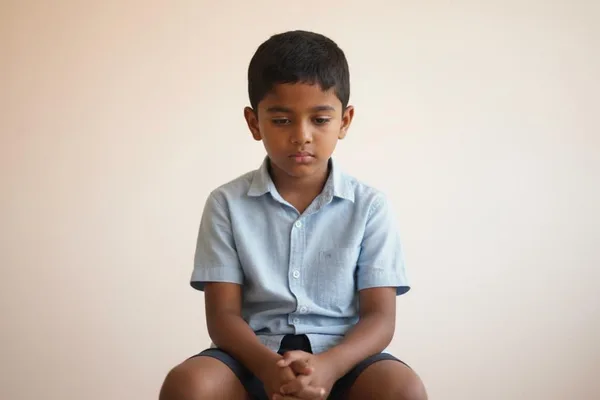
Think about it this way. Your child is different than he used to be. He seems sad all the time, or gets angry easily. He says he has trouble concentrating on schoolwork. No matter how much you talk, you feel like you can't get him out of that situation. At a time like this, getting help from someone outside, someone who knows the subject well, can be a great help to your child. That's why we're going to see a therapist.
What kinds of problems do therapists help with?
Therapists help children and their families with a wide variety of issues. Let's take a look at what they are:
- Sleep problems, stress about schoolwork, difficulty getting along with others: Some children have trouble sleeping at night and have nightmares. When schoolwork piles up and exams are approaching, they feel a lot of stress. They may also have problems with friends, teachers, and family.
- Difficulty paying attention and staying in one place: Problems such as not being able to concentrate in class, having a hard time sitting still, and constantly running around. These are sometimes called Attention Deficit Hyperactivity Disorder (ADHD). However, not all attention deficit disorder is ADHD, and that should be determined by a doctor.
- Always fighting, quick to anger, lack of patience: gets angry over small things, always fights with others, and acts as if nothing can be tolerated.
- Constantly feeling unnecessarily worried about one's health and safety: Constantly feeling fearful and anxious about things like 'Will I get sick?', 'Will there be an accident?'
- Physical discomfort and pain occur even without illness: Even if doctors say 'no illness', if you constantly experience physical discomfort such as stomach aches and headaches, the cause may be psychological.
- Family problems, major illness, and difficult times in life: Problems at home, problems between parents, the loss of someone close to them, or a major illness in the family - children need help to cope with such difficult times.
- Stress, anxiety, worry, anger, sadness, depression, or grief: These feelings are normal and not a problem. However, if they become uncontrollable and interfere with your child's daily activities and happiness, it is important to look into them.
Remember, if you feel like your child has something like this, it's nothing to be ashamed of or hide. It's like seeing a doctor for a physical ailment.
What happens when you first meet a therapist?
When you go to see a therapist with your child for the first time, it's normal to feel a little scared and curious. But the therapists are very friendly. They will make you and your child feel very welcome.
First, the therapist will talk to you and your child. They will create an environment where your child can talk easily. Then, they will start asking questions. These questions are not to judge you, but to gain a better understanding of your child, the problem they are facing, and the family background. They will listen very carefully to what you have to say.
Next, you can ask more questions to understand exactly what the child is experiencing, such as anxiety , depression , stress , or attention problems . Sometimes you can also have them fill out short questionnaires. All of this is done to identify the exact problem.
Once they understand what the problem is, the therapist will tell you how they can help you. That means they will explain what kind of therapy approach they will use, how long it will take, and so on.
Often, therapists will ask children to come in for a few more sessions. These are what we call therapy sessions . These sessions are usually once a week, but can vary depending on the child's needs. This may take several months.
How are the little children?
For very young children, that is, children under 5-6 years old, the therapist may be able to gather information by observing the child's play and interactions with parents rather than talking directly to the child. Also, the most information is obtained from the parents. There are some therapeutic methods, such as Play Therapy , which uses toys and drawing to try to understand what is on the child's mind.
What happens when you go to therapy sessions?
Okay, so what happens when you keep going to these therapy sessions? It's like a child going to a class to learn something new. But here, what they're learning is how to deal with their own problems, how to understand their own emotions, and new ways to solve problems.
In each session, the child talks to the therapist. The therapist asks questions, listens carefully to what the child has to say, and helps the child talk freely about things that are on their mind, such as fears and anxieties. Then, they talk about those problems and how to deal with them.
Sometimes therapists give children small activities to do. For example, they may ask them to draw a picture of their feelings, or they may teach them small exercises on how to control their anger. These are like 'mental exercises' .
What therapists teach
Therapists teach children many important things. For example:
- How to identify and manage emotions: They teach you how to understand and respond appropriately to emotions like sadness, anger, and fear when they arise.
- Problem-solving skills: They help you think about different ways to solve a problem, rather than panicking when it arises.
- Changing negative thinking patterns: Sometimes we are used to thinking negatively all the time. They help us to think more realistically and positively instead of thinking like 'I can't' or 'I am bad'. This is sometimes done using methods like `(Cognitive Behavioral Therapy - CBT)`.
- Social skills: Things like talking well with others, making friends, and expressing your opinions properly.
- Relaxation techniques: Things like breathing exercises can help you calm down when you feel stressed or anxious.
The most important thing is that therapists also teach parents how to help their child. They guide you on how to talk to your child at home, how to support your child, and how to help your child continue what they have learned. Because parental support is also essential for building a child's mental well-being.
Going to therapy in this way gives children a lot of strength to cope with problems, relax, and carry out daily tasks, schoolwork, and relationships with friends.
What can we do as parents?
I know that taking your child to a therapist is not an easy decision. You may have questions like, 'What will other people think?', 'Will this really help your child?' But remember, you are doing one of the best things you can do for your child.
So, there are a few things you can do as a parent:
1. Be open: Talk to your child about going to see a therapist. Make it clear that it's not a punishment or something the child is doing because they're 'bad.' Simply say, 'We're going to get help for a minor problem you're having, just like you would go to the doctor when you have a fever.'
2. Be supportive: Follow the therapist's instructions. Help your child with small activities at home. Listen to what your child says and try to understand him.
3. Be patient: It may take some time to see results. Not everything will change overnight. It is very important to be patient and continue to support your child.
4. Maintain regular contact with the therapist: Talk to the therapist about your child's condition and any problems you may have. Only then can you get the best results.
5. Encourage your child: Praise your child for participating in therapy and for their efforts. Saying something like, "You're so brave for facing this" can be very encouraging to your child.
The most important thing is to remember that you are not alone. There are therapists who can help you, and there are other parents who have had similar experiences.
A message to take home for you.
Okay, so, here are the most important things you need to remember from what we've talked about today:
- It's normal for a child to have a mental health problem or emotional distress. It can happen to anyone.
- At such times , there is nothing to be ashamed of, seeking help from a specialist like a therapist. It is a great help to the child.
- Therapists are people who have received special training to understand and help children with their mental health problems.
- Therapy is a process that teaches a child to deal with their feelings and problems in a healthy way.
- Parental support and understanding are very important for the child on this journey.
So, if you think your child needs this kind of help, don't be afraid to look into it further, and if necessary, take the step of seeing a qualified therapist. A child's mental well-being is just as important as their physical well-being. It's important to prioritize that. Good luck to you!
` Mental health, child psychology, therapy, counseling, Therapy, Therapist, stress, anxiety, depression, children's problems, parenting counseling




💬 Comments (0)
No comments yet. Be the first to share your thoughts here.
Add Your Comment