

You've probably heard of kidney stones. Maybe one of your friends or relatives has had this condition. Today, we'll talk simply about what kidney stones are, why they form, and what to do if they form. There's nothing to be afraid of, it's very important to be aware of this.
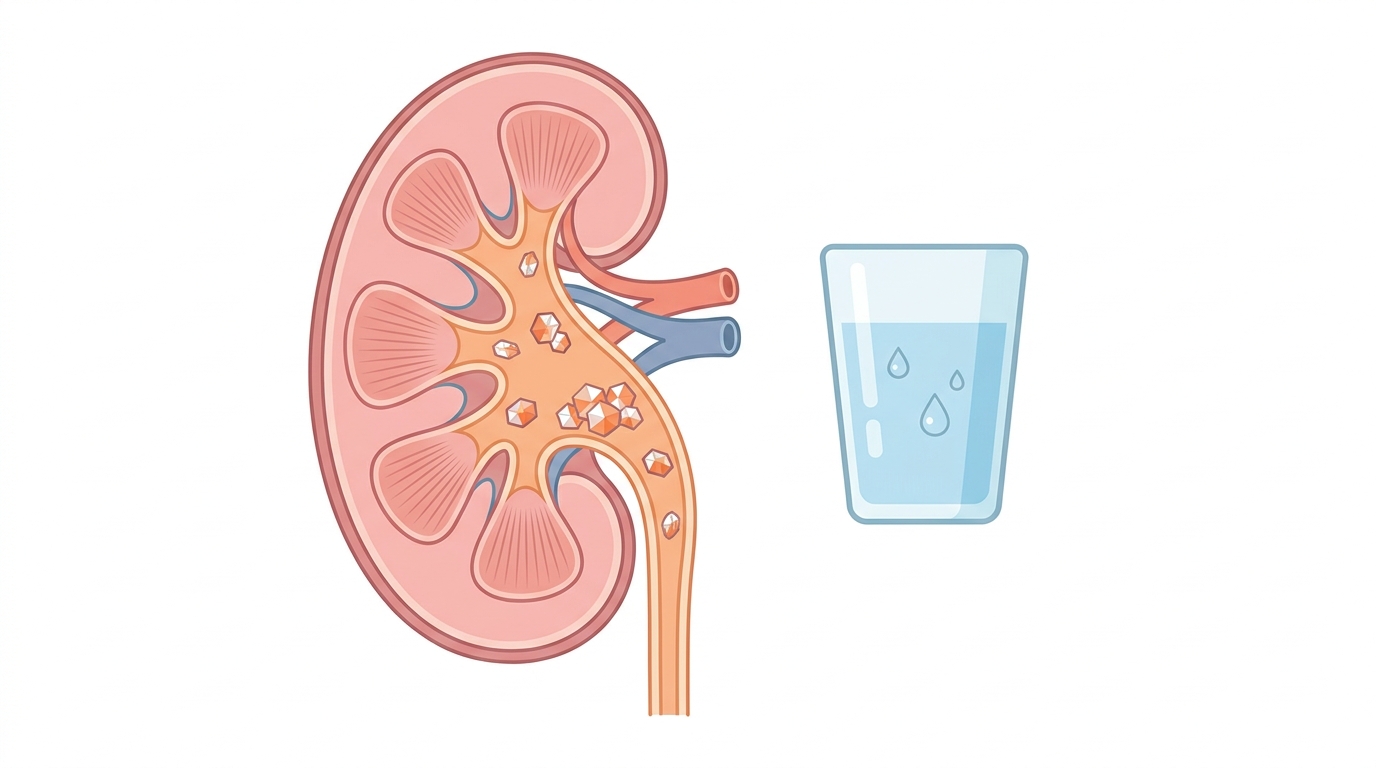
What are kidney stones? Let's understand it simply.
Okay, first let's see what these kidney stones are. You know that we have two kidneys in our body. These are like two filters in our body. The main function of the kidneys is to filter and separate the unwanted waste products in the blood, combine them with water and excrete them as urine, that is, urine .
Now think about it this way, sometimes if certain things in your urine, for example calcium , oxalate , and uric acid, become more than normal, they clump together and form small crystals. It's like if you add sugar to a glass of water, sugar will settle to the bottom. Those crystals clump together and over time, they become hard, stone-like things. That's what we call kidney stones .
These stones can come in all sizes. Some are as small as a grain of sand. They can pass out with your urine without you even realizing it. But some stones are a little bigger, about the size of a pea, and sometimes even bigger. That's when the problems start. These large stones can cause severe pain , blood can come out with your urine , and sometimes they can block the urethra and stop urine from coming out.
Why do these kidney stones form? Do these reasons affect you too?
"Why did this happen to me?" you may be wondering. There is not just one cause of kidney stones, there are many factors that can contribute to them. Let's take a look at the main causes:
- Insufficient water intake: This is the main and most common cause . If you don't drink enough water per day, your urine becomes thick. Then, things like calcium that I mentioned earlier can easily accumulate and form stones.
- Diet: Eating too much of certain foods can also have an effect.
- Foods high in salt (sodium): Eating too much salt can increase the amount of calcium in the urine.
- Foods high in animal protein: Eating too much meat, fish, and eggs can also cause the formation of some types of stones.
- Foods high in oxalate: Foods like spinach, tea leaves, peanuts, and chocolate are high in oxalate. Eating too much of these can also contribute to the formation of calcium oxalate stones. However, it is not necessary to completely stop eating these foods, but it is important to control them according to medical advice.
- Family History: If someone in your family has had kidney stones, you are more likely to develop them too. This means there may be a genetic influence.
- Some medical conditions:
- If you get frequent urinary tract infections (UTIs).
- In conditions like hyperparathyroidism, the parathyroid glands produce too much hormone, leading to elevated calcium levels in the blood and urine.
- People with gout can develop uric acid stones.
- People with inflammatory bowel disease (IBD) may also be at increased risk of developing stones.
- Certain medications: Some medications can cause stones to form as a side effect even when used long-term. If you are taking any medication, it is a good idea to talk to your doctor about this as well.
- Obesity: It has been found that people who are overweight are also at higher risk of developing kidney stones.
- Structural defects: Stones can also form due to certain congenital structural defects in the urinary system.
Simply put , kidney stones don't form overnight. They are caused by habits and changes in the body that accumulate over time.
Are there different types of kidney stones? What are they?
Yes, kidney stones are not all the same type. There are several main types. This classification is based on the material the stone is made of.
- Calcium Stones: These are the most common type . They can form as Calcium Oxalate or, rarely, as Calcium Phosphate.
- Struvite Stones: These are often associated with urinary tract infections (UTIs). These stones can grow quickly and can sometimes spread over a large area of the kidney (`Staghorn calculi`).
- Uric Acid Stones: These types of stones can develop in people who drink little fluids, eat a diet high in animal protein, or have gout.
- Cystine Stones: These are somewhat rare. These stones form when the kidneys produce too much of the amino acid cystine in people with a genetic condition called cystinuria.
It is important to know the exact type of stone, so that you can decide what to do to prevent stones from forming again.
How do you know if you have a kidney stone? Watch out for these symptoms
Most of the time, small stones pass through the urine without any symptoms. However, symptoms only appear if the stone is large or if it becomes lodged in the narrow tube that carries urine (the ureter). These symptoms can start suddenly.
- Severe pain: This is the main symptom. It is felt in the area around the kidneys, that is, on the back above the groin, under the ribs.This is where this pain comes from. This pain gradually increases and can become unbearable and severe (Renal Colic). Sometimes this pain comes and goes like a wave. The pain can spread to the lower abdomen and groin area .
- Pain or burning during urination (Dysuria): There may be pain or a burning sensation when urinating .
- Change in urine color (Hematuria): If the urine turns pink, red, or brown, it may mean that there is blood in the urine .
- Changes in the appearance of urine: Urine may become cloudy or have a foul odor.
- Nausea and Vomiting: Nausea and vomiting are common along with pain.
- Frequent urination: Feeling like you need to urinate frequently, but only a small amount of urine may come out when you urinate .
- Fever and Chills: If a urinary tract infection develops along with the stone, a fever may occur.
If you have one or more of these symptoms, it is best to seek medical advice immediately.
When should you see a doctor? Don't forget these things
Some small stones can be passed out with home treatments, such as drinking plenty of water. However, in cases like these, you should definitely see a doctor:
- If there is unbearable pain .
- If there is blood in the urine .
- If you have difficulty urinating , or if your urine flow seems to have stopped completely.
- If you have fever, chills, and shivering along with the pain.
- If you cannot drink anything due to persistent nausea and vomiting .
Seeking treatment quickly at times like this can minimize potential damage to the kidneys.
How does a doctor diagnose kidney stones? (Diagnosis)
When you see a doctor, they will first ask you about your symptoms and whether anyone in your family has had similar conditions. Then they will do a physical exam. In addition, they may do tests like these to find out exactly if you have kidney stones, where they are, and how big they are:
- Urinalysis: A urine sample is taken and checked for blood, germs, and crystals that can form stones.
- Blood Tests: This helps to check how the kidneys are functioning and the levels of things like calcium and uric acid in the blood.
- Imaging Tests:
- `CT scan (Computed Tomography scan)`:This is often the best test to detect stones. It can provide many details, such as the location of the stone, its size, and whether the kidney is swollen.
- Ultrasound Scan: This is also a painless and safe method. It is used especially for those who cannot undergo a CT scan, such as pregnant women.
- X-ray examination `(KUB X-ray - Kidneys, Ureters, Bladder)`: Some types of stones can be seen with this. However, not all stones are visible on `X-ray`.
- Analysis of Passed Stones: If you pass a stone in your urine , take it to your doctor . They can send it to a lab to find out what material it's made of. That information can help prevent stones from forming again.
What are the treatments for kidney stones? Don't worry, there are solutions.
Treatment for kidney stones depends on the size, type, location of the stone, and the severity of your symptoms.
Treatment for small stones:
In most cases, stones smaller than 5-6 millimeters can pass without any special treatment. For this, the doctor may advise the following:
- Drink plenty of water: Drinking at least 2-3 liters of water a day will help increase urine production and help flush out the stone. Drink water until your urine is colorless or light yellow.
- Pain Relievers: To control pain, you can take common pain relievers like Ibuprofen, or milder pain relievers prescribed by your doctor.
- Medical Expulsive Therapy: Sometimes alpha-blockers, such as tamsulosin, are prescribed. These medications relax the muscles in the urethra and help the stone pass more easily.
Treatment for large or problematic stones:
If the stone is large, causing unbearable pain, causing a urinary tract infection, or if it appears to be damaging the kidney, the following treatments may be used:
- Extracorporeal Shock Wave Lithotripsy (ESWL): This involves sending high-energy sound waves (shock waves) from outside the body to break the stone into small pieces. The small pieces are then passed out in the urine . This can be done with or without anesthesia.
- `Ureteroscopy (URS):` In this, a thin, camera-equipped tube (`Ureteroscope`) is inserted through the urethra (`Urethra`) and through the bladder (`Bladder`) to the ureter (`Ureter`) or kidney to find the stone. Then, the stone is removed using special instruments, or something like a `Laser` is used to break up the stone and remove it.
- ``Percutaneous Nephrolithotomy (PCNL)'':This is a bit of a major surgery. It is done if there are very large stones, or if methods like `ESWL` are not successful. In this, a small incision is made on the outside of the kidney, and an instrument is inserted through it to remove the stone.
- Parathyroid gland surgery: Sometimes, if the cause of kidney stones is hyperparathyroidism, surgery may be required to treat the problem with the parathyroid glands.
Remember, your doctor will decide what treatment is best for you, so it's important to follow his or her instructions.
Can you prevent kidney stones from forming again? Try these things
Once you have a kidney stone, you are more likely to develop it again. But the good news is that making small changes to your lifestyle and eating habits can greatly reduce this risk.
- Water is king!
- Drink at least 2.5 - 3 liters of water a day. Drink even more on hot days and when exercising.
- The goal is to drink water until your urine is light yellow or colorless .
- Be careful about your diet: (These may vary depending on your type of stone. Therefore, it is best to consult a doctor or nutritionist.)
- Reduce Sodium: Reduce the amount of salt you add to your food. Processed foods like canned foods, instant noodles, sauces, and sausages are high in salt.
- Limit Animal Protein: Reduce your intake of red meat, poultry, and eggs. Instead, try to get your protein from vegetables, fruits, and nuts.
- Be careful with foods high in oxalate: If you have calcium oxalate stones, limit your intake of foods high in oxalate, such as spinach, beetroot, peanuts, tea, and chocolate. But don't completely stop eating calcium-rich foods (milk, yogurt, cheese). Because if your diet is low in calcium, you can absorb more oxalate. Seek medical advice about this.
- Reduce sugary drinks and foods high in sugar and fructose.
- Maintain a healthy weight.
- Medications only if prescribed by a doctor: For some people, a doctor may prescribe medications such as thiazide diuretics and allopurinol to prevent stones from forming again.
Take-Home Message
Kidney stones can be a painful experience, but don't panic.
- Kidney stones are a treatable condition.
- If you experience symptoms, especially severe pain or blood in your urine , see a doctor immediately.
- Drinking plenty of water is the simplest and best way to prevent stone formation.
- Follow your doctor's instructions carefully. Follow the instructions given for treatment and to prevent the stones from forming again.
- Don't rely on guesswork. If you have a problem, talk to a doctor about it and get accurate information and treatment.
I hope you find this information useful. Stay healthy!
` Kidney Stones, Kidney Pain, Urinary Stones, Renal Colic, Hematuria, Kidney Stone Treatment
Doctor's Note
Although kidney stones are common among adults, nowadays they are also seen among children due to wrong eating patterns and not drinking enough water. These stones are formed by the crystallization of minerals in the urine. The main reasons are excessive use of salt, use of artificial drinks and drinking less water. Kidney stones can be prevented by giving the child enough water a day, eating a diet rich in fruits and vegetables, and limiting salt intake.
❓ Some more questions you may encounter (FAQ)
What are the main symptoms of kidney stones?▼
Severe pain in the back or lower abdomen, burning during urination, hematuria and vomiting.
How to prevent kidney stones?▼
Drinking enough clean water daily, limiting salty foods (packaged snacks) and drinking things like fresh lemon juice.
What are the treatments for kidney stones?▼
Smaller stones are passed out with urine by drinking more water, while surgery or wave therapy (lithotripsy) is used for larger stones.


💬 Comments (0)
No comments yet. Be the first to share your thoughts here.
Add Your Comment