
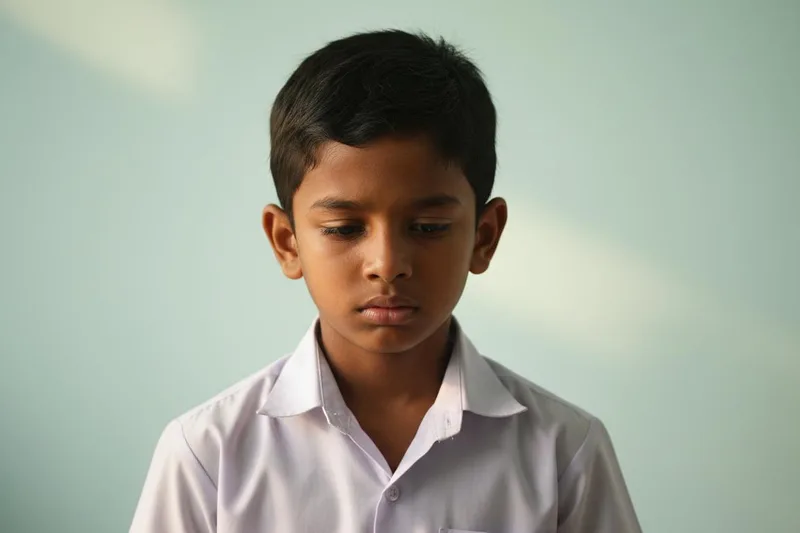
School is a place where our children learn new things, have fun playing with friends, and are shown the way to become good citizens for the future. But sometimes, our children may encounter small problems, worries, and incomprehensible things within this school life. Perhaps your child is also suffering from something like this. So, today we will talk about who a school counselor is and what help they can provide. This will be very important for both you and your child.
Who is this school counselor? What does he do?
Simply put, a school counselor is someone who helps children at school maintain their mental health, education, and social relationships. More precisely, they are a friendly adult who listens to children, understands their problems, and guides them to find solutions. Think about it, sometimes children may have problems that they cannot tell their family or friends. At such times, this school counselor is someone they can talk to without any fear.
Their main goal is to create a friendly environment where every child can learn well, be happy, and not afraid at school.
A lot of people here think, "Oh, my child doesn't have that big of a problem, so he doesn't need a counselor." But really, you don't have to wait until there's a big problem. Even if it's something small, if it's bothering your child, you can meet with a counselor to talk about it.
What kind of things does a school counselor help with?
School counselors really help with a wide range of things. Let's take a look at what those are.
Bullying at school
This is a problem that children often face. Some children physically abuse another child, steal things, or hurt or marginalize them with words. This is what we call (Bullying) . When something like this happens, the child becomes afraid to go to school, gets bored, and feels very sad. The school counselor can listen to such a child, comfort him, teach him how to protect himself (self-defense strategies) , and also help him take the necessary steps to stop this situation.
Loneliness and lack of friends at a new school
Imagine, your child has moved to a new school, or has moved to a new class. Then, they may feel lonely without anyone they know. It may be difficult to make friends. At times like these, the counselor can help the child adjust to the new environment, teach them little tricks for talking to others and building friendships (social skills) .
When problems at home bother you
Sometimes, family issues can have a big impact on children's minds. For example, problems between parents, divorce , loss of a family member (such as death), or financial problems can cause children to become stressed. At times like these, the counselor's office provides a confidential, safe space for the child to talk about and deal with those feelings.
Problems with homework
Not only are things like "Oh, my child isn't studying," "He's not getting good grades on exams," but things like not understanding the lessons, not being able to do homework , and exam stress are also a big stressor for children. The counselor can talk to the child and teach them things like study skills and time management that will help them study.
Problems with friends
It is normal to have minor disagreements and fights with friends during childhood and adolescence. But sometimes these can escalate and cause emotional damage. It is difficult for children to cope with things like a friend not talking to them or being left out of the group. At times like these, the counselor teaches children about communication skills and conflict resolution.
General stress
Schoolwork, exams, peer pressure, concerns about their appearance, and fears about the future can all cause stress in children. The counselor teaches children coping mechanisms to help them cope with this stress and relax.
How do these counselors help? What do they do?
School counselors help children in a variety of ways, depending on the child's needs.
One-on-One Counseling
This is the most commonly used method. The child can talk to the counselor privately, confidentially, and about anything that is on their mind. The counselor listens carefully, understands the child's problem, and provides appropriate guidance. Here, the child gets the opportunity to express their feelings freely.
Classroom Guidance
Some school counselors go directly into classrooms to teach children important things. For example:
- Understanding and Managing Emotions: Teaches you how to identify emotions such as sadness, anger, and happiness and how to manage them properly.
- Study Skills: Things like how to study and how to remember.
- Friendship Skills: Teaches how to be a good friend and how to maintain friendships.
- Assertiveness Skills: Learn to speak your mind without fear in the face of injustice or harassment.
- Mindful Breathing and Relaxation Techniques: Simple techniques to reduce stress and calm the mind are taught. Things like Mindful Breathing are very helpful.
Group Counseling/Sessions
Sometimes, a counselor will group children with similar problems together and talk to them. Think of a group for children whose parents have separated, a group for children who have lost a loved one (bereaved children), a group to support children with conditions like ADHD (Attention Deficit Hyperactivity Disorder) , or a group for children who need help making friends.
Group meetings like this give children the feeling that "I'm not the only one facing this problem, there are others." That's a great strength. It also gives them an opportunity to learn from the experiences of others.
How can my child meet with the school counselor?
This is very simple. You don't have to wait until it's a big problem. If your child feels like, "I need someone to talk to about this," they can:
- Tell your class teacher: "I need to meet the counselor," and the teacher will help you with that.
- Go directly to the counselor's office: Sometimes you can just go to the office, say "hello," and ask, "Can I talk to you for a minute? When is a good time?"
School counselors are always very willing to help children, so there is no reason to be afraid.
What can I do as a parent?
As parents, you also have a big role to play.
- Encourage your child: If you sense that your child is having trouble, encourage them to talk to a counselor. Say, "That's a good thing, it'll help you."
- Talk to the counselor too: If you have any concerns about your child, you can also meet with the school counselor and talk about it. The information you provide about your child's home environment and behavior patterns can be very important to the counselor.
- Teach your child that asking for help is normal: There may be misconceptions in society, such as "going to counseling is for crazy people." However, help your child understand that seeking help for emotional problems is just as normal as seeing a doctor for physical problems.
A misconception that many people have!
There's something important to say here. Some people think that "only children with serious mental problems or 'crazy' children go to see a school counselor." This is a completely wrong idea!
In fact, school counseling is something that helps improve a child's overall well-being . Just like when we have a physical ailment, we see a doctor and get medicine, when we have a little discomfort or a problem, it is wise to seek help for it. This will make the child stronger and learn to cope with problems better.
Finally, what to remember (Take-Home Message)
Okay, so we've talked about a lot of things today, haven't we? I hope you now have a better understanding of who a school counselor is and what kind of help they provide.
Remember, a school counselor is a valuable resource in your child's school life. They help with a wide range of issues, from minor problems to more complex ones.
The most important thing is to never hesitate to talk about it and ask for help if your child is having trouble. A child's mental health is just as important as their physical health. So, make the most of this facility. There's nothing better than seeing your child learning happily and healthily, right?
` School Counseling, Children's Mental Health, School Life, Problem Solving, Education in Sri Lanka, Parental Advice, School Counselor Sinhala


💬 Comments (0)
No comments yet. Be the first to share your thoughts here.
Add Your Comment