
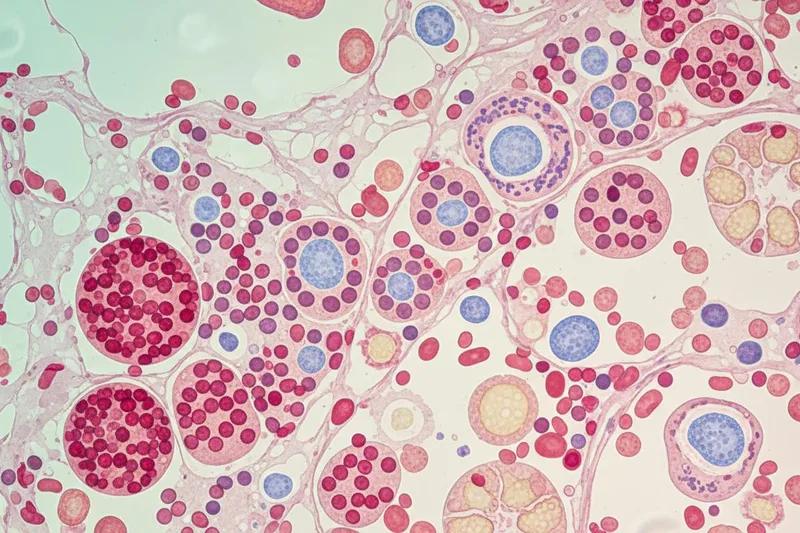
You've probably heard of 'Bone Marrow', right? Maybe from a doctor, or maybe on TV. It's actually a very amazing thing inside our bones, something that is essential to our bodies. Don't worry, even though this may seem like a big deal, today we'll talk about it very simply, in a way that you can understand.
What exactly is bone marrow?
Okay, so let's first look at what this 'bone marrow' is. Simply put, it's the soft, spongy, jelly-like part inside our bones. Have you ever seen the marrow inside some animal bones (for example, the thigh bone when you eat chicken)? That's what this is. In English, it's called 'bone marrow'. It sounds like 'me-ro' .
This bone marrow is not in every bone in our body, but it is especially abundant in the large, long bones in our body. For example, in your thigh bone, hip bone, sternum, and ribs. Although many bones in young children have this bone marrow, as we grow older, that is, as we reach adolescence, some bones change and become filled with fat cells. But in places like the thigh bone and hip bone, this important bone marrow remains active throughout life.
Did you know that there are two types of bone marrow?
Yes, there are actually two main types of bone marrow in our body. One is the red bone marrow , and the other is the yellow bone marrow . Both of these have slightly different functions.
Red Bone Marrow – Our blood-making factory!
This red bone marrow is what our body needs, and it does a very, very important job. It produces all the types of blood cells in our body. Think of it like a big factory, constantly producing the blood cells we need. What are these blood cells?
- Red Blood Cells (RBCs): These are the cells that carry oxygen throughout our bodies. Think of them as little trucks that pick up oxygen from the lungs and deliver it to every cell in the body. This oxygen is what gives us energy, allows us to breathe, and allows us to do work. When these cells are low, we feel tired and sometimes develop a condition called anemia.
- White Blood Cells (WBCs): These are like the security guards of our body. Just like the army and police in our country. When disease-causing substances like germs, bacteria, and viruses enter the body, these white cells go and fight them, destroy them, and save us from diseases. There are several types of these white blood cells, and each type has a specific job. For example, neutrophils and lymphocytes.
- Platelets: Another important group are these platelets. When you have a small wound or a cut, a little blood will flow and stop automatically. These platelets help with that. They come to the bleeding site and clump together, forming a blood clot, closing the wound and stopping the bleeding. Otherwise, even a small wound can become a big problem, right? If there is a lot of blood loss, it is dangerous.
So, this red bone marrow is what makes all three types of cells and keeps our blood system healthy. That's why many of the bones in young children are filled with this red bone marrow, because they're growing so fast and need a lot of blood cells.
Yellow Bone Marrow – Fat storage
Yellow bone marrow is mainly made up of fat cells. This is like our body's energy store. This fat can be converted into energy when needed. Also, in an emergency, for example, if there is a major hemorrhage, this yellow bone marrow can turn back into red bone marrow and help make blood cells. Isn't it amazing? As we grow older, some bones have more yellow bone marrow than red bone marrow.
Why is bone marrow so important to us? – Its main functions
Now you probably understand how important bone marrow, especially red bone marrow, is to our bodies. Let's review some of its main functions:
1. Blood cell production: This is the main and most important function. All three types of blood cells, red cells, white cells, and platelets, are produced by the bone marrow.
2. Helping with oxygen transport: Red cells provide oxygen to the entire body.
3. Maintaining immunity: White cells protect us from diseases.
4. Control bleeding: Platelets stop excessive bleeding by clotting the blood.
5. Home of Stem Cells: Inside the bone marrow, there is a special type of cell called 'Stem Cells' . These cells can not only become any type of blood cell, but also some other types of cells in the body. This is why 'Stem Cell Transplant' is used as a treatment for some diseases.
Simply put, bone marrow is an organ that is essential for our survival. It is like a small, yet very powerful factory in our body.
Can bone marrow problems occur? – Some common problems
Like any other part of our body, bone marrow can sometimes develop problems and diseases. If that happens, it can affect our entire body, as the production of blood cells is disrupted. Let's look at some of the main problems that can occur:
- Leukemia: This is a type of cancer that develops in the bone marrow. What happens here is that the bone marrow produces a large number of abnormal, useless white blood cells. These abnormal cells also reduce the production of healthy blood cells.
- Lymphoma: This is also a type of cancer. However, it starts in the white blood cells called lymphocytes, which are part of the immune system. Since these lymphocytes are also found in the bone marrow, lymphoma can also affect the bone marrow.
- Aplastic Anemia: In this condition, the bone marrow is unable to produce enough new blood cells (red cells, white cells, and platelets). It's like the factory has shut down.
- Myelodysplastic Syndromes (MDS): Here, although the bone marrow produces blood cells, the cells they produce are not developed properly, or their function is impaired. It's like repairing broken equipment.
- Multiple Myeloma: This is a cancer that develops in the bone marrow involving plasma cells (a type of white blood cell).
- Other causes: In addition, certain infections, certain medications (especially chemotherapy), radiation therapy, and certain nutritional deficiencies (e.g., vitamin B12, folate, iron deficiency) can also affect bone marrow function.
When this condition occurs, symptoms such as fatigue, frequent illness, paleness, and bleeding may occur.
How do you know if there is a problem with the bone marrow? – Diagnosis
If a doctor suspects that someone has a bone marrow problem, they will do several tests to find out exactly what it is.
- Blood Tests: The first thing you will do is a full blood count (FBC). This will check the number of red cells, white cells, and platelets in your blood. If there is a big difference in these numbers, it could be a problem with your bone marrow.
- Bone Marrow Aspiration and Biopsy: This is the main test used to determine the exact condition of the bone marrow. Here, a small sample of bone marrow is removed using a small syringe, usually from a place like the hip bone. This is called a 'Bone Marrow Aspiration' and 'Biopsy' . Although this may seem like a bit of a painful test, doctors do it to make it as painless as possible. The sample is then examined under a microscope to check the type and size of the cells.
These tests can determine exactly what kind of problem there is in the bone marrow.
What are the treatments for bone marrow diseases?
Once a bone marrow disease is diagnosed, the treatment depends on many factors, including the nature of the disease, the patient's age, and their overall health. Here are some of the main treatment options:
- Medications: For some conditions, medications are given that stimulate the bone marrow and increase blood cell production. For cancer conditions, powerful medications like chemotherapy are used.
- Blood Transfusions: If the blood cell count is very low, external blood transfusions (red cells, platelets) are performed.
- Bone Marrow Transplant / Stem Cell Transplant: This is a more complex treatment. It involves removing the diseased bone marrow and replacing it with healthy bone marrow cells (or stem cells). These healthy cells can come from a matched donor, or sometimes from the patient themselves. Although this is a major and challenging treatment, it has been able to cure some serious bone marrow diseases.
In addition, things like supportive care and nutritional advice are also important.
What can we do to keep our bone marrow healthy?
Since bone marrow is something that is found inside the body, you might wonder if you need to do anything special to maintain it. In fact, maintaining an overall healthy lifestyle is the best thing for bone marrow health.
- Good nutrition: Eat a balanced diet that contains nutrients like iron, vitamin B12, and folic acid. Foods like greens, vegetables, fruits, meat, fish, and dairy products help with this.
- Avoid harmful things: Avoid exposure to toxic chemicals and unnecessary radiation as much as possible. Things like smoking are also harmful.
- Medical advice: If you have any symptoms (e.g., persistent fatigue, frequent illness), or if anyone in your family has had a bone marrow disease, see a doctor for advice.
Take-Home Message
So, today we talked a lot about bone marrow, right?
Bone marrow is like a small factory in our body that performs a silent but very important service, keeping us alive. We cannot live without the blood cells it produces.
- Simply put, bone marrow is a sponge-like part inside our bones that makes all three types of blood cells: red blood cells, white blood cells, and platelets.
- These blood cells help carry oxygen to our bodies, protect us from disease, and stop bleeding .
- Sometimes, bone marrow can also develop diseases (like leukemia), but these can be managed with proper medical testing and treatment .
- Living a healthy lifestyle is also important for bone marrow health.
If you have any more questions about this, don't be afraid to ask a doctor. The more we know about our bodies, the more we take care of our health.
` Bone marrow, Blood cells, Red blood cells, White blood cells, Platelets, Leukemia, Bone marrow transplant


💬 Comments (0)
No comments yet. Be the first to share your thoughts here.
Add Your Comment