

Coughing is something we all experience all the time. Sometimes, a cough that comes with a minor cold will subside in two or three days. But some coughs last for months, don't even let us sleep at night, and are completely debilitating. So, what exactly is this cough? Why do we cough? Are all coughs the same? Let's talk about all this in detail and simply today.
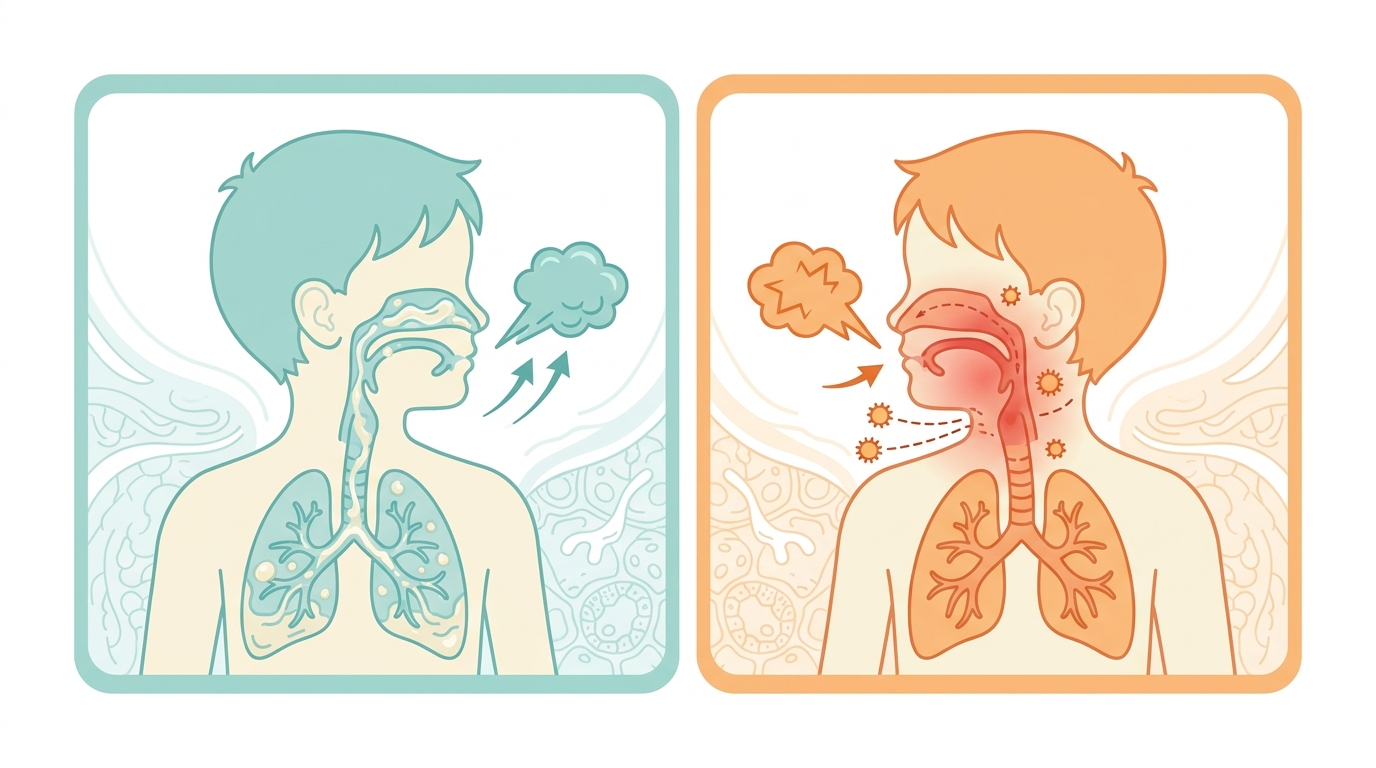
What is a cough? Why do we cough?
Simply put, coughing is a defense mechanism in our body. To be precise, it is an automatic response (reflex) . If there is something unwanted or irritating stuck in your throat or chest airways (`(Airways)`), the body coughs to get it out. Think about it, if you suddenly choke on food while eating, you cough, that's how it is.
What are these irritating things?
- Dust and smoke: Dust particles in the environment, vehicle exhaust, and cigarette smoke can cause coughing when they enter the respiratory tract.
- Mucus: When we have an illness like a cold, our airways produce more mucus. The body coughs to get rid of this mucus.
- Infections : When there is a bacterial infection, it also irritates the airways.
So coughing is actually something our body does to protect us. However, a persistent cough can be very annoying.
What are the main causes of coughing?
There are many reasons for coughing. Some are very minor, while others require a little attention. Let's take a look at the main causes.
- Common cold and flu (`(Influenza)`): These are the most common causes of cough. These conditions are caused by viral infections. These coughs usually subside within a few days to a week or two.
- Asthma: Asthma is a major cause of cough in many people, especially young children. When you have asthma, your airways become swollen, narrowed, and filled with mucus. This makes it difficult to breathe and causes coughing. For some children, a persistent cough may be the only sign that they have asthma. This cough may get worse, especially at night or during exercise.
- Allergies and irritants: Some people are allergic to things like dust, pollen, and animal dander, which can also cause a cough. Similarly, things like cigarette smoke, strong odors, and air pollution can also irritate the airways and cause a cough.
- Bronchitis (Bronchitis):This is when the main airways (bronchi) leading to the lungs become infected and swollen. Acute bronchitis is usually caused by a virus and can come after a cold. Chronic bronchitis is a more serious condition and often occurs in smokers.
- Pneumonia: This is an infection that affects the lungs. Symptoms may include a cough, fever, difficulty breathing , and chest pain. Pneumonia is a condition that should definitely be seen by a doctor.
- Sinusitis and Postnasal Drip: Sinuses are the cavities inside our face. Sinusitis occurs when these become infected. Then mucus starts to drain into the back of the throat (Postnasal Drip). This can also cause coughing, especially at night.
- Gastroesophageal Reflux Disease (GERD): In some people, stomach acid can come up the esophagus and irritate the throat. This can also cause a dry cough, especially shortly after eating or when lying down.
- Certain medications: Some medications for high blood pressure (such as ACE inhibitors) can cause a dry cough as a side effect. If you are taking any medications, tell your doctor if you develop a new cough.
- Other causes: In addition to this, in rare cases, a persistent cough can also be caused by serious conditions such as tuberculosis (TB) and lung cancer . However, these are very rare, so don't worry about these things just because you have a constant cough. However, if you have a persistent cough that doesn't go away, you should definitely see a doctor. As you know, a cough is also a major symptom of COVID-19.
Are there different types of coughs?
Yes, coughs can be classified in different ways. This classification also helps doctors find the cause.
Dry Cough vs Productive/Wet Cough
- Dry cough : This type of cough does not produce mucus. It feels like a tickle in the throat. This type of cough can often occur during the early stages of a viral infection, asthma, GERD, and some medications.
- Mucus cough: In this, mucus is produced when coughing. The color (white, yellow, green) and thickness of the mucus can give some idea of the nature of the infection. Mucus cough is seen in conditions like `(Bronchitis)` and `(Pneumonia)`.
Acute Cough vs Chronic Cough
- Sudden cough (`(Acute Cough)`):This is a cough that usually lasts less than 3 weeks. It is often caused by things like colds, flu, and `(Acute Bronchitis)`.
- Persistent cough (`(Chronic Cough)`): This is the name we give to a cough that lasts for more than 8 weeks. There can be many causes for this. Asthma , `(GERD)`, `(Chronic Bronchitis)`, `(Postnasal Drip)` are the main ones. Sometimes, a cough can persist even if several causes come together.
Nocturnal Cough
Some coughs are more bothersome at night than during the day. People with asthma, GERD, and postnasal drip may have a worse cough at night.
Exercise-induced cough
Some people, especially those with asthma, may experience a cough during or after exercise. This may be due to a condition called ``Exercise-induced bronchoconstriction''.
Let's be a little more careful about coughs in young children.
It's very common for young children to get a cough. Their immune systems are still developing, so they often get colds, fevers, and coughs.
It's natural for parents to be worried when a young child coughs. But not every cough should be feared.
However, there are times when we need to be a little more careful about coughs in young children:
- Asthma: As mentioned earlier, asthma can be a major cause of persistent cough in children. Be aware of coughing that worsens at night and coughing that occurs during play.
- Whooping cough (Pertussis): This is a dangerous bacterial infection. It causes coughing so fast that you can't even breathe, and finally you breathe out with a "whoop" sound. There is a vaccine for this, make sure you take it properly.
- Croup: This is a condition in which the upper airways become swollen, causing a characteristic barking cough. There may be a whistling sound (stridor) when breathing.
- Choking: Sometimes small children can get something stuck in their airways because of things they put in their mouths. This should also be considered if they have a sudden, severe cough or difficulty breathing.
If your child's cough doesn't subside in a few days, if they have difficulty breathing, if they have a fever, if they don't eat well, if they are lethargic and not playing, then definitely take them to a doctor.
What are the home remedies for a cough?
You don't need to run to the doctor for every cough. For a simple cough, there are a few things you can do at home.
- Drink plenty of water: Drinking plenty of fluids, such as hot water and soup, will moisten your throat and help thin out mucus, making it easier to come out.
- Honey:Children over one year old and adults can be given a teaspoon of honey. Honey reduces a sore throat and soothes a cough. However, do not give honey to babies under one year old.
- Steam Inhalation: Inhaling steam from a hot water bottle can help moisten the airways and loosen mucus. However, you need to be very careful when inhaling steam for young children, as it can burn them. It is also a good idea to turn on the hot water tap in the bathroom and stay in the steam for a while.
- Stay away from smoke and irritants: Avoid places with cigarette smoke. Vacuum your home thoroughly. Reduce the use of strong-smelling ``(Air fresheners)`` and scents.
- Rest: Resting the body is good for any illness.
- Gargle with salt water: If you have a sore throat, gargling with lukewarm salt water can provide relief.
- Over-the-counter cough syrups (OTC cough syrups): While these may provide temporary relief for some coughs, they do not work for all coughs. Some cough syrups are not suitable for young children. The best thing to do is to find the cause of the cough and treat it. So always consult a doctor before taking medication.
When should you be concerned about a cough? When to see a doctor!
Although most coughs subside within a few days, sometimes we should definitely seek medical advice. Be aware of these "red flag symptoms":
- Difficulty breathing or shortness of breath.
- If you make a wheezing sound when breathing.
- If you have severe chest pain .
- If you cough up blood with mucus .
- A high fever (e.g., over 102°F / 38.9°C) that lasts for several days, or a fever that doesn't go down.
- Recurrent fever.
- If you suddenly lose weight in an unimaginable way.
- If the cough has been present for more than 3-4 weeks and is getting worse day by day.
- If it's a small child, if they refuse to eat or drink, if they don't play and are moody, if they are excessively sleepy .
- If the lips or face appear to be turning blue (`(Cyanosis)`).
- It is best to see a doctor immediately if you are an elderly person or someone with other chronic diseases (e.g., diabetes mellitus, heart disease) develops a cough.
If you have any of these symptoms, don't waste time and see a doctor.
How does a doctor find the cause of a cough?
When you go to a doctor, he will first ask you a few questions.
- When did the cough start?
- Is it a dry cough or a cough with phlegm? What color is the phlegm?
- Do you cough more at night or during the day?
- Are there any other symptoms (fever, chills, chest pain)?
- Do you smoke?
- Do you take medicine for any other illnesses?
- Does anyone else at home have a cough?
The doctor will then examine you, especially listening to your chest with a stethoscope (`(Auscultation)`).
Most of the time, this information and tests can help determine the cause of your cough. However, sometimes further testing may be necessary. For example:
- Chest X-ray: To diagnose conditions such as pneumonia and tuberculosis.
- Respiratory function tests (Spirometry): To diagnose conditions such as asthma.
- Maybe blood tests, sputum tests.
It is only after these tests that the doctor will prescribe the most appropriate treatment for your cough.
Take-Home Message
We've talked a lot about coughs today. Finally, remember these things:
- A cough is not a disease, but a symptom. It is a signal that something is wrong inside the body.
- Most often, coughs are caused by simple causes (like a cold) and resolve in a few days.
- Never ignore a persistent cough, or a cough with the aforementioned "red flag" symptoms. Definitely see a doctor.
- Avoiding smoking and staying away from irritants like dust and smoke can help reduce coughing.
- It is wiser to seek advice from a doctor and seek treatment rather than just buying cough syrup from the pharmacy.
If you have a bothersome cough, don't be afraid to see a doctor to find out the cause and get proper treatment. Then you can recover quickly!
` Cough, Phlegm, Asthma, Cold, Bronchitis, Pneumonia, GERD
Doctor's Note
Cough is a natural defense response of the body to expel phlegm, dust or germs from the child's airways. Wet cough usually occurs with a cold or lung infection, while dry cough can be caused by asthma or allergies. To keep the baby comfortable, it is advisable to give lukewarm water to drink, hold steam and give a teaspoon of honey to children above 1 year of age. Avoid giving cough syrups to children without a doctor's prescription.
❓ Some more questions you may encounter (FAQ)
What is the difference between wet cough and dry cough?▼
Coughing up fluid with mucus indicates an infection in the respiratory tract. A dry cough without phlegm is caused by an irritation or allergy in the throat.
What can be done at home to control cough?▼
Let the child rest well, give warm liquids to drink, and give honey if the child is above 1 year of age.
What are the emergency situations in which a cough should go to a doctor?▼
If the child has fast breathing, wheezing/stridor, and high fever, go to a hospital immediately.





💬 Comments (0)
No comments yet. Be the first to share your thoughts here.
Add Your Comment