
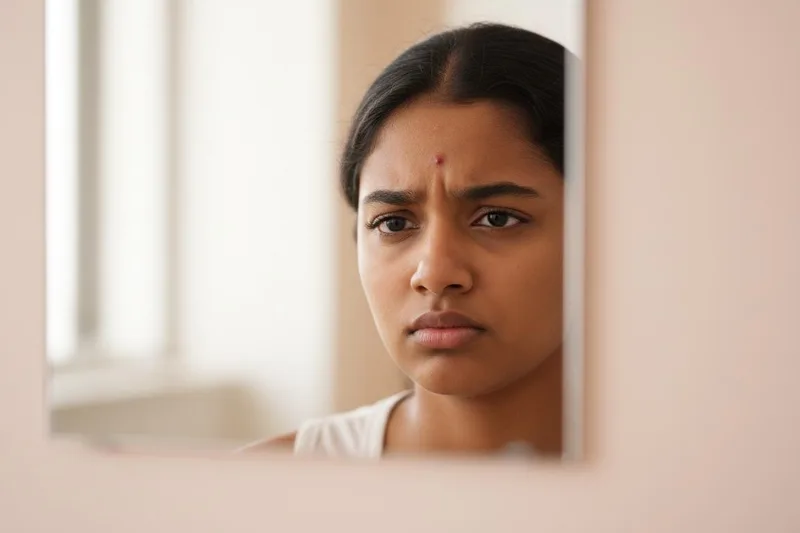
Imagine, when you wake up in the morning and look at your face in the mirror, there is a small red bump on your forehead or cheek! A pimple again! This is a very common thing that happens to many people, especially during school and at a young age. But even this small pimple can be very annoying sometimes, isn't it? So today we will talk about these pimples or `(Pimple)`, why they appear, what to do when they appear, and what not to do.
What is a pimple? What exactly happens to the skin?
Simply put, a pimple is a small hole in your skin, also called ``pores,'' that gets clogged up by various things. Now look at this.
There are oil glands under our skin called `(Oil glands).` These are the ones that produce a type of oil called `(Sebum)` that helps keep our skin moist and not dry. This is actually good for the skin. However, especially when you are going through puberty , your body's hormonal changes cause this oil production to increase slightly.
Just think, what happens here is like when dirt gets stuck inside a water pipe, the water doesn't flow out and fills up in one place.
So, the excess oil produced in this way gets stuck inside the pores we mentioned, along with the dead skin cells on the surface of the skin. When bacteria or other types of bacteria get into that stuck area, the area becomes red, swollen, and sometimes filled with pus, which then comes out as a pimple. Many people have this problem with acne. But this condition usually subsides after puberty, so don't worry .
Are there other reasons why acne occurs?
As mentioned earlier, although the main cause is hormonal changes, there are several other small things that can contribute to acne.
- Hormonal changes: This is the main culprit. This is especially common during adolescence, from the ages of 12-13 to the early 20s. Some women even get acne around their monthly menstrual cycle.
- Genetic predisposition: Sometimes, if your mother, father, or someone in your family had acne when they were young, you are more likely to get acne too. That's something we can't control.
- Stress: Do you remember when you felt like you were getting more acne when you had an exam or had some problems at home? Yes, stress can also indirectly affect the development of acne. That is, stress can change the functioning of some hormones in the body and increase oil production.
- Certain foods: There are different opinions on this. Some say that oily foods, chocolate, and dairy products cause acne. However, this does not affect everyone the same. However, studies have found that foods that are very sweet and contain refined carbohydrates (like bread and biscuits) can increase acne in some people. Eating a balanced diet is very important.
- Skincare and makeup products: Sometimes, if the facial creams and makeup you use don't suit your skin type, they can clog pores and cause acne. You should be especially careful when choosing oily cosmetics. You can reduce this risk by choosing products that are labeled as non-comedogenic.
- Hygiene: Not cleaning your face properly is not the only cause of acne. However, the accumulation of sweat and dirt throughout the day can clog pores. Also, frequently touching your face with dirty hands can also introduce bacteria to the skin and cause acne.
Are there different types of acne? What type do you have?
Yes, there are different types of acne. Once you know what type you have, it's easier to treat it properly.
- Whiteheads: These are small, white bumps that are blocked by pores and covered with a thin layer of skin.
- Blackheads: These are also clogged pores. But because they are open at the top, the oil and dead cells inside combine with the air and appear black. Don't think of this as dirt , this is something else due to a chemical reaction.
- Papules: These are small bumps that are red, slightly swollen, and painful to the touch. They do not contain visible pus.
- Pustules: These are similar to chickenpox, but they have a yellow or white pus-filled surface. This is what we often call a "pimple."
- Nodules: These are a bit more serious. They are large, hard, painful lumps that form deep under the skin. They take a long time to heal and can also cause scarring.
- Cysts: These are also large lumps that form under the skin, like nodules. However, these are filled with pus. Both types are very painful and have a high risk of scarring , so it is important to seek medical advice.
What are the things you should definitely not do when you have acne?
The first thing we want to do when we see a pimple is to squeeze it out. But...
Oh, mom, don't squeeze or pop pimples with your hands! That will cause more damage than you think.
- Squeezing pimples: When you squeeze a pimple, the bacteria and oil inside can get further into the skin. This can make the area even more swollen, red, and enlarged. Not only that, the bacteria can spread to other areas and cause more pimples. Most importantly, squeezing pimples increases the risk of scarring and long-lasting dark spots.
- Rubbing your face vigorously: Some people think that scrubbing your face vigorously will reduce acne. This is wrong. Doing so can damage the skin's protective layer, dry out the skin, increase oil production, and make acne worse.
- Frequent face touching: How much invisible dirt and bacteria are on our hands? So when we touch our face carelessly, these can get on the skin and cause acne to increase.
- Using too many harsh cosmetics at once: Don't apply too many harsh medications and creams to your face at once, hoping to cure acne quickly. This can cause skin allergies, redness, and burning.
So what do you do when you get acne? Simple things you can do at home
The important thing is not to panic when you get acne, but to take proper care of your skin. There are a few simple things you can do at home.
- Wash your face gently: Wash your face twice a day (in the morning and at night before going to bed) with a gentle, soap-free cleanser. It's also a good idea to wash your face after exercising or sweating. Use lukewarm water, not hot water.
- Keep your hair clean: If your hair is oily, that oil can fall on your face and cause acne. So wash your hair often and keep it out of your face.
- Avoid oily cosmetics: When choosing facial creams, lotions, and makeup, choose those that are labeled ``Non-comedogenic'' (does not clog pores) or ``Oil-free'' (does not contain oil).
- A balanced diet and water: Eating lots of vegetables and fruits, and drinking plenty of water is very good for overall health as well as the skin.
- Over-the-counter treatments: Some acne creams are available over-the-counter without a prescription. These contain ingredients like Benzoyl Peroxide or Salicylic Acid. These help dry out pimples and kill bacteria. But be sure to follow the directions carefully when using these. Test a small amount first to see if it works for your skin.
- Keep your mind free: As mentioned earlier, stress can also affect acne, so try to keep your mind relaxed. Things like meditating and engaging in a hobby you enjoy can help.
When should you seek medical advice for acne?
Most of the time, acne can be controlled with home remedies and over-the-counter medications. However, there are some cases where you may need to see a doctor, especially a dermatologist.
- Even if you've been taking care of your skin at home for several months or using medication from the pharmacy, your acne still hasn't gone away.
- If the pimples are very large and deep (like the ``Nodules'' and ``Cysts'' we mentioned).
- If acne has started to cause scars.
- If you feel very uncomfortable and embarrassed because of acne, if it has affected your self-esteem.
Don't be afraid to see a doctor. He or she will examine your skin condition and prescribe the most suitable treatment for you. It may be a topical medication, or it may be an oral medication. Sometimes, other medical procedures may also be recommended.
The most important thing for you to remember (Take-Home Message)
Okay, so we've talked a lot about acne today, haven't we? Finally, here are the most important things you need to remember.
- Acne is very common , especially if you are young. You are not alone in facing this problem.
- Most of the time, these will subside on their own over time .
- Keep your skin clean, but don't rub it too hard .
- Never squeeze pimples by hand! It will only cause more damage.
- If it's difficult to control with home care, don't be shy or afraid to seek advice from a doctor.
- Most importantly, don't let acne get you down . You'll get your beautiful skin back. With a little patience, let's take proper care of it.
So, I hope you've found answers to many of your questions about acne. These tips will help you keep your skin healthy!
` Acne, Pimple, Acne, Skin health, Youth, Hormonal changes, Acne treatment, Skin diseases




💬 Comments (0)
No comments yet. Be the first to share your thoughts here.
Add Your Comment