
Do you also get tingling in your legs and arms? (Pins and Needles) Why does this happen? Let's talk!

Do you also get tingling in your legs and arms? (Pins and Needles) Why does this happen? Let's talk!

Have you ever had a leg or arm that "feels like it's not yours" when you get up from sitting in one place for a long time, or when you sleep with one arm under your arm at night and wake up in the morning? At that time, it feels like that leg or arm doesn't belong to you, it feels heavy, sometimes like ants are running around, or like you're being pricked by the tips of a needle, isn't it? We've all had this experience at some point. So, why does this really happen? Let's find out exactly what this "tingling" is?
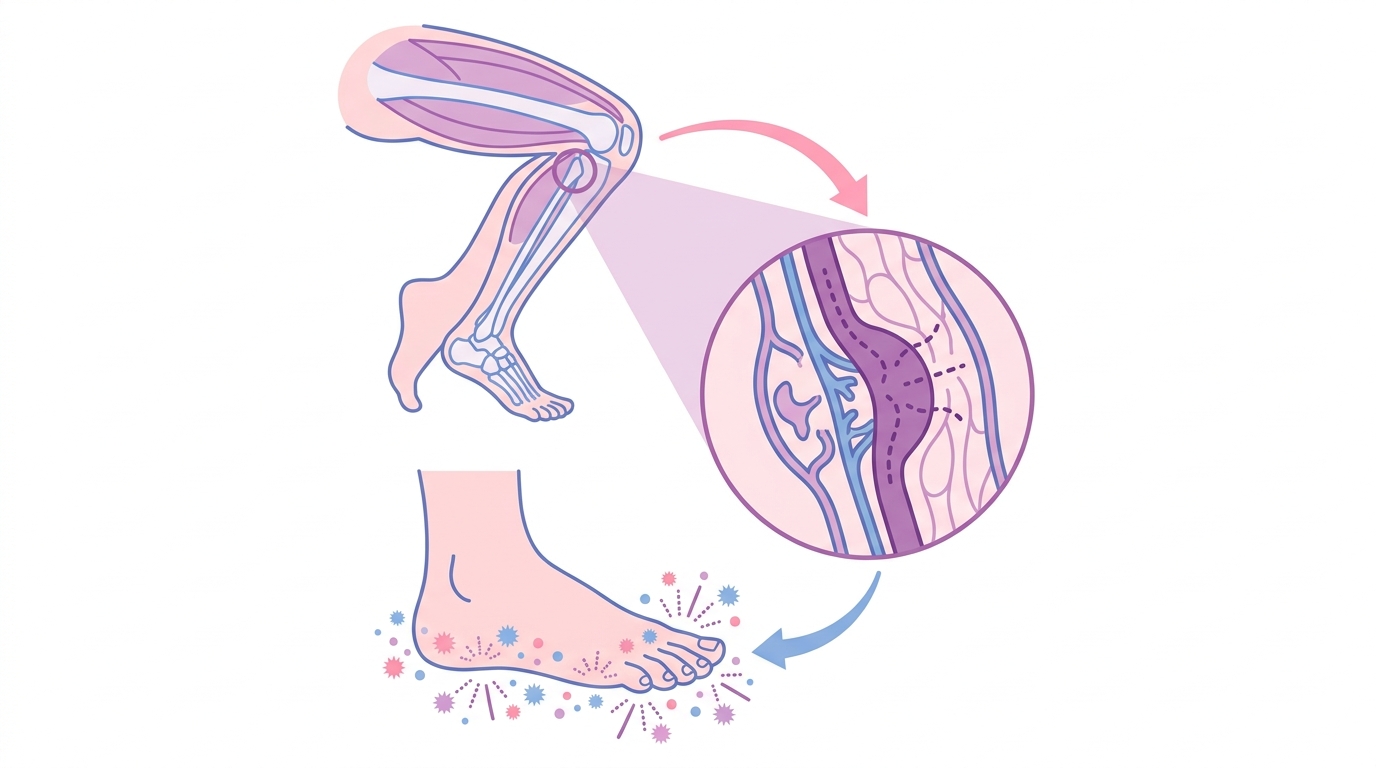
Do you also get tingling in your legs and arms? (Pins and Needles) Why does this happen? Let's talk! Infographic

Why do our limbs "go to sleep" like this?

Many people think that this happens when the blood flow to an arm or leg stops. Although there is some truth to that, the main culprit is our nerves . Think about it, these nerves are the little wires that run throughout our bodies. They are like the electrical wires in our homes. These nerves carry messages from our brain to other parts of the body, and from parts of the body back to the brain. If you feel something, if you hurt, if you move, it is this nervous system that helps with all of this.

Now, in the same position, imagine you're sitting on a leg with one leg crossed, and what happens is that the nerves in that leg get pinched for a while. Just like when someone steps on a water pipe, the water flow slows down, when the nerves get pinched, the messages that flow through them temporarily stop or slow down. So, the messages from the leg to the brain don't go from the leg to the brain saying, "I feel this way," and the messages from the brain don't go from the leg to the brain saying, "This should happen." That's when we feel "not like" in the leg, and we get tingling.

Simply put, it's like you're talking to a friend on the phone and the call is suddenly disconnected. You say, "Hello, hello," but there's no answer on the other end. It's like your brain asking, "Where's your leg?" but your leg can't answer because of the nerves that are jammed. Got it?

Why does it feel like "ants are running"? (Paresthesia)

Okay, now what happens when you move your leg out of the position you were in? After a while, the tingling sensation gradually subsides, and your leg feels like it's coming back to life, right? But along with that comes a strange tingling sensation, like ants running around, or like you're being pricked by needles. In medicine, we call this `Paresthesia` .

What happens is that when those pinched nerves are released again, they slowly start to "wake up." Just as we feel sluggish for a while after waking up, our nerves also take a while to get back to their normal function. During this "wake up," the messages from the nerves to the brain can get a little jumbled up and go in different directions. That's why we feel all sorts of strange sensations—like ants running around, like pins and needles . But don't worry, this will go away completely in a few seconds, a few minutes.

Is this something dangerous? Should we be afraid?

Usually, tingling in one arm or leg is not dangerous at all . It happens to all of us from time to time . It can happen to children, young people, adults, anyone. If you sit a little wrong, or if your arm gets stuck under your neck while sleeping, this is very common. It does not cause any permanent damage to your body.

Imagine, you sit in one place for about an hour watching a movie. When you get up, your leg feels numb. When you move around a little, within two or three minutes the numbness goes away and your leg feels completely normal. That's the normal situation.

So don't always be afraid for nothing.

But, at a time like this, you have to be a little careful!

Although normal numbness is not dangerous, sometimes this numbness can be a symptom of another underlying medical condition. Therefore, it is a good idea to be aware of the following:

  • If you experience frequent tingling for no apparent reason: If your limbs constantly tingle, even when you are sitting or sleeping.
  • If the numbness lasts for hours or days: If there is persistent numbness that usually gets better within a few minutes.
  • If numbness is accompanied by weakness in the arms or legs: If you feel like you can't lift anything or have difficulty walking.
  • If the numbness starts in one part of the body and spreads to other parts.
  • If the numbness is accompanied by severe pain, and the pain does not subside.
  • If the skin changes color , becomes cold, or swells in the area of ​​numbness (these could be blood vessel problems).
  • If you have a disease like Diabetes Mellitus, Vitamin B12 deficiency, or Thyroid disorders, people with these diseases may develop peripheral neuropathy. If such a person experiences numbness frequently, it is important to seek medical advice.
  • Sometimes, numbness can also be an early symptom of diseases that affect the nervous system, such as `` Multiple Sclerosis.`` However, these are very rare.

The most important thing is not to panic about a serious illness just because your leg feels numb once or twice. However, if the numbness persists, gets worse, or is accompanied by the other symptoms I mentioned above, it is wise to see a doctor for advice.

What should you do quickly if your leg or arm is numb?

If you suddenly feel a tingling sensation in your arm or leg, don't panic. Try these simple things:

1. Change the posture:Get out of your current position. If you have your legs folded, extend them. If your arms are tucked in, take them out.

2. Move slowly: Gently move, stretch, and bend the numb arm or leg. Don't try to move it too much at once.

3. Massage: Gently touch and massage the area that is tingling. This will improve blood circulation and nerve stimulation.

4. Get up and walk around a bit: If your leg is tingling, take a break and walk around slowly.

Usually, the tingling sensation subsides within a few minutes when you do these things.

What can be done to reduce the occurrence of these numbness?

These habits will help you avoid frequent tingling in your limbs:

  • Don't stay in the same position for too long: Even when working in the office, watching TV, or studying, get up at least once every half hour, stretch your body a little, and move around.
  • Sit properly: Sit with your feet flat on the floor and your back straight. Don't sit with your legs crossed or crossed over for long periods of time.
  • Be careful when sleeping: Do not sleep with one arm tucked under your head or with one arm under your body. If possible, sleep on your side with both arms in front of you.
  • Don't wear tight clothing or jewelry: Sometimes tight jeans, socks, or tight bands or bracelets on your wrists can cause nerve compression and numbness.
  • A healthy lifestyle: Drink plenty of water, eat a balanced diet, and exercise. These things are important for overall nervous system health.

The most important things to remember (Take-Home Message)

Okay, so we've talked a lot about this numbness, haven't we? Finally, here are some things you need to remember:

  • Numbness in the extremities is often caused by a temporary pinched nerve . This is usually not dangerous.
  • The main reason is the cessation of nerve transmission rather than blood flow.
  • Paresthesia, the "pins and needles" sensation that follows numbness, is a temporary condition that occurs when the nerves "wake up" again .
  • Normal numbness will get better on its own within a few minutes.
  • Be aware of frequent, unexplained, persistent, and widespread numbness accompanied by weakness. Seek medical advice if this occurs.
  • This can be controlled by changing positions, doing light exercise, and practicing good posture.

So, the next time your leg or arm "falls asleep," don't panic. Now you know why! But if you have any of the unusual symptoms I mentioned, don't forget to see a doctor.


` Numbness, pins and needles, leg numbness, hand numbness, nerves, nerve compression, paresthesia

Doctor's Note

Pins and Needles / Paresthesia is a temporary condition that children and adults often experience. When we sit in the same position for a long time or when we put one leg over the other, the nerves going to that area are temporarily pushed (Nerve compression). Here, the flow of signals through the nerve to the brain is blocked, and when the position is changed again, the nerve is activated and a 'pins and needles' sensation is felt. This is a harmless condition and can be cured in a few minutes by gently rocking the leg and restoring blood circulation.

Some more questions you may encounter (FAQ)

Why does the arm or leg tingle?

The reason for this is that communication with the brain is blocked due to temporary nerve compression.

How to quickly recover from a tingling foot?

By gently shaking the foot or hand and gently massaging blood circulation and restoring nerve communication.

What should be done if the hands and feet tingle frequently and for no reason?

If there is frequent tingling for no reason, it may be a symptom of vitamin B12 deficiency or nerve weakness, so you should see a doctor.

📖 Sources and scientific sources (References)

⚠️ Important: The medical articles and information on Nirogi Lanka are for general awareness only, and are by no means a substitute for professional medical advice, diagnosis, or treatment. For any medical problem you have, consult a qualified physician immediately.

💬 Comments (0)

No comments yet. Be the first to share your thoughts here.

Add Your Comment

Please calculate: 4 + 8 =
Do you also get tingling in your legs and arms? (Pins and Needles) Why does this happen? Let's talk!
Root of the MatterMarch 31, 2026

Do you also get tingling in your legs and arms? (Pins and Needles) Why does this happen? Let's talk!

Have you ever had a leg or arm that "feels like it's not yours" when you get up from sitting in one place for a long time, or when you sleep with one arm under your arm at night and wake up in the morning? At that time, it feels like that leg or arm doesn't belong to you, it feels heavy, sometimes like ants are running around, or like you're being pricked by the tips of a needle, isn't it? We've all had this experience at some point. So, why does this really happen? Let's find out exactly what this "tingling" is?

Do you also get tingling in your legs and arms? (Pins and Needles) Why does this happen? Let's talk! Infographic

Why do our limbs "go to sleep" like this?

Many people think that this happens when the blood flow to an arm or leg stops. Although there is some truth to that, the main culprit is our nerves . Think about it, these nerves are the little wires that run throughout our bodies. They are like the electrical wires in our homes. These nerves carry messages from our brain to other parts of the body, and from parts of the body back to the brain. If you feel something, if you hurt, if you move, it is this nervous system that helps with all of this.

Now, in the same position, imagine you're sitting on a leg with one leg crossed, and what happens is that the nerves in that leg get pinched for a while. Just like when someone steps on a water pipe, the water flow slows down, when the nerves get pinched, the messages that flow through them temporarily stop or slow down. So, the messages from the leg to the brain don't go from the leg to the brain saying, "I feel this way," and the messages from the brain don't go from the leg to the brain saying, "This should happen." That's when we feel "not like" in the leg, and we get tingling.

Simply put, it's like you're talking to a friend on the phone and the call is suddenly disconnected. You say, "Hello, hello," but there's no answer on the other end. It's like your brain asking, "Where's your leg?" but your leg can't answer because of the nerves that are jammed. Got it?

Why does it feel like "ants are running"? (Paresthesia)

Okay, now what happens when you move your leg out of the position you were in? After a while, the tingling sensation gradually subsides, and your leg feels like it's coming back to life, right? But along with that comes a strange tingling sensation, like ants running around, or like you're being pricked by needles. In medicine, we call this `Paresthesia` .

What happens is that when those pinched nerves are released again, they slowly start to "wake up." Just as we feel sluggish for a while after waking up, our nerves also take a while to get back to their normal function. During this "wake up," the messages from the nerves to the brain can get a little jumbled up and go in different directions. That's why we feel all sorts of strange sensations—like ants running around, like pins and needles . But don't worry, this will go away completely in a few seconds, a few minutes.

Is this something dangerous? Should we be afraid?

Usually, tingling in one arm or leg is not dangerous at all . It happens to all of us from time to time . It can happen to children, young people, adults, anyone. If you sit a little wrong, or if your arm gets stuck under your neck while sleeping, this is very common. It does not cause any permanent damage to your body.

Imagine, you sit in one place for about an hour watching a movie. When you get up, your leg feels numb. When you move around a little, within two or three minutes the numbness goes away and your leg feels completely normal. That's the normal situation.

So don't always be afraid for nothing.

But, at a time like this, you have to be a little careful!

Although normal numbness is not dangerous, sometimes this numbness can be a symptom of another underlying medical condition. Therefore, it is a good idea to be aware of the following:

  • If you experience frequent tingling for no apparent reason: If your limbs constantly tingle, even when you are sitting or sleeping.
  • If the numbness lasts for hours or days: If there is persistent numbness that usually gets better within a few minutes.
  • If numbness is accompanied by weakness in the arms or legs: If you feel like you can't lift anything or have difficulty walking.
  • If the numbness starts in one part of the body and spreads to other parts.
  • If the numbness is accompanied by severe pain, and the pain does not subside.
  • If the skin changes color , becomes cold, or swells in the area of ​​numbness (these could be blood vessel problems).
  • If you have a disease like Diabetes Mellitus, Vitamin B12 deficiency, or Thyroid disorders, people with these diseases may develop peripheral neuropathy. If such a person experiences numbness frequently, it is important to seek medical advice.
  • Sometimes, numbness can also be an early symptom of diseases that affect the nervous system, such as `` Multiple Sclerosis.`` However, these are very rare.

The most important thing is not to panic about a serious illness just because your leg feels numb once or twice. However, if the numbness persists, gets worse, or is accompanied by the other symptoms I mentioned above, it is wise to see a doctor for advice.

What should you do quickly if your leg or arm is numb?

If you suddenly feel a tingling sensation in your arm or leg, don't panic. Try these simple things:

1. Change the posture:Get out of your current position. If you have your legs folded, extend them. If your arms are tucked in, take them out.

2. Move slowly: Gently move, stretch, and bend the numb arm or leg. Don't try to move it too much at once.

3. Massage: Gently touch and massage the area that is tingling. This will improve blood circulation and nerve stimulation.

4. Get up and walk around a bit: If your leg is tingling, take a break and walk around slowly.

Usually, the tingling sensation subsides within a few minutes when you do these things.

What can be done to reduce the occurrence of these numbness?

These habits will help you avoid frequent tingling in your limbs:

  • Don't stay in the same position for too long: Even when working in the office, watching TV, or studying, get up at least once every half hour, stretch your body a little, and move around.
  • Sit properly: Sit with your feet flat on the floor and your back straight. Don't sit with your legs crossed or crossed over for long periods of time.
  • Be careful when sleeping: Do not sleep with one arm tucked under your head or with one arm under your body. If possible, sleep on your side with both arms in front of you.
  • Don't wear tight clothing or jewelry: Sometimes tight jeans, socks, or tight bands or bracelets on your wrists can cause nerve compression and numbness.
  • A healthy lifestyle: Drink plenty of water, eat a balanced diet, and exercise. These things are important for overall nervous system health.

The most important things to remember (Take-Home Message)

Okay, so we've talked a lot about this numbness, haven't we? Finally, here are some things you need to remember:

  • Numbness in the extremities is often caused by a temporary pinched nerve . This is usually not dangerous.
  • The main reason is the cessation of nerve transmission rather than blood flow.
  • Paresthesia, the "pins and needles" sensation that follows numbness, is a temporary condition that occurs when the nerves "wake up" again .
  • Normal numbness will get better on its own within a few minutes.
  • Be aware of frequent, unexplained, persistent, and widespread numbness accompanied by weakness. Seek medical advice if this occurs.
  • This can be controlled by changing positions, doing light exercise, and practicing good posture.

So, the next time your leg or arm "falls asleep," don't panic. Now you know why! But if you have any of the unusual symptoms I mentioned, don't forget to see a doctor.


` Numbness, pins and needles, leg numbness, hand numbness, nerves, nerve compression, paresthesia

Doctor's Note

Pins and Needles / Paresthesia is a temporary condition that children and adults often experience. When we sit in the same position for a long time or when we put one leg over the other, the nerves going to that area are temporarily pushed (Nerve compression). Here, the flow of signals through the nerve to the brain is blocked, and when the position is changed again, the nerve is activated and a 'pins and needles' sensation is felt. This is a harmless condition and can be cured in a few minutes by gently rocking the leg and restoring blood circulation.

Some more questions you may encounter (FAQ)

Why does the arm or leg tingle?

The reason for this is that communication with the brain is blocked due to temporary nerve compression.

How to quickly recover from a tingling foot?

By gently shaking the foot or hand and gently massaging blood circulation and restoring nerve communication.

What should be done if the hands and feet tingle frequently and for no reason?

If there is frequent tingling for no reason, it may be a symptom of vitamin B12 deficiency or nerve weakness, so you should see a doctor.

📖 Sources and scientific sources (References)

⚠️ Important: The medical articles and information on Nirogi Lanka are for general awareness only, and are by no means a substitute for professional medical advice, diagnosis, or treatment. For any medical problem you have, consult a qualified physician immediately.

💬 Comments (0)

No comments yet. Be the first to share your thoughts here.

Add Your Comment

Please calculate: 4 + 8 =