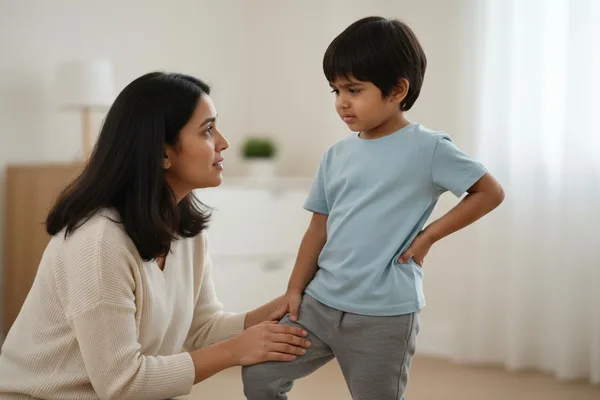
Does your child's hip hurt? Does he limp? Let's learn about Legg-Calve-Perthes disease!

Does your child's hip hurt? Does he limp? Let's learn about Legg-Calve-Perthes disease!

Has your toddler suddenly started limping? Or is his hip hurting? Sometimes we may not pay much attention to these small things. However, if these symptoms persist, it is important to be a little concerned. Because these may be symptoms of a rare hip disorder in children called Legg-Calve-Perthes disease . So, let's talk about this in more detail today, shall we?

What is Legg-Calve-Perthes disease?

Simply put, this is a condition that affects the hip joint in children between the ages of 2 and 12. Our hip joint is made up of a ball-like part at the top of the thigh bone (which we call the `femoral head`) and a socket-like part in the hip bone. It's like a ball fitting into a cup. So, what happens in Legg-Calve-Perthes disease is that the blood supply to that ball-like part of the thigh bone is temporarily reduced or stopped .

Think about it, every part of our body needs blood to survive. It is from blood that we get oxygen and nutrients. So, when the blood flow stops in this way, the tissue of that bone starts to die little by little. This is called `avascular necrosis` or `osteonecrosis` in medicine. However, after some time, the blood flow starts again. Then the damaged bone part starts to repair itself. However, sometimes the newly formed bone may not grow in the same shape as before. That is the problem here.

This disease belongs to a group of diseases called `osteochondroses`. In these, there is a degeneration and remodeling of the growing end of a bone. It starts suddenly, without any identifiable cause. The disease develops in several stages, and the entire process can take several years. How much this affects your child depends on the extent of the bone change. However, with proper treatment, most children can make a good recovery.

This disease is also known by several other names:

  • Perthes disease
  • Perthes syndrome
  • Legg Calve
  • Legg-Perthes
  • Calve-Perthes
  • Coxa plana (flat hip)

How rare is Perthes disease? Who usually gets it?

Worldwide, the disease affects approximately one in 12,000 children . Boys are five times more likely to develop it than girls.

In terms of age, it is most common in children between the ages of 5 and 7. However, it can develop in children as young as 2 years old or as old as 12 years old.

Is Legg-Calve-Perthes disease permanent?

This is called a degeneration and rebuilding of the head of the child's femur. This process takes several years. So, the disease is temporary. However, it can cause permanent changes in the shape of the bone.

Can this disease cause problems in the future?

Yes, unfortunately sometimes it can. If the ball of the thigh bone is too misshapen, it may not fit properly into the socket of the hip joint. Although treatment can correct this to a great extent, if this misalignment persists, it can lead to hip joint problems as the child grows, such as arthritis over time .

What are the symptoms of Legg-Calve-Perthes disease?

The symptoms of this disease don't appear all at once. They develop gradually. Sometimes, at first, you can't even imagine what's happening.

Symptoms that may be seen in the early stages:

  • Limping: The child may appear to drag one leg or have difficulty walking. This is done to reduce weight on the affected hip. Often, the limp is the first sign of pain. The child may not even know why he is limping. Imagine, your son, Sadeep, is no longer running and playing like he used to, and he seems to drag one leg when he walks. He doesn't even say it hurts at first. That's how it can start.
  • Hip pain: If your child has pain, it's most likely early in the disease. That's when the blood supply to the bone decreases and the bone begins to deteriorate. This pain increases with exercise, running, and playing.
  • Referred pain: Some children may feel pain in the knee, thigh, pelvis, or abdomen instead of hip pain.
  • Leg cramps: A tightening and cramping pain may occur in the leg muscles connected to the hip joint.

Symptoms that may appear later:

  • Trendelenburg gait: This is a specific walking pattern seen when there are problems with the hip joint. Due to weakness of the hip muscles, the pelvis on the affected side tilts downward when the child walks.
  • Limited joint movement: The child may have difficulty rotating the hip. The ability to turn the thighs outward and the knees inward may be reduced.
  • Muscle atrophy: The muscles in the child's thighs and buttocks may decrease in size and appear thin.
  • Leg length discrepancy: One leg may appear shorter than the other.

What causes Legg-Calve-Perthes disease?

We have already said that this disease is caused by a temporary decrease or cessation of blood supply to the head of the femur (ischemia). Since a bone receives oxygen and nutrients from the blood, when it loses blood, the bone tissue begins to die and break down. This is called `avascular necrosis` or `osteonecrosis`.

Typically, when a blood vessel becomes blocked or narrowed, it can happen in one of two ways. It can be blocked from the inside, due to an artery disease or a blood clot, or it can be blocked from the outside, due to swelling. However, researchers still don't know exactly what causes this reduced blood supply in Legg-Calve-Perthes disease. It may happen for different reasons in different children.

Risk factors

Research suggests that about half of children with the condition have a blood clotting disorder . Another theory is that the condition may be caused by a traumatic injury or repetitive strain injury, which can block blood flow to the bone. It is also thought that about 10% of cases are linked to an inherited gene mutation.

Here are some factors that can increase your child's risk of developing Legg-Calve-Perthes disease:

  • Delayed bone growth.
  • Low birth weight.
  • Decreased height (relative to age).
  • Dental abnormalities.
  • Being at a low economic level.
  • Exposure to secondhand smoke.
  • Blood clotting disorders.
  • HIV infection.
  • Engaging in things like sports or gymnastics (this is controversial, not for everyone).
  • Inherited mutations in the gene `COL2A1`.

Important: Not every child will develop this disease despite having these risk factors. It is also possible to develop it even without any of these factors. It is important to be aware of these and seek medical advice immediately if any symptoms appear.

How will this disease affect my child?

During active Legg-Calve-Perthes disease, the head of the femur in your child's hip joint undergoes degeneration (breakdown) and then remodeling (rebuilding). This degeneration phase can take about a year . The remodeling and formation phase can take about two to five years .

Some children have more bone tissue damage than others. This may be because their lack of blood supply (ischemia) is more severe, or because it has been going on for a longer period of time. Or, if the bone is already weak and too much weight is put on it, it can be damaged further. In some children, the round head of the femur collapses and flattens. Then it doesn't fit properly into the socket of the hip joint.

When the bone starts to grow back, it has a chance to grow back into its original shape. However, not all children's bones grow back the same way. Some thigh bones never return to their original size and shape. Some may even grow larger than the socket of the hip joint. Your doctor will try to influence these results and get them as close to normal as possible.

Some children may need to have their hips immobilized in a cast for a short time. Others may need surgery. These treatments help the bone grow back properly. Children whose hip joints do not heal properly may continue to have symptoms. Hip dysplasia can lead to complications such as arthritis in the future.

How is Legg-Calve-Perthes disease diagnosed?

The first thing a doctor does is give your child a thorough physical examination . Then, they take X-rays to look at your child's bones. X-rays can show whether Perthes disease is present, what stage it is in, and how severe it is. Sometimes, the doctor may also recommend an MRI (Magnetic Resonance Imaging) scan to get a more detailed look.

What are the treatments for Legg-Calve-Perthes disease?

Treatment depends on the severity of the disease, the stage it is in, and the child's age. Younger children usually get better with less intervention because their bones grow faster. Older children may need more treatment. A team of doctors will work together to develop a treatment plan that is right for your child.

This treatment plan may include:

  • Resting the affected hip and limiting weight-bearing: The child may need to stop or limit walking for a while, or may need to use a support such as crutches.
  • Nonsteroidal anti-inflammatory drugs (NSAIDs): These are over-the-counter pain relievers and anti-inflammatory medications (such as aspirin and ibuprofen). They can help control pain and swelling in the hip joint.
  • Physical therapy: A physical therapist will teach your child special exercises to help the hip return to normal. You may also need to help your child practice these exercises.
  • Traction: This involves using an orthopedic traction device to gently pull the hip joint into place. This treatment is done over a period of several days.
  • Plaster casts or braces:While the bone is reshaping, your doctor may recommend using a cast or brace to keep the bone firmly in place in the socket of the hip joint. This will help the bone grow back into its proper shape as it grows out of the socket.
  • Surgery: Some children may need surgery to reshape the bone and fix it in place in the joint. This is called an osteotomy. Others may need surgery to lengthen or reshape the hip socket, called an arthroplasty.

How is Legg-Calve-Perthes disease cured?

If your child has Legg-Calve-Perthes disease, you will face a medical journey that can last for several years, with different stages. This will affect the child's childhood to some extent – ​​some less, some more. However, once all this is over, most children are able to carry on with their normal activities without any limitations or ongoing symptoms.

Remember, if your child is under 7 years old, they are more likely to make a full recovery with conservative treatments. If they are over 7 years old, they are more likely to need surgery. If they do not receive proper treatment in a timely manner, and the hip bone remains deformed, they may develop hip osteoarthritis as they grow older.

Can Perthes disease be prevented?

Unfortunately, no. There is currently no known way to prevent Perthes disease.

What should I ask my doctor about Perthes disease?

If your child has Legg-Calve-Perthes disease, you will have many questions about treatment and what to expect from the recovery. Your doctor will do his best to explain the details about your child.

You can ask questions like these:

  • "Doctor, what stage is my child's disease in now?"
  • "How bad is this situation?"
  • "How do we change the child's lifestyle and the games he plays?"
  • "What factors do you think may have influenced this situation?"
  • "What symptoms or changes should we look out for during treatment?"
  • "How should I teach my child about this, what he should expect?"

Since Legg-Calve-Perthes is a sudden diagnosis, it's normal to have a lot of questions. Once your doctor has explained your child's condition, you'll have a rough idea of ​​what to expect. The next step is to explain it to your child in a way that they can understand.

There are many reasons to be happy. Most children do not experience much discomfort after starting treatment. They may have some limitations, but they are usually temporary. They may need some form of orthopedic therapy. But in the end, they are very likely to make a full recovery.

Take-Home Message

You may be a little scared to hear about Legg-Calve-Perthes disease. However, the most important thing is to be aware of it early.

  • Recognize the early signs: If your child is limping or says their hip hurts, don't just ignore it and seek medical advice.
  • Proper treatment is important: Follow the doctor's instructions exactly. Treatments may take a while and may be painful, but they are necessary for the child's future well-being.
  • Support your child: Your child needs your love, care, and mental strength during this time. They may feel sad when they can't play, run, or jump. Be understanding and be there for them during this time.
  • Stay hopeful: Most children recover completely from this condition and lead normal lives. So, it's important to stay positive.

If you have any further questions about this, don't be shy about asking your doctor. They will be happy to help you.

👩🏽‍⚕️ Additional questions (FAQs)

💬 Is Legg-Calve-Perthes disease (LCPD) a disease that causes broken legs in young children?

No! This is a rare disease that occurs in children between the ages of 4 and 10, where the blood supply to the 'ball on the top of the thighbone (Femoral head)' suddenly stops. When the blood is lost, the bones (cartilage/bone) of that ball completely rot/die and the round shape becomes flat. (The reason for this is not yet known even by medical science).

💬 What is the first sign that my child is developing Perthes disease?

The main thing that mothers notice is that the child starts limping on one leg without any injury. Not only that, the child cries that his thigh, hip, groin, or maybe even his knee hurts (especially after running/playing).

💬 Is it true that this rotting hip bone will regrow (heal)?

Yes! Surprisingly, it's true! After a few months/years, the dead bone will be supplied with blood again and 'new bone will form in a circle' (Bone regeneration). During this time, doctors will not allow the child to walk/bear weight and will put a wheelchair or brace (Braces, Cast) on the child to train the newly formed ball to 'grow in a circle'. (Only in some severe cases, surgery is necessary).


` Legg-Calve-Perthes, Perthes disease, hip pain, children's diseases, bone diseases, limping, children's health

⚠️ Important: The medical articles and information on Nirogi Lanka are for general awareness only, and are by no means a substitute for professional medical advice, diagnosis, or treatment. For any medical problem you have, consult a qualified physician immediately.

💬 Comments (0)

No comments yet. Be the first to share your thoughts here.

Add Your Comment

Please calculate: 3 + 2 =
Does your child's hip hurt? Does he limp? Let's learn about Legg-Calve-Perthes disease!

Does your child's hip hurt? Does he limp? Let's learn about Legg-Calve-Perthes disease!

Has your toddler suddenly started limping? Or is his hip hurting? Sometimes we may not pay much attention to these small things. However, if these symptoms persist, it is important to be a little concerned. Because these may be symptoms of a rare hip disorder in children called Legg-Calve-Perthes disease . So, let's talk about this in more detail today, shall we?

What is Legg-Calve-Perthes disease?

Simply put, this is a condition that affects the hip joint in children between the ages of 2 and 12. Our hip joint is made up of a ball-like part at the top of the thigh bone (which we call the `femoral head`) and a socket-like part in the hip bone. It's like a ball fitting into a cup. So, what happens in Legg-Calve-Perthes disease is that the blood supply to that ball-like part of the thigh bone is temporarily reduced or stopped .

Think about it, every part of our body needs blood to survive. It is from blood that we get oxygen and nutrients. So, when the blood flow stops in this way, the tissue of that bone starts to die little by little. This is called `avascular necrosis` or `osteonecrosis` in medicine. However, after some time, the blood flow starts again. Then the damaged bone part starts to repair itself. However, sometimes the newly formed bone may not grow in the same shape as before. That is the problem here.

This disease belongs to a group of diseases called `osteochondroses`. In these, there is a degeneration and remodeling of the growing end of a bone. It starts suddenly, without any identifiable cause. The disease develops in several stages, and the entire process can take several years. How much this affects your child depends on the extent of the bone change. However, with proper treatment, most children can make a good recovery.

This disease is also known by several other names:

  • Perthes disease
  • Perthes syndrome
  • Legg Calve
  • Legg-Perthes
  • Calve-Perthes
  • Coxa plana (flat hip)

How rare is Perthes disease? Who usually gets it?

Worldwide, the disease affects approximately one in 12,000 children . Boys are five times more likely to develop it than girls.

In terms of age, it is most common in children between the ages of 5 and 7. However, it can develop in children as young as 2 years old or as old as 12 years old.

Is Legg-Calve-Perthes disease permanent?

This is called a degeneration and rebuilding of the head of the child's femur. This process takes several years. So, the disease is temporary. However, it can cause permanent changes in the shape of the bone.

Can this disease cause problems in the future?

Yes, unfortunately sometimes it can. If the ball of the thigh bone is too misshapen, it may not fit properly into the socket of the hip joint. Although treatment can correct this to a great extent, if this misalignment persists, it can lead to hip joint problems as the child grows, such as arthritis over time .

What are the symptoms of Legg-Calve-Perthes disease?

The symptoms of this disease don't appear all at once. They develop gradually. Sometimes, at first, you can't even imagine what's happening.

Symptoms that may be seen in the early stages:

  • Limping: The child may appear to drag one leg or have difficulty walking. This is done to reduce weight on the affected hip. Often, the limp is the first sign of pain. The child may not even know why he is limping. Imagine, your son, Sadeep, is no longer running and playing like he used to, and he seems to drag one leg when he walks. He doesn't even say it hurts at first. That's how it can start.
  • Hip pain: If your child has pain, it's most likely early in the disease. That's when the blood supply to the bone decreases and the bone begins to deteriorate. This pain increases with exercise, running, and playing.
  • Referred pain: Some children may feel pain in the knee, thigh, pelvis, or abdomen instead of hip pain.
  • Leg cramps: A tightening and cramping pain may occur in the leg muscles connected to the hip joint.

Symptoms that may appear later:

  • Trendelenburg gait: This is a specific walking pattern seen when there are problems with the hip joint. Due to weakness of the hip muscles, the pelvis on the affected side tilts downward when the child walks.
  • Limited joint movement: The child may have difficulty rotating the hip. The ability to turn the thighs outward and the knees inward may be reduced.
  • Muscle atrophy: The muscles in the child's thighs and buttocks may decrease in size and appear thin.
  • Leg length discrepancy: One leg may appear shorter than the other.

What causes Legg-Calve-Perthes disease?

We have already said that this disease is caused by a temporary decrease or cessation of blood supply to the head of the femur (ischemia). Since a bone receives oxygen and nutrients from the blood, when it loses blood, the bone tissue begins to die and break down. This is called `avascular necrosis` or `osteonecrosis`.

Typically, when a blood vessel becomes blocked or narrowed, it can happen in one of two ways. It can be blocked from the inside, due to an artery disease or a blood clot, or it can be blocked from the outside, due to swelling. However, researchers still don't know exactly what causes this reduced blood supply in Legg-Calve-Perthes disease. It may happen for different reasons in different children.

Risk factors

Research suggests that about half of children with the condition have a blood clotting disorder . Another theory is that the condition may be caused by a traumatic injury or repetitive strain injury, which can block blood flow to the bone. It is also thought that about 10% of cases are linked to an inherited gene mutation.

Here are some factors that can increase your child's risk of developing Legg-Calve-Perthes disease:

  • Delayed bone growth.
  • Low birth weight.
  • Decreased height (relative to age).
  • Dental abnormalities.
  • Being at a low economic level.
  • Exposure to secondhand smoke.
  • Blood clotting disorders.
  • HIV infection.
  • Engaging in things like sports or gymnastics (this is controversial, not for everyone).
  • Inherited mutations in the gene `COL2A1`.

Important: Not every child will develop this disease despite having these risk factors. It is also possible to develop it even without any of these factors. It is important to be aware of these and seek medical advice immediately if any symptoms appear.

How will this disease affect my child?

During active Legg-Calve-Perthes disease, the head of the femur in your child's hip joint undergoes degeneration (breakdown) and then remodeling (rebuilding). This degeneration phase can take about a year . The remodeling and formation phase can take about two to five years .

Some children have more bone tissue damage than others. This may be because their lack of blood supply (ischemia) is more severe, or because it has been going on for a longer period of time. Or, if the bone is already weak and too much weight is put on it, it can be damaged further. In some children, the round head of the femur collapses and flattens. Then it doesn't fit properly into the socket of the hip joint.

When the bone starts to grow back, it has a chance to grow back into its original shape. However, not all children's bones grow back the same way. Some thigh bones never return to their original size and shape. Some may even grow larger than the socket of the hip joint. Your doctor will try to influence these results and get them as close to normal as possible.

Some children may need to have their hips immobilized in a cast for a short time. Others may need surgery. These treatments help the bone grow back properly. Children whose hip joints do not heal properly may continue to have symptoms. Hip dysplasia can lead to complications such as arthritis in the future.

How is Legg-Calve-Perthes disease diagnosed?

The first thing a doctor does is give your child a thorough physical examination . Then, they take X-rays to look at your child's bones. X-rays can show whether Perthes disease is present, what stage it is in, and how severe it is. Sometimes, the doctor may also recommend an MRI (Magnetic Resonance Imaging) scan to get a more detailed look.

What are the treatments for Legg-Calve-Perthes disease?

Treatment depends on the severity of the disease, the stage it is in, and the child's age. Younger children usually get better with less intervention because their bones grow faster. Older children may need more treatment. A team of doctors will work together to develop a treatment plan that is right for your child.

This treatment plan may include:

  • Resting the affected hip and limiting weight-bearing: The child may need to stop or limit walking for a while, or may need to use a support such as crutches.
  • Nonsteroidal anti-inflammatory drugs (NSAIDs): These are over-the-counter pain relievers and anti-inflammatory medications (such as aspirin and ibuprofen). They can help control pain and swelling in the hip joint.
  • Physical therapy: A physical therapist will teach your child special exercises to help the hip return to normal. You may also need to help your child practice these exercises.
  • Traction: This involves using an orthopedic traction device to gently pull the hip joint into place. This treatment is done over a period of several days.
  • Plaster casts or braces:While the bone is reshaping, your doctor may recommend using a cast or brace to keep the bone firmly in place in the socket of the hip joint. This will help the bone grow back into its proper shape as it grows out of the socket.
  • Surgery: Some children may need surgery to reshape the bone and fix it in place in the joint. This is called an osteotomy. Others may need surgery to lengthen or reshape the hip socket, called an arthroplasty.

How is Legg-Calve-Perthes disease cured?

If your child has Legg-Calve-Perthes disease, you will face a medical journey that can last for several years, with different stages. This will affect the child's childhood to some extent – ​​some less, some more. However, once all this is over, most children are able to carry on with their normal activities without any limitations or ongoing symptoms.

Remember, if your child is under 7 years old, they are more likely to make a full recovery with conservative treatments. If they are over 7 years old, they are more likely to need surgery. If they do not receive proper treatment in a timely manner, and the hip bone remains deformed, they may develop hip osteoarthritis as they grow older.

Can Perthes disease be prevented?

Unfortunately, no. There is currently no known way to prevent Perthes disease.

What should I ask my doctor about Perthes disease?

If your child has Legg-Calve-Perthes disease, you will have many questions about treatment and what to expect from the recovery. Your doctor will do his best to explain the details about your child.

You can ask questions like these:

  • "Doctor, what stage is my child's disease in now?"
  • "How bad is this situation?"
  • "How do we change the child's lifestyle and the games he plays?"
  • "What factors do you think may have influenced this situation?"
  • "What symptoms or changes should we look out for during treatment?"
  • "How should I teach my child about this, what he should expect?"

Since Legg-Calve-Perthes is a sudden diagnosis, it's normal to have a lot of questions. Once your doctor has explained your child's condition, you'll have a rough idea of ​​what to expect. The next step is to explain it to your child in a way that they can understand.

There are many reasons to be happy. Most children do not experience much discomfort after starting treatment. They may have some limitations, but they are usually temporary. They may need some form of orthopedic therapy. But in the end, they are very likely to make a full recovery.

Take-Home Message

You may be a little scared to hear about Legg-Calve-Perthes disease. However, the most important thing is to be aware of it early.

  • Recognize the early signs: If your child is limping or says their hip hurts, don't just ignore it and seek medical advice.
  • Proper treatment is important: Follow the doctor's instructions exactly. Treatments may take a while and may be painful, but they are necessary for the child's future well-being.
  • Support your child: Your child needs your love, care, and mental strength during this time. They may feel sad when they can't play, run, or jump. Be understanding and be there for them during this time.
  • Stay hopeful: Most children recover completely from this condition and lead normal lives. So, it's important to stay positive.

If you have any further questions about this, don't be shy about asking your doctor. They will be happy to help you.

👩🏽‍⚕️ Additional questions (FAQs)

💬 Is Legg-Calve-Perthes disease (LCPD) a disease that causes broken legs in young children?

No! This is a rare disease that occurs in children between the ages of 4 and 10, where the blood supply to the 'ball on the top of the thighbone (Femoral head)' suddenly stops. When the blood is lost, the bones (cartilage/bone) of that ball completely rot/die and the round shape becomes flat. (The reason for this is not yet known even by medical science).

💬 What is the first sign that my child is developing Perthes disease?

The main thing that mothers notice is that the child starts limping on one leg without any injury. Not only that, the child cries that his thigh, hip, groin, or maybe even his knee hurts (especially after running/playing).

💬 Is it true that this rotting hip bone will regrow (heal)?

Yes! Surprisingly, it's true! After a few months/years, the dead bone will be supplied with blood again and 'new bone will form in a circle' (Bone regeneration). During this time, doctors will not allow the child to walk/bear weight and will put a wheelchair or brace (Braces, Cast) on the child to train the newly formed ball to 'grow in a circle'. (Only in some severe cases, surgery is necessary).


` Legg-Calve-Perthes, Perthes disease, hip pain, children's diseases, bone diseases, limping, children's health

⚠️ Important: The medical articles and information on Nirogi Lanka are for general awareness only, and are by no means a substitute for professional medical advice, diagnosis, or treatment. For any medical problem you have, consult a qualified physician immediately.

💬 Comments (0)

No comments yet. Be the first to share your thoughts here.

Add Your Comment

Please calculate: 3 + 2 =