
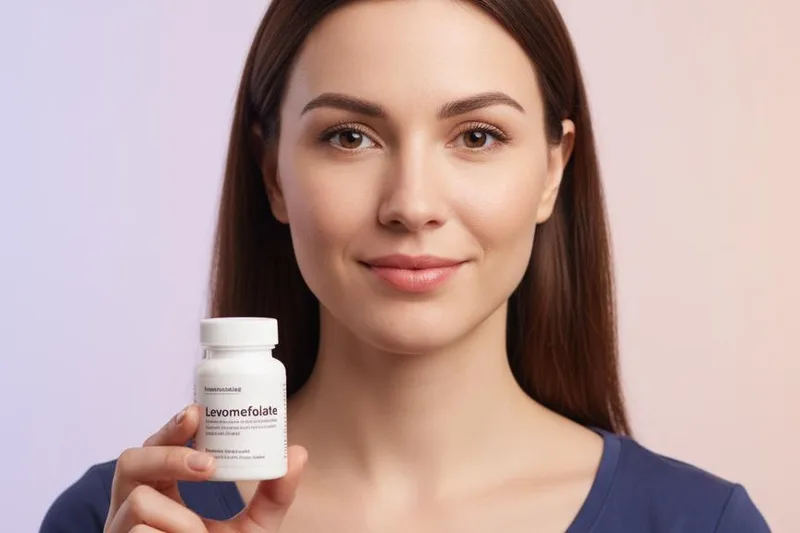
Are you being treated for depression? Your doctor may have told you to take Levomefolate along with your prescribed medication. Although it may seem like a vitamin, it can be a very important part of your treatment. So let's talk about this today, just like talking to a friend, and let all your worries melt away.
What is Levomefolate?
Simply put, Levomefolate is a type of vitamin B. To be precise, it is an active form of the vitamin folate that has been modified in a way that makes it easier for our bodies to absorb. Folate is essential for the functioning of our brain cells, especially for the production of neurotransmitters that control our mood.
Sometimes, people with depression can have low folate levels. When that happens, other antidepressants may not work as well. So, a doctor may prescribe Levomefolate to help your existing antidepressants work better by addressing the folate deficiency in your body. This means that it is more of a supplement than a stand-alone medication, and it works better with other medications.
Things you need to tell your doctor before taking this medicine
It is very important that your doctor has a complete picture of your health before you start using this medicine. Therefore, be sure to tell your doctor if you have any of the following conditions:
- If you have low vitamin B12 levels: When using folate, symptoms of a vitamin B12 deficiency may be masked. This can be dangerous, so it's important for your doctor to be aware of this.
- If you have low red blood cells (anemia): This medicine may affect some anemia conditions.
- If you have other mental illnesses: Knowing your complete mental health history will help your doctor plan treatment.
- Allergies: Tell your doctor if you have any allergies to Levomefolate, folic acid, other medications, foods, dyes, or preservatives.
- If you are pregnant or trying to get pregnant: During this time, take any medication only on the advice of a doctor.
- If you are a breastfeeding mother: Talk to your doctor about whether this medication passes to your baby through breast milk.
Remember, this information is very important for your safety. Don't hide anything, even a small thing, from your doctor.
How exactly do I use this medicine?
To get the most out of a medication, you need to use it as directed.
- This pill is to be taken by mouth. Try to take it at the same time every day , as prescribed by your doctor. That way, it's easier to keep the medicine at the same level in your body.
- You can take this with or without food. However, if you experience stomach upset or heartburn, it is best to take it with a meal.
- The most important thing is, even if you feel better, do not stop taking the medicine until your doctor tells you to. It is very important to complete the treatment.
What if you take too much medicine? (Overdose)
Imagine that you have taken too much of this medicine by mistake. If this happens, do not panic, but act quickly. Immediately call the National Poisons Information Centre at the Colombo National Hospital, or go to the Emergency Department (ETU) of the nearest hospital.
What if I miss a dose of medication?
Anyone can forget to take a dose. If this happens, take it as soon as you remember. However, if it is almost time for your next dose, skip the missed dose and take your next dose at the scheduled time. Do not take double doses for any reason.
Other medications that may interact with Levomefolate
Some medications you take may interact with Levomefolate. This may reduce the effectiveness of Levomefolate or increase the side effects. The table below lists some of the medications that may interact.
| Type of medicine | Description and examples |
|---|---|
| Birth Control Pills | Some birth control pills can affect folate levels. |
| Anticancer drugs | Examples: Capecitabine, Methotrexate |
| Some antibiotics | Examples: Chloramphenicol, Pentamidine |
| Cholesterol-lowering medications | Examples: Cholestyramine |
| Medicines for seizures | Drugs such as phenobarbital and phenytoin. |
| Metformin for diabetes | Long-term use of metformin can affect B12 and folate levels. |
| Painkillers (NSAIDs) | Commonly used painkillers such as Ibuprofen and Naproxen. |
This list is not complete. Therefore, it is very, very important to tell your doctor about all the medications you are taking (prescribed by other doctors, bought from the pharmacy, vitamins, even herbal products).
Possible side effects while taking the medicine
Levomefolate is generally well-tolerated by most people, with few major side effects. However, like any medicine, some people may experience side effects. In particular, an allergic reaction is something you should look out for immediately.
Symptoms that require immediate medical attention:
- Skin rash, itching, hives
- Swelling of the face, lips, tongue, or throat.
If you experience any of these symptoms, it could be a sign of a serious allergy, so seek medical advice immediately.
If you feel anything unusual that is not mentioned on this list, don't be afraid to talk to your doctor about it.
How to store medicine safely?
To maintain the quality of medicines, they must be stored properly.
- Store at room temperature (between 20-25 degrees Celsius). Keep away from excessive heat and humidity, and away from direct sunlight. Keeping it in the bathroom is not a good idea.
- Keep it safe, out of the reach of children and pets.
- Keep the cap of the medicine bottle tightly closed.
- Do not use expired medications. Ask your doctor about the best way to dispose of expired or unused medications.
Take-Home Message
- Levomefolate is a special form of vitamin B called folate that helps other antidepressant medications work better.
- Before starting the medication, tell your doctor about all your medical conditions, allergies, and all other medications you are taking.
- Take the medicine at the same time every day, exactly as your doctor tells you. Never stop taking the medicine without your doctor's advice.
- If you miss a dose, do not take two doses at once.
- Seek immediate medical attention if you experience allergic symptoms such as swelling of the face, lips, or a skin rash.
- If you have any questions or concerns about this medication, talk to your doctor about it openly.


💬 Comments (0)
No comments yet. Be the first to share your thoughts here.
Add Your Comment