
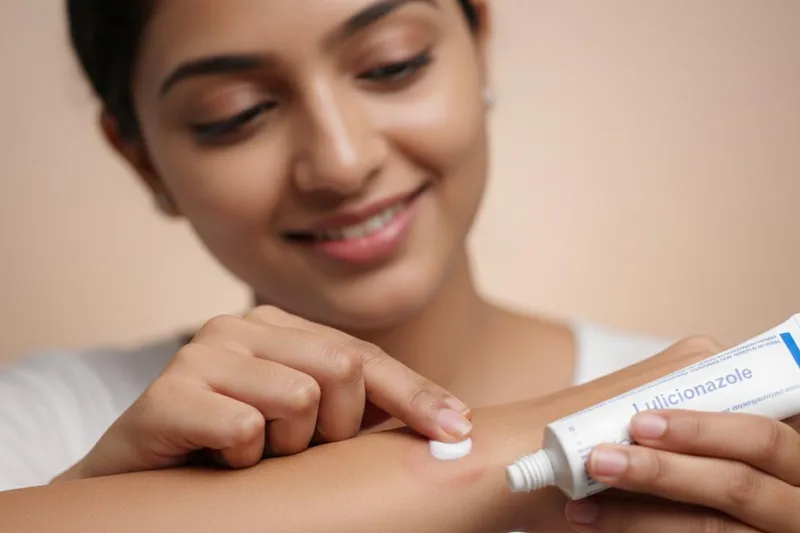
Have you ever had red, itchy, or flaky patches on your skin? Sometimes they appear in circles and are annoying, right? These are often caused by fungal infections. So today we are going to talk about a type of cream that is used to treat fungal skin infections. That is a cream called Luliconazole.
What is Luliconazole?
Simply put, Luliconazole is an antifungal medication. This means that it can kill various types of fungi that grow on our skin. You may have seen it under the brand name LUZU. It comes as a cream, which means it is applied to the skin. A doctor may prescribe it for you to treat a fungal infection on your skin.
Think about it, our skin is like a protective shield. But sometimes small organisms, namely fungi, can break through this shield and enter. That's when the symptoms like itching, redness, and peeling appear as mentioned earlier. That's when this medicine like Luliconazole can help us.
What should I tell my doctor before using this medicine?
This is very important. When you go to see a doctor, before he gives you this Luliconazole cream, there are a few things that you need to be aware of. These are definitely things to mention , okay?
- Do you have any allergies? You may be allergic to Luliconazole, other medicines, foods, or some dyes or preservatives. If you have any of these, you should tell your doctor.
- Are you pregnant? Or are you hoping to get pregnant? Some medications are not suitable during pregnancy. So it is very important to inform your doctor about this.
- Are you a breastfeeding mother? Some medications can affect your baby while you're breastfeeding. So be sure to tell your doctor about this as well.
When you tell your doctor these things, he or she can determine exactly whether this medication is right for you or not.
How do you use this medicine correctly?
Since this is a skin-soothing medication, it is very important to know how to use it properly. Otherwise, you may not get the desired results.
1. Apply only to the skin: Isn't this an oral medication? It only needs to be applied to the skin .
2. Read the label: Read the instructions on the label of the medicine carefully. Use it exactly as your doctor tells you.
3. Wash your hands: You should wash your hands thoroughly with soap before and after applying the medicine.
4. Apply a thin layer: You don't need to apply a lot of the medicine. You need to apply a thin layer on and around the affected skin area. To be precise, apply it so that the affected skin area is completely covered.
5. Only use as directed: Do not use more than the doctor tells you to use. Your doctor will tell you how many times a day and for how long.
6. Use the full course: This is a mistake that many people make. After two or three days of application, when the itching subsides, and they feel better, they stop taking the medicine. Don't do that. You should use the medicine for the full course prescribed by the doctor. Only then will the fungus be completely gone and the recurrence of the disease will be reduced.
7. Don't stop taking your medication without your doctor's advice: Don't stop or change your medication at your own discretion. Always follow your doctor's advice.
What if this medicine is used on small children?
If you are using this medicine for your young child, it is best to talk to your pediatrician. In some selected cases, this medicine can be prescribed to children as young as 2 years old. However, there are some special considerations to be taken into account . So, do as your doctor tells you.
What to do if you overdose on the medicine?
If you think you have used too much of this medicine, or if someone has accidentally taken it, call the nearest emergency room or poison control center immediately. Although this is a topical medication, it can cause problems if used incorrectly.
Important: This medicine is for you only. Do not share your medicine with others, even if they have the same illness as you. Not all medicines work for everyone.
What if I miss a dose of medication?
If you forget to take your medicine, take it as soon as you remember. But if it is almost time for your next dose, skip the missed dose and take your next dose at the scheduled time. Never take a double dose.
Are there any other interactions with this medicine?
There haven't been many studies on how other medications interact with Luliconazole cream. But it's best not to use any other skin products on the same area of skin as this cream without your doctor's advice.
Tell your doctor about all the medications you take (prescribed or over-the-counter), herbs, and dietary supplements you take. Also, tell your doctor if you smoke, drink alcohol, or use illegal drugs. Some things can interact with your medications.
What else should I be careful about when using this medicine?
There are a few other small things you can do to get the most out of this medicine, heal the infection quickly, and prevent it from recurring.
- Do not get in your eyes: Do not let this medicine get into your eyes under any circumstances. If you accidentally get it in your eyes, immediately rinse your eyes thoroughly with clean (cool tap water).
- Keep your skin dry: After bathing, make sure to keep the infected area very dry, especially since moist conditions are the best environment for fungal infections to grow. Avoid walking barefoot as much as possible.
- Take care of your clothes: To prevent reinfection, wear freshly washed cotton clothes. Avoid clothes made of synthetic fabrics. These absorb less sweat and retain more moisture.
- If the wounds don't heal: If you develop wounds or blisters that don't heal properly, tell your doctor.
- If the infection comes back: If your skin infection comes back after you stop using the medicine, see a doctor.
If you use this medicine for 'Jock Itch'...
Jock itch is a fungal infection that occurs in the groin area, between the thighs. When treating jock itch, avoid wearing tight-fitting underwear. Also, avoid wearing underwear made of synthetic fabrics like rayon or nylon. Instead, wear loose-fitting, cotton underwear. Dry the area thoroughly after bathing.
If you use this medicine for athlete's foot...
Athlete's Foot is a fungal infection of the feet, especially between the toes. After applying the medication, dry your feet thoroughly, especially between the toes . Avoid wearing socks made of wool or synthetic materials such as rayon or nylon. Wear clean cotton socks and change them daily. If your feet sweat a lot, change your socks several times a day. Try to wear well-ventilated sandals or shoes.
What are the possible side effects of this medicine?
Like any medicine, Luliconazole cream can cause minor side effects in some people. But don't worry, most people won't experience them.
Side effects that you should tell your doctor about immediately:
If you experience any of these symptoms, you should tell your doctor or healthcare professional immediately :
- Allergic reactions: skin rash, itching or hives, swelling of the face, lips, or tongue.
- Inflammation, redness, or increased pain: If the swelling, redness, or pain at the site of application seems to be getting worse than before.
Side effects that usually do not require medical advice, but should be reported to the doctor if they persist:
These are usually not serious and will go away in a few days. However, if they persist or bother you, tell your doctor:
- Mild skin irritation, burning sensation, or itching: The area where the medicine was applied may feel a little sore, burn, or itch.
This list does not include all possible side effects. If you notice anything unusual, talk to your doctor. You can also report side effects to the FDA at 1-800-FDA-1088.
Where should I keep this medicine?
It is also important to store this medicine properly.
- Keep it out of the reach of children.
- Store at room temperature. Ideally, between 20 and 25 degrees Celsius (68 and 77 degrees Fahrenheit). Do not expose to extreme heat or cold.
- Throw away expired medications. Throw away unused medications after they expire.
Please note: This article is a summary only. It may not contain all the information. If you have any further questions about this medicine, please talk to your doctor, pharmacist or health care provider.
The most important things to remember
Okay, so let's recap the most important things about the Luliconazole cream we talked about.
- Luliconazole is an antifungal cream used to treat fungal skin infections.
- Be sure to tell your doctor about your allergies, pregnancy, or breastfeeding.
- Wash your hands thoroughly before and after applying the medicine. Apply a thin layer to the affected area.
- Use the medicine for the full course prescribed by the doctor. Do not stop taking it just because you feel better.
- Avoid contact with eyes. Keep skin dry and wear cotton clothing.
- If using for 'Jock Itch' or 'Athlete's Foot', follow the specific instructions for that.
- If you experience serious side effects (allergic reactions, increased swelling/redness/pain), tell your doctor immediately.
- Keep the medicine at room temperature, out of the reach of children.
If you follow these instructions carefully, you will be able to cure your fungal skin infection quickly. Don't forget to always follow your doctor's instructions. I wish you a speedy recovery!
` Luliconazole, fungal infections, skin cream, antifungal, dermatology, LUZU, medicine


💬 Comments (0)
No comments yet. Be the first to share your thoughts here.
Add Your Comment