

It's normal to feel a lot of fear and anxiety when you hear that someone you know in the Intensive Care Unit (ICU) has been put on a ventilator. This fear is compounded by not knowing much about this machine. It is actually a very valuable piece of equipment that can help in a battle between life and death. So today, let's talk about what a ventilator, or as it is called in medical science, is and what it does, in a very simple and understandable language.
Simply put, what is a ventilator?
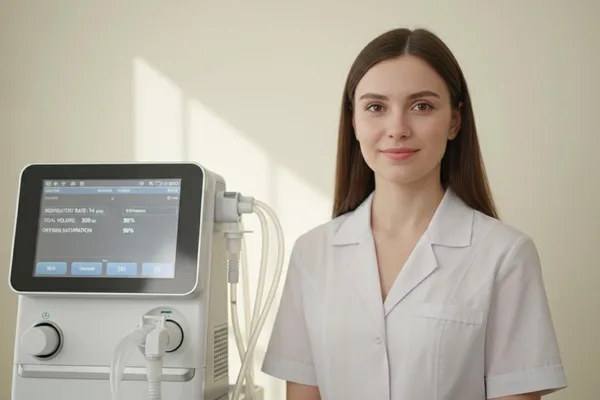
A ventilator is a machine that helps someone breathe when they have difficulty breathing on their own. Think of it like using crutches when you have a broken leg. Just like crutches help you walk with your weight, a ventilator takes over the breathing function for your lungs, either completely or to some extent.
The most important thing is that a ventilator is not a cure. It is a life support system . That is, it helps maintain the breathing process until the body recovers through other treatments and medications.
These things mainly happen with a ventilator:
- It provides your lungs with the oxygen they need.
- It helps remove harmful carbon dioxide gas that accumulates in the lungs.
- The tiny air sacs in the lungs, called alveoli, provide the necessary pressure to keep them open without collapsing.
Doctors can change the settings of this machine according to the patient's needs.
Are Intubation and Ventilation two different things?
Yes. This is where many people get confused. Even though these two happen together, these are two different processes.
- Intubation: The process by which a doctor inserts a tube into the patient's windpipe (trachea) through the patient's mouth.
- Mechanical Ventilation: This means that the tube inserted in this way is connected to a ventilator machine that helps with breathing.
In some cases, it is possible to connect the ventilator to a face mask that fits snugly over the face, without inserting a tube like this.
What ventilator methods are available?
Ventilators push air into the lungs using positive pressure. This can be done in two main ways. To make this information easier to understand, let's create a table like this.
| Ventilation Type | Simple explanation |
|---|---|
| Invasive Mechanical Ventilation (tube inserted) | In this, a tube is inserted into the airway. This tube is inserted through the mouth (intubation) or through a small surgery in the neck (tracheostomy) and connected to a ventilator. |
| Non-invasive Ventilation | This involves using a mask that fits tightly over the face. This mask is connected to a ventilator that pushes air into the lungs. Devices like CPAP or BiPAP®, which are used even at home, fall into this category. |
Who needs the assistance of a ventilator?
The assistance of a ventilator may be needed anytime someone is unable to breathe on their own, especially in cases like these:
- During surgery: General anesthesia reduces our ability to breathe. Therefore, a ventilator helps maintain regular breathing throughout the surgery.
- Severe lung infections or conditions: In conditions like pneumonia, COVID-19, acute respiratory distress syndrome (ARDS), and chronic obstructive pulmonary disease (COPD).
- Accidents or medical emergencies: In the event of an accident that causes airway obstruction or respiratory failure. For example, a severe allergic reaction (anaphylaxis).
- Brain damage: Brain damage, such as a stroke or coma, can prevent the message from the brain to the lungs from getting through properly.
- Imbalance in blood gas levels: In conditions such as increased carbon dioxide in the blood (hypercapnia) or decreased oxygen (hypoxemia).
- To prevent food or saliva from entering the lungs: Prevent aspiration of things (saliva, food) in the mouth of an unconscious person and causing infection.
What happens when you are connected to a ventilator?
Because someone on a ventilator needs to be monitored very closely, they are usually kept in an intensive care unit (ICU). There, a team of specially trained doctors, nurses, and respiratory therapists care for the patient.
Monitoring the patient
You'll notice that your loved one has several other machines attached to their body. They constantly measure things like blood pressure, heart rate, breathing rate, and blood oxygen levels. They also do chest X-rays and blood tests.
Suctioning
Mucus can build up in the airway. Therefore, the nursing staff often inserts a thin tube (catheter) to remove the mucus. At this time, the patient may cough. This may be a bit uncomfortable for you to watch, but this is essential to keep the airway clear.
Medicine, nutrition and hygiene
Some medications are aerosolized into the lungs through the breathing tube. Since they are unable to eat or drink, liquid nutrition is given through a tube passed through the nose into the stomach. Necessary fluids are given intravenously through saline.
Is the patient awake?
Doctors try to keep the patient as comfortable, calm, and alert as possible. However, depending on the patient's condition, it may be necessary to give the patient rest and allow the body to heal, or to put them in a deep sleep (deep sedation). Sometimes, the patient may need to be restrained to prevent them from harming themselves, for example, to stop them from trying to remove the tube. This is done for the patient's safety.
What are the benefits and risks?
Like any medical treatment, the use of a ventilator has both benefits and risks.
| Advantages | Risks |
|---|---|
| You don't need to work hard to breathe. Focus on healing and fighting off possible infections. | Bacteria can travel through the trachea to the lungs and cause infections (e.g. pneumonia). |
| The body receives the full amount of oxygen it needs. Carbon dioxide is removed. | The pressure from the machine can sometimes damage the lungs. |
| Prevents the air sacs in the lungs from collapsing. | A weak spot in the lung can cause the lung to collapse (pneumothorax). |
| Helps keep the airway open. | Heart function and blood pressure may be affected. |
In some very serious cases, the patient may never be able to breathe on their own again. Also, putting a patient on a ventilator who has no chance of recovery can unnecessarily prolong the dying process. In such sensitive situations, it is important to talk openly with your doctor and make the best decision for the patient.
How do you remove yourself from the ventilator?
Once the patient's condition improves and doctors are sure that they can breathe on their own, they begin the process of ``weaning'' them off the ventilator. First, they gradually reduce the support from the machine and see if the patient can breathe on their own. If everything is OK, the ``ET tube'' is removed.
After the tube is removed, you may have a sore throat and hoarseness for a few days. This is normal.
Take-Home Message
- Mechanical ventilation is not a cure for a disease, it is a life support method that helps the body breathe until it recovers.
- This is nothing to worry about. The trained medical team in the intensive care unit is taking very close care of the patient.
- As with all treatments, there are risks, but the medical team is constantly trying to minimize those risks.
- Talk openly with your doctor about any questions or concerns you may have. They will explain the situation to you.
- Finally, it is very important for anyone to discuss their wishes with their family about the treatment they should receive if they develop a serious illness, even while they are healthy.




💬 Comments (0)
No comments yet. Be the first to share your thoughts here.
Add Your Comment