
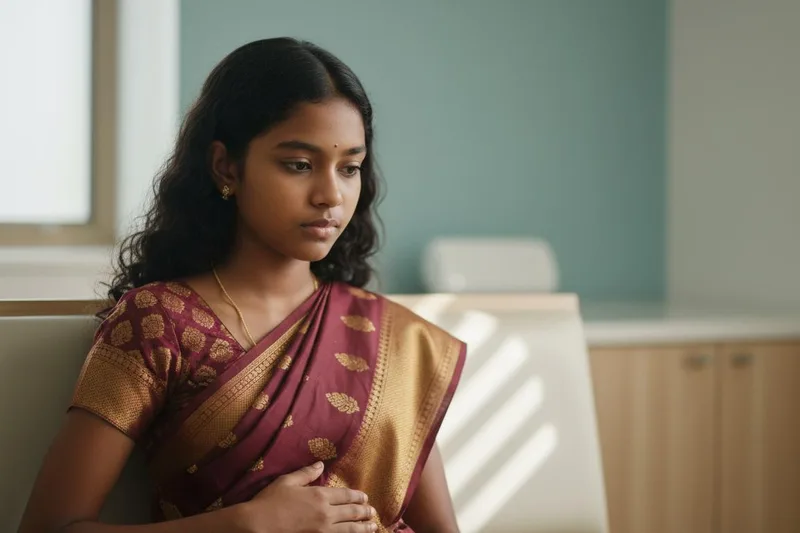
A very important day in your life is the day you reach puberty, which means the day you get your first period. Since this is a new experience, you may have a lot of questions about it. Maybe even a little bit of fear. But don't worry, this is a very normal and natural part of a girl's life. Let's talk about this in detail today.
What is Menarche? Let's find out simply.
Simply put, Menarche is the day you get your first period . In other words, it's the day you start using your menstrual pads for the first time. This is a very important milestone in your life. Because this is when your fertility, which is when you can have children, begins. Starting your period means that, unless you have other health problems, you are physically able to conceive and have a baby . This is a very natural thing, so there's no reason to worry.
What is the difference between menstruation and menarche?
Now you may be wondering if 'Menstruation' is one thing and 'Menarche' is another. Actually, menstruation is just one part of your menstrual cycle . It happens every month. Your body prepares for pregnancy every month. If pregnancy doesn't occur, the lining of your uterus (we call it the uterine lining) is shed through your vagina . This is what we call menstruation, or 'having your period'.
But menarche is when you get your first period . That's what makes it special. Your first period not only marks the beginning of your reproductive years, but it's also an important sign that your body is transitioning from childhood to adulthood, or puberty . Before you get your first period, you may have noticed these changes in your body:
- Breast development. (Your breasts may feel a little bigger.)
- Wide hips.
- A sudden increase in height (growth spurt).
- Oily skin and acne.
- Hair growth under the armpits.
- Pubic hair growth in the genital area.
Your body can continue to grow after you get your first period. But by the time you get your first period, many of the changes that occur during puberty have already occurred in your body.
Who does this phenomenon called Menarche affect?
Your monthly period is caused by the parts of your reproductive system and hormones like estrogen and progesterone . So, anyone with a female reproductive system – that is, a vagina, uterus, fallopian tubes , and ovaries – can have a monthly period. It is a natural part of a girl’s life.
At what age does menarche usually occur?
Most often, you will get your first period between the ages of 11 and 14. According to some reports, this happens to most girls in Sri Lanka around the age of 12 or 13. Another way to estimate when you will get your period is to think back to when you first noticed changes in your breasts. Menarche usually occurs 2 to 2 1/2 years after breasts start to develop.
But some people can get their first period as early as 9 years old, and others as late as 15 years old. There are many factors that affect this. But in most cases, you will get your first period at an age close to the age your mother got her first period . So it's a good idea to ask your mother or an adult at home about this.
How does Menarche affect your body?
Just because you've had your first period means you can get pregnant if you have sex (some people call this penis-in-the-vagina sex / intercourse ) unless you're using regular birth control. It's also important to remember that you can still get pregnant if you have sex while you're on your period.
But getting your period isn't just about getting pregnant. You have to get used to the changes your body goes through every month. Along with these changes, you have to deal with the products you use to control your bleeding, and sometimes the discomfort that comes with your period.
What are the symptoms before and during menarche?
As you get closer to your first period, you may experience symptoms like these:
- Cramping: You may feel a pain or ache in your stomach, back, or legs. We also call this 'cramping'.
- Bloating: The stomach may feel bloated and heavy.
- Tender or sore breasts.
- Having more acne/pimples.
- Mood swings: Feeling sad or angry all of a sudden.
- Fatigue: Simply feeling tired.
During your period, you may notice red or brown blood on your underwear or in the toilet after you use the toilet. You may have very light bleeding and then your period will stop. Or, you may have a little bleeding at first, then a lot more, and then a little more bleeding and then it will stop.
The important thing is, not everyone's periods are the same. The first period is especially unpredictable. It's okay if your symptoms and your period are different from someone else's. Don't worry about it.
Why does Menarche happen? What are the causes?
You get your first period when your body is mature enough to have a menstrual cycle. Think about it, every month your ovaries produce an egg, and the lining of your uterus thickens. If you have sex, that egg can be fertilized. The fertilized egg then travels to the uterus, implants in the uterine wall, and develops into a fetus .
But if that egg is not fertilized, that egg and the thickened lining of the uterus are shed through your vagina. This is the material that comes out of the uterus every month and is what we call 'period blood' or menstrual blood.
Both genetics and environmental factors influence the onset of menarche:
- Heredity: Your genes affect when you get your first period. Usually, a daughter gets her period around the same time as her mother.
- Hormones: Hormones in your brain and hormones in your reproductive organs control your monthly menstrual cycle. These also affect menstruation.
- Body composition: Things like your height, weight, and fat distribution affect when you get your first period.
- Health: Stress, poor nutrition, and some health conditions can cause late menstruation and irregular periods.
- Environment: Environmental factors, such as access to resources, are thought to affect menopause. For example, people in economically developed countries tend to have their periods earlier than those in less developed countries.
How are you taking care of yourself during this time?
You don't have to stop doing your normal activities just because you're on your period. And, if you don't want to, you don't have to let anyone know you're on your period. You can use these things to help control your bleeding:
- Pads or panty liners: Some people use pads on days when they bleed heavily and panty liners on days when they bleed less. These should be changed every four to eight hours .
- Tampons: A tampon is something you put inside your vagina. It absorbs blood before it leaves your body. You can go swimming while wearing a tampon, even during your period. You should change your tampon every four to eight hours .
- Menstrual cups: Many menstrual cups can be washed and reused. They can hold more blood than a regular tampon. You should change your cup every eight to twelve hours .
- Period underwear: These can also be washed and reused. Some people can control their bleeding with these underwear alone, while others wear them with pads, tampons, or menstrual cups.
The best thing to do is to start marking the days of your period on a calendar or in an app. This will help you understand what your normal period pattern is and if anything unusual is happening. A normal menstrual cycle occurs between 21 and 35 days (28 days on average) and lasts between three and seven days (five days on average). But everyone's period is different.
Your periods may be irregular for the first year or two. Your period may even skip some months as your body adjusts to this new menstrual cycle. As your periods gradually become more regular, you can learn what your normal period is. Then you can recognize any changes in the way your bleeding occurs, whether it's from day to day. If you're bleeding in an unusual way, it's a sign that you should see a doctor.
How to manage menstrual discomfort?
If you're having trouble with cramps, there are a few simple things that can help:
- Take a bath with warm water.
- Exercise, stretch a little.
- Place a hot water bottle (heating pad) or a cloth soaked in hot water on your stomach.
- Take pain relievers containing ibuprofen (such as Advil©, Motrin©) or naproxen (such as Aleve©).
However, do not take aspirin without consulting a doctor . It has been found that the use of aspirin in people under 18 years of age can cause a rare condition called Reye's syndrome .
When should you see a doctor?
Whether you get your first period early or late, you should tell your doctor. When your period starts before the age of nine, it is called 'precocious puberty' . If you have not had your period by the age of 15 (amenorrhea) , you should see a doctor to determine the cause. Depending on the cause of your late period, your doctor can prescribe the necessary treatment.
Also, if you have severe menstrual cramps , your doctor can prescribe medications to help.
What questions should you ask the doctor?
Menarche is a good time to start a good relationship with a gynecologist. He or she can answer any questions you have about these new changes. You can ask questions like:
- How much blood is 'normal' during menarche?
- How long will it take for my periods to become more regular?
- What symptoms can be managed at home?
- What are the symptoms that require seeing a doctor?
The doctor can also answer any questions you have about pregnancy, birth control, and sexually transmitted infections (STIs) .
Take-Home Message:
So, Menarche is a very important milestone in your puberty. As you get used to this new experience, pay close attention to the changes in your body. After this, when you see a doctor, they will often ask you things like when you last had your period and what your periods are like. This information will help the doctor assess your health.
Remember, this is a natural part of your life. There is nothing to be afraid of or ashamed of.
Talk to your doctor or an adult you trust (like a mom, dad, older sister, aunt) about what menarche means for your health, pregnancy, and safe sex. They can help you. You are not alone!
` Menarche, first menstruation, monthly menstruation, puberty, girls, hormones, youth health


💬 Comments (0)
No comments yet. Be the first to share your thoughts here.
Add Your Comment