New information about autism - are severe conditions really on the rise?

New information about autism - are severe conditions really on the rise?

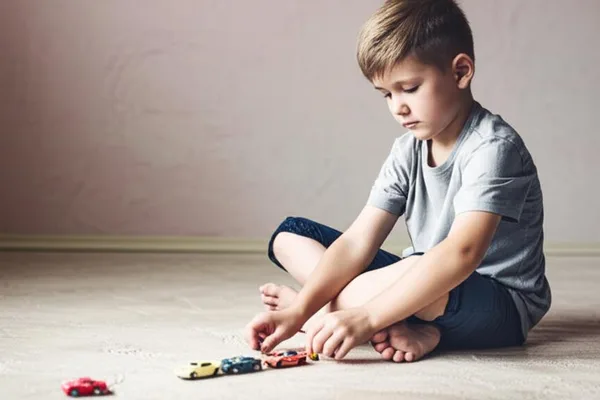
Do you sometimes feel like your little one is a little different from other children? Maybe he prefers to play alone. Or maybe he doesn't look you in the eye when you talk. Some children are late to use words. It's very normal for a parent to feel a little scared and worried when they see things like this. Today we're talking about a condition called autism, which can have these symptoms. We'll also talk about some new information found in recent research on this topic.

First, let's see what autism is.

Simply put, autism is not a disease. It is a neurodevelopmental condition that affects brain development. It can affect the way a child understands information, communicates with others, and behaves.

The important thing is that the condition affects each person differently. That's why doctors call it Autism Spectrum Disorder (ASD) . Think of it like a rainbow. Just as the rainbow has different colors, children with autism have different abilities and challenges. Some children need a lot of support to do everyday tasks. Other children can live normally, but they may have some difficulty with social interactions.

What does the new research say?

A recent study led by the Centers for Disease Control and Prevention (CDC) in the United States has found something important. They studied data from nearly 20,000 8-year-old children with autism.

What they found was that the identification of children with milder autism was increasing more rapidly than that of children with more profound autism .

  • In the year 2000: About 3 out of 1,000 children had severe autism.
  • By 2016: That number had increased to 5 per 1,000 children .
  • But, look at the low prevalence of autism: While in 2000, 4 out of 1,000 children were diagnosed, by 2016, that number had increased to 14 out of 1,000 children.

This shows that children with less severe symptoms are now being identified more often than before.

What is the difference between 'low-grade' and 'high-grade' autism?

Let's clarify a little more what is meant by 'low stress' and 'high stress'. This is not to label a child, but this classification helps to understand the level of support the child needs.

Characteristic Milder Autism Profound Autism
Ability to speak Can speak normally, but may have difficulty maintaining a conversation or understanding a joke. Often does not use words (non-verbal) or speaks very few words.
Intelligence Quotient (IQ) Intelligence may be average or above average. According to research, the intelligence quotient (IQ) is below 50.
Social connections You may want to make friends, but it can be difficult to behave in society and understand the feelings of others. They may seem detached from others, in their own world, and not care much about others.
Daily support Can do most things on their own. May need some guidance with schoolwork and social activities. Even everyday tasks like eating and dressing require significant support throughout life.

Why are 'low-grade' autism cases being reported more often?

These statistics may make you wonder if autism is on the rise in society. There are actually several reasons for this.

1. Increased awareness: Parents, teachers, and doctors are more aware of this condition than ever before. Therefore, even if they notice a small change in a child's behavior, they look into it.

2. Expanded diagnostic criteria: In the past, only children with the most severe symptoms were diagnosed with autism. However, now the diagnostic criteria have been expanded. As a result, it is now possible to accurately identify even children with less severe symptoms who were previously undiagnosed.

That means this is not a new epidemic. Instead, our understanding and ability to recognize it is improving. This is a really good thing, because it means we can provide children with the support they need earlier.

What should I do if I have doubts about my child?

If you have any doubts about your child while reading this article, please keep that in mind and don't be sad. Don't panic. You are not alone.

The most important thing you should do is talk to a doctor about this. Talk openly about this with your family doctor or a consultant pediatrician . Explain clearly what you think about your child and the changes you have noticed.

Remember, the sooner you identify these conditions, the more help you can give your child . Early detection allows you to get the help your child needs, such as speech therapy and behavioral therapy. This can help your child develop their skills and strengthen them to face future challenges.

Take-Home Message

  • Autism is a condition that comes in many different forms, like a rainbow. One child can be very different from another.
  • Recently, more cases of 'mild' autism have been reported, not because the condition is widespread, but because our awareness and ability to recognize it has increased.
  • We need to be aware that children with 'profound' autism require significant support and care throughout their lives.
  • If you have the slightest doubt about your child's development, speech, or behavior, do not delay in seeing your doctor and discussing it . Early detection is the biggest investment in a child's future.

Autism, Autism Spectrum Disorder, Child Development, Child Health, Mental Health, Characteristics of Children

⚠️ Important: The medical articles and information on Nirogi Lanka are for general awareness only, and are by no means a substitute for professional medical advice, diagnosis, or treatment. For any medical problem you have, consult a qualified physician immediately.

💬 Comments (0)

No comments yet. Be the first to share your thoughts here.

Add Your Comment

Please calculate: 4 + 5 =
New information about autism - are severe conditions really on the rise?
How the Body WorksJuly 6, 2026

New information about autism - are severe conditions really on the rise?

Do you sometimes feel like your little one is a little different from other children? Maybe he prefers to play alone. Or maybe he doesn't look you in the eye when you talk. Some children are late to use words. It's very normal for a parent to feel a little scared and worried when they see things like this. Today we're talking about a condition called autism, which can have these symptoms. We'll also talk about some new information found in recent research on this topic.

First, let's see what autism is.

Simply put, autism is not a disease. It is a neurodevelopmental condition that affects brain development. It can affect the way a child understands information, communicates with others, and behaves.

The important thing is that the condition affects each person differently. That's why doctors call it Autism Spectrum Disorder (ASD) . Think of it like a rainbow. Just as the rainbow has different colors, children with autism have different abilities and challenges. Some children need a lot of support to do everyday tasks. Other children can live normally, but they may have some difficulty with social interactions.

What does the new research say?

A recent study led by the Centers for Disease Control and Prevention (CDC) in the United States has found something important. They studied data from nearly 20,000 8-year-old children with autism.

What they found was that the identification of children with milder autism was increasing more rapidly than that of children with more profound autism .

  • In the year 2000: About 3 out of 1,000 children had severe autism.
  • By 2016: That number had increased to 5 per 1,000 children .
  • But, look at the low prevalence of autism: While in 2000, 4 out of 1,000 children were diagnosed, by 2016, that number had increased to 14 out of 1,000 children.

This shows that children with less severe symptoms are now being identified more often than before.

What is the difference between 'low-grade' and 'high-grade' autism?

Let's clarify a little more what is meant by 'low stress' and 'high stress'. This is not to label a child, but this classification helps to understand the level of support the child needs.

Characteristic Milder Autism Profound Autism
Ability to speak Can speak normally, but may have difficulty maintaining a conversation or understanding a joke. Often does not use words (non-verbal) or speaks very few words.
Intelligence Quotient (IQ) Intelligence may be average or above average. According to research, the intelligence quotient (IQ) is below 50.
Social connections You may want to make friends, but it can be difficult to behave in society and understand the feelings of others. They may seem detached from others, in their own world, and not care much about others.
Daily support Can do most things on their own. May need some guidance with schoolwork and social activities. Even everyday tasks like eating and dressing require significant support throughout life.

Why are 'low-grade' autism cases being reported more often?

These statistics may make you wonder if autism is on the rise in society. There are actually several reasons for this.

1. Increased awareness: Parents, teachers, and doctors are more aware of this condition than ever before. Therefore, even if they notice a small change in a child's behavior, they look into it.

2. Expanded diagnostic criteria: In the past, only children with the most severe symptoms were diagnosed with autism. However, now the diagnostic criteria have been expanded. As a result, it is now possible to accurately identify even children with less severe symptoms who were previously undiagnosed.

That means this is not a new epidemic. Instead, our understanding and ability to recognize it is improving. This is a really good thing, because it means we can provide children with the support they need earlier.

What should I do if I have doubts about my child?

If you have any doubts about your child while reading this article, please keep that in mind and don't be sad. Don't panic. You are not alone.

The most important thing you should do is talk to a doctor about this. Talk openly about this with your family doctor or a consultant pediatrician . Explain clearly what you think about your child and the changes you have noticed.

Remember, the sooner you identify these conditions, the more help you can give your child . Early detection allows you to get the help your child needs, such as speech therapy and behavioral therapy. This can help your child develop their skills and strengthen them to face future challenges.

Take-Home Message

  • Autism is a condition that comes in many different forms, like a rainbow. One child can be very different from another.
  • Recently, more cases of 'mild' autism have been reported, not because the condition is widespread, but because our awareness and ability to recognize it has increased.
  • We need to be aware that children with 'profound' autism require significant support and care throughout their lives.
  • If you have the slightest doubt about your child's development, speech, or behavior, do not delay in seeing your doctor and discussing it . Early detection is the biggest investment in a child's future.

Autism, Autism Spectrum Disorder, Child Development, Child Health, Mental Health, Characteristics of Children

⚠️ Important: The medical articles and information on Nirogi Lanka are for general awareness only, and are by no means a substitute for professional medical advice, diagnosis, or treatment. For any medical problem you have, consult a qualified physician immediately.

💬 Comments (0)

No comments yet. Be the first to share your thoughts here.

Add Your Comment

Please calculate: 4 + 5 =