
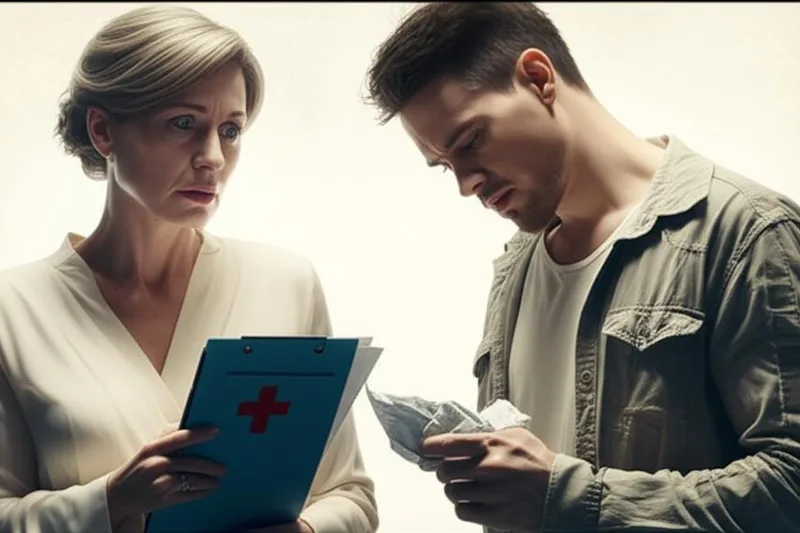
Have you ever felt like healthcare isn't the same for everyone? Sometimes, it can feel like who we are, where we live, and our financial situation all affect the medical care we receive. This is a sensitive topic, but it's really important to talk about it. Because everyone has the right to be healthy.
Simply put, like in many countries around the world, some individuals and social groups in our country have a harder time accessing better healthcare than others. There can be many reasons for this. Sometimes it is due to financial reasons. Other times, it can be due to some unconscious biases within the healthcare system itself. Let's talk about this in a little more depth.
Main reasons affecting inequality in healthcare
There are several key factors that contribute to these differences, or disparities, in access to health care. Understanding these can help us better understand the situation.
| Reason | Impact |
|---|---|
| Health insurance and financial ability | Although government healthcare in Sri Lanka is free, treatment in private hospitals costs a lot of money. For those without insurance or those with financial difficulties, seeing specialists and getting necessary tests can be delayed. |
| Difficulty in reaching facilities | The specialist medical services, modern machinery, and facilities found in major cities like Colombo are not available in remote rural areas. Therefore, people in those areas have to travel long distances to receive quality services. |
| Differences in the quality of treatment | Sometimes, medical staff may be unknowingly biased by the patient's appearance, speech, or social status. This can lead to things like not listening to the patient properly and downplaying symptoms. |
| Problems with communication and understanding | Good communication and building trust between the doctor and the patient is essential. Some patients may not be able to articulate their problems or understand what the doctor is saying. This can also affect treatment. |
Difficulty accessing services
Imagine, if someone living in a city wants to see a specialist, it's not that difficult. But, for someone living in a very remote area? He might have to set aside a whole day and take several buses to get to the city. Because of such practical difficulties, many people are not motivated to seek treatment at the earliest stage of an illness.
Often, people only go to a doctor when symptoms are severe and severe. By then, the disease may be too advanced.
Also, not everyone has a "family doctor" to call their own. Therefore, many people go to the hospital's outpatient department (OPD) or emergency treatment unit (ETU) when they get sick. This hampers preventive care and long-term health management.
Quality of Treatment and 'Unconscious Bias'
This is a bit more complicated. "Unconscious bias" is the idea that we unconsciously form about someone. This can also happen in the medical field. For example, sometimes women are less likely to report pain or symptoms than men.
A good example of this is the incident that world-famous tennis player Serena Williams faced after giving birth to her child. She developed symptoms of a blood clot in her lungs (Pulmonary Embolism). She was aware of it because she had a medical history. But when she told the nurses about it, they didn't take it seriously at first. It was because of her continued insistence that the necessary tests were done and her life was saved. She later said, "No one listened to me. I could have died."
This shows how dangerous it can be to not listen properly to what the patient is saying, no matter who they are.
Differences in pain treatments
Another unfortunate situation is that some patients' pain is underestimated. For example, some people may have the misconception that "rural people can tolerate pain better." Because of this attitude, some patients may not receive the necessary amount of pain medication.
Tinu, a foreign woman, has been trying to find treatment for years to manage her severe pain caused by fibromyalgia (a condition that affects the whole body) and chronic lymphocytic leukemia (CLL). She says that when she asks for pain medication, she is often treated like a drug addict. She has even stopped going to the hospital.
Experiences like this can erode trust between patients and the healthcare system.
What are we doing? Steps for equal treatment
Finding solutions to these problems is not something one person can do. This is something that needs to change as a system. However, there are things we as patients can do as well.
- Communicate well with your doctor: Be clear about all your symptoms and questions. Don't hide anything. If you don't understand what the doctor is saying, don't be shy about asking again.
- Be your own advocate: If you feel like you're not being listened to, say so in a kind but firm way. You could say something like, "Doctor, this pain is really bad for me. I'm really scared about this."
- Get a Second Opinion: If you have any doubts about your treatment, there is nothing wrong with seeing another doctor for advice.
- Be informed: Be as informed as possible about your health condition. This will help you discuss it with your doctor and ask the right questions.
The most important thing is to build trust and respect between doctors and patients. A good doctor always tries to provide the best possible service to everyone, regardless of the patient's background or social status.
Take-Home Message
- Inequality in healthcare is a real problem in our country as well as the world. Economic and social factors influence this.
- As a patient, talk to your doctor about your symptoms and feelings clearly and openly.
- If you have any doubts or are unhappy with the treatment you are receiving, never hesitate to seek a second medical opinion.
- Educating yourself about your health condition will help you receive better treatment and make the right decisions.
- Good healthcare is a fundamental right for everyone. It is important for all of us to be aware and take action for it.


💬 Comments (0)
No comments yet. Be the first to share your thoughts here.
Add Your Comment