
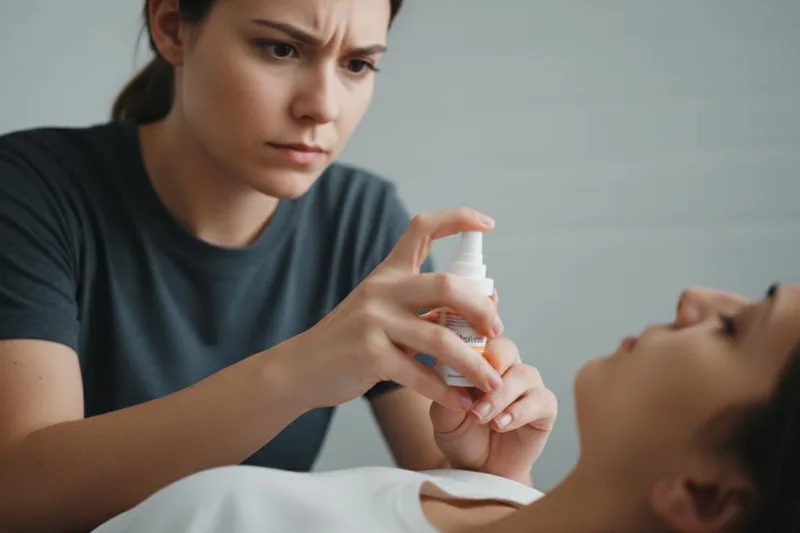
Oh, imagine if you saw someone suddenly having difficulty breathing, being unable to wake them up, or even losing consciousness... At such a time, that person may have taken an overdose of an opioid or painkiller. Today we are going to talk about a nasal spray that can help save lives in such dangerous situations. Its name is Naloxone .
What is Naloxone? How does it work?
Simply put, Naloxone is a drug that treats life-threatening opioid overdoses . You may be wondering what an opioid is. These are medications that doctors mainly prescribe as painkillers . Also, some people abuse them as narcotics. For example, morphine, fentanyl, tramadol , and oxycodone fall into this category. Heroin is also an opioid.
If someone takes too much of this type of opioid, that is, an overdose, their breathing will start to slow down, and they may even stop breathing altogether. They will also become very sleepy , lose consciousness, and become so sleepy that they cannot be awakened. These are the most dangerous symptoms of an opioid overdose.
So, what does this Naloxone drug do? This drug temporarily reverses the effects of opioids by binding to certain receptors in our body's brain. It's like "blocking" the action of the opioid. That's why these Naloxone drugs are also called opioid blockers . It comes in the form of a nasal spray, so it's easy to use.
The most important thing is that after using this medicine, you must definitely seek medical help immediately. Call an ambulance (in Sri Lanka, you can call 1990) or take the person to a hospital immediately. Because the effects of Naloxone are temporary, further treatment may be required.
This drug can be found on the market under names like Kloxxado and Narcan.
What should I tell the medical team before using this medicine?
If a doctor has advised you to carry a naloxone nasal spray, or if you are giving it to someone else, it is a good idea to be aware of some information. In particular, make sure your care team is aware of the following:
- Heart conditions: If you have any heart conditions, you should tell us about them.
- Substance use disorder: If someone is addicted to drugs, doctors need to be aware of the condition. Because naloxone suddenly reverses the effects of opioids, some people may experience sudden withdrawal symptoms .
- Allergies: If you have had an allergic reaction to Naloxone, other medications, foods, dyes, or preservatives, it is imperative that you tell your doctor.
- Pregnancy or trying to get pregnant: Tell your doctor if you are pregnant or planning to become pregnant.
- Breastfeeding: If you are a breastfeeding mother, inform the doctor about this as well.
This information is important because it allows doctors to be aware of the possible side effects of using Naloxone in advance and provide the necessary advice.
How do you use this nasal spray correctly?
This is a medicine used in the nose. It is very important to know how to use it properly and not panic in an emergency.
1. Lay the person down: Carefully lay the person who is having difficulty with an opioid overdose on their side (on the floor or bed).
2. Head and neck: Place one of your hands under his neck and tilt his head back slightly. This will open up his nostrils.
3. Give the nasal spray: Insert the nozzle of the nasal spray into one nostril and activate the spray fully (press the plunger). One spray per nostril.
4. Turn the person on their side: After giving the medicine, carefully turn the person on their side. This will help prevent the substance from entering the airway, even if they vomit.
5. Don't test the spray beforehand: Keep this nasal spray fresh until you are ready to use it. Don't try it or test it beforehand. Doing so can waste the medicine.
Emergency medical assistance immediately!
After giving the first dose of this medicine, even if the person regains consciousness or wakes up after a while, you must immediately call an ambulance (1990) or take them to the nearest hospital. Don't forget this.
You should be aware of the signs and symptoms of an opioid overdose. Sometimes, a single dose may not be enough. If this happens, you may need to give another dose after 2-3 minutes. At that time, the second dose should be given in the other nostril. When you receive this medicine, ask your doctor or pharmacist about this.
What do you think about using this medicine on children?
This medicine can even be prescribed to newborn babies in some selected cases. However, there are some special precautions to be taken when using it in children. Therefore, it is essential to seek medical advice before giving it to a child.
What happens if you take too much of this medicine? (Overdosage)
Since this is a medication that is usually given to someone else in an emergency, it doesn't apply to you "taking too much." However, if someone accidentally or for any other reason takes too much of this medication, they should immediately report it to a poison control center or emergency room.
What if I miss a dose?
Since this is a medicine used only in emergencies, "missing a dose" does not apply to this.
Can other things interact with this medicine?
Naloxone is a life-saving drug that is given in an emergency. Therefore, it is not expected to cause adverse interactions with other medications when used in an emergency.
However, it is always a good idea to tell your doctor about all the medications you are taking (prescription and over-the-counter), herbal products, vitamins, and dietary supplements. Also, tell your doctor if you smoke, drink alcohol, or use other drugs, as some of these can interact with your other medications.
What should I be careful about when using this medicine?
- Always keep it ready: If you have someone at risk of an opioid overdose in your home, or if there is a risk at your workplace, always keep this Naloxone nasal spray within easy reach, ready to use.
- Keep emergency phone numbers handy: Keep the phone number of your medical team, the emergency department of the nearest hospital, and numbers like 1990 (ambulance) within easy reach.
- Extra doses may be needed: Each nasal spray contains only one dose. In some emergencies, one or more extra doses may be needed. Therefore, seek medical advice about keeping extra sprays if necessary.
- Notify the hospital: When the person who was given Naloxone is taken to the hospital, it is imperative to tell the medical team treating them that they were given a dose of this medicine.
- Get advice: Before an emergency occurs, you will receive additional instructions about what to do during and after using this medicine. Understand and follow them carefully.
What are the possible side effects of using this medicine?
Like all medicines, Naloxone can cause side effects in some people, but not everyone gets them.
Side effects that should be reported to the doctor or medical team immediately:
- Allergic reactions: These are more serious. If you experience symptoms such as skin rash, itching, hives, swelling of the face, lips, tongue, or throat, seek medical attention immediately.
Side effects that do not usually require medical treatment, but should be reported to the medical team if they persist or are bothersome:
- Constipation
- Dryness or irritation inside the nose
- Headache
- Increase in blood pressure
- Muscle pain or spasms
- Stuffy nose
- Toothache
Important: This list does not include all possible side effects. If you experience anything unusual, consult your doctor.
In the United States, side effects can be reported to the FDA (Food and Drug Administration) at 1-800-FDA-1088. In Sri Lanka, it is best to inform your doctor or pharmacist.
Where should I keep my medicine?
- Keep out of reach of children and pets. This is very important.
- Temperature: This should be stored at a temperature between 20 and 25 degrees Celsius (20-25 degrees C). That is, between 68 and 77 degrees Fahrenheit (68-77 degrees F).
- Do not freeze: Do not store this medicine in the freezer.
- Expired medication: Throw away any unused medication after the expiration date.
- Keep in the original box: It is best to keep the medicine in its original box until you use it.
This leaflet is a summary only. It may not contain all the information you need. If you have any further questions about this medicine, ask your doctor, pharmacist, or health care provider.
The most important things to remember (Take-Home Message)
Okay, so let's review some of the things you need to remember from what we've talked about:
- Naloxone is a life-saving emergency treatment for opioid overdose.
- This comes in the form of a nasal spray, so it's easy to use.
- Even if the patient regains consciousness after giving Naloxone, an ambulance must be called immediately (call 911) and taken to a hospital.
- Be aware of the symptoms of an opioid overdose (slow breathing, excessive sleepiness, loss of consciousness).
- Learn exactly how to use the medicine and act without panicking.
- Keep this medicine out of the reach of children and pets, at the appropriate temperature.
- If you have any questions about this, don't be afraid to ask your doctor.
I hope this information is useful to you. This knowledge may someday help you save someone's life.
` Naloxone, Opioid Overdose, Nasal Spray, Emergency Medication, Life-Saving Drug, Opioid, Naloxone, Emergency Treatment


💬 Comments (0)
No comments yet. Be the first to share your thoughts here.
Add Your Comment